Last Updated on August 11, 2026 by Rosslyn Tebbutt
Great kitchens don’t always need grand square footage—sometimes the most memorable spaces are the ones with constraints.
In the basement of a Georgian terraced home in Bath, deVOL has created a kitchen that feels equal parts practical and poetic: a compact, downstairs room that blends traditional craftsmanship with a cool, utilitarian edge.
At first glance, this space is defined by its tiled walls—floor to ceiling, laid on a big scale, and unapologetically functional.
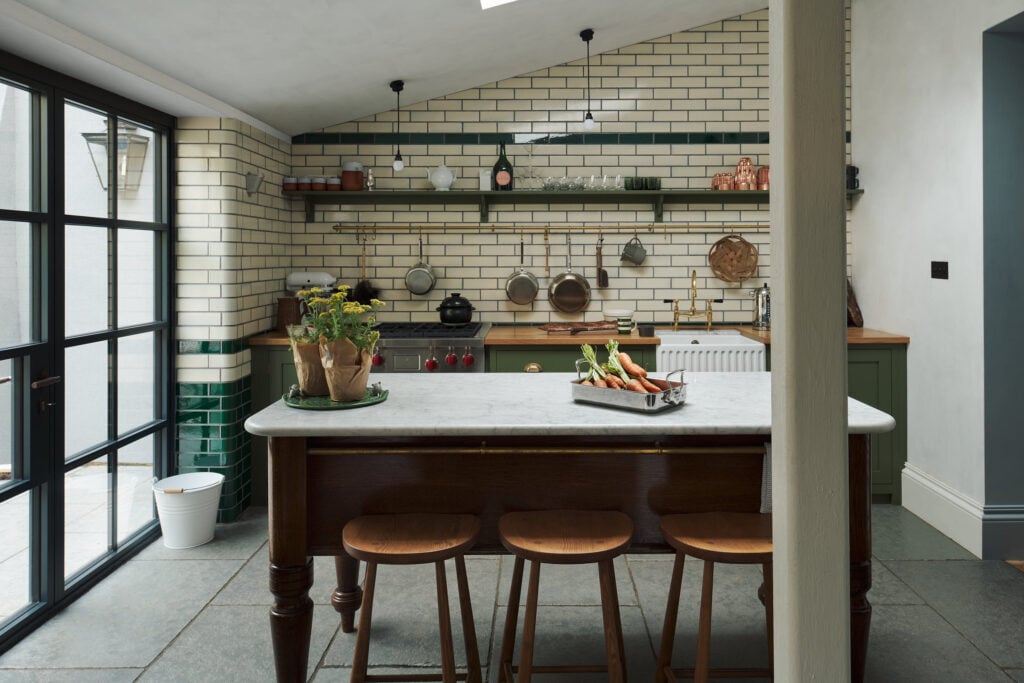
But then you notice the details that soften the “industrial” feel: handmade Shaker cupboards painted in a deep, heritage green, warm oak surfaces, and brass accents that add a quiet glow against the crisp tile backdrop.
The result is a kitchen that feels grounded in history yet fresh and modern—classic and edgy, fun and functional, all at once.

The Big Design Move: Tiled Walls That Set the Tone
The first thing you feel in this kitchen is its confidence. Fully tiled walls can easily lean sterile, but here they become the room’s personality—graphic, architectural, and almost workshop-like in the best way.
In the images, the tile creates a strong grid effect, amplifying the height and structure of the space while reflecting light around the basement.
It’s practical (easy to wipe, durable, splash-proof), but it also gives the kitchen a bold “working room” energy—like a professional prep space tucked inside a beautiful old home.
Why it works:
- Tiles add brightness and bounce light in a lower-level room.
- A large-scale tile layout creates rhythm and texture without clutter.
- The tiled “envelope” makes the cabinetry and metal details feel sharper and more intentional.

Shaker Cabinetry in Wilkes Green: Classic Craft With Depth
The cabinetry is deVOL Shaker—simple, handmade, and beautifully proportioned. Painted in deVOL’s Wilkes Green, it brings that timeless British “heritage kitchen” feel, but with enough depth to hold its own against the strong tiled surfaces.
Green is a smart choice in a basement space: it adds warmth without relying on bright colour, and it pairs effortlessly with natural materials like oak and stone.
Style takeaway:
If you want a traditional kitchen that still feels current, choose a classic door style (like Shaker) but anchor it in a slightly moodier, more complex colour.


Brass Details: The Finishing Touch That Elevates Everything
Brass is used with restraint—handles, and a long hanging rail that spans the width of the kitchen run. This detail does two jobs at once: it’s practical storage, and it becomes a visual line that brings the whole back wall together.
Brass also adds warmth to a palette that could otherwise feel cool (tile + stone + steel). It’s the little glint that makes the kitchen feel considered rather than purely utilitarian.
SampleBoard note: Brass is a “connector” finish—use it to link cabinetry, shelving brackets, taps, lighting, and hardware so the space feels cohesive without matching everything perfectly.
The Heirloom Dairy Table: A Freestanding Piece That Changes the Room
Instead of a built-in island, deVOL used a freestanding Heirloom Dairy Table, topped with Carrara marble. It’s a genius move—because it shifts the mood from “industrial” to “lived-in.”
A freestanding piece introduces softness and individuality. It feels collected, not installed.
In this kitchen, the table gives a subtle “chef’s table experience”: a place to prep, chat, and be part of what’s happening—rather than a hard-edged island that screams “new build.”
Why it’s a standout choice:
- Freestanding furniture makes small rooms feel less rigid.
- Oak warms up cooler materials (tile, marble, steel).
- Marble brings a quiet luxury without overpowering the practical feel.


Simple Layout, High Impact: A Compact Run Done Right
This is a neat, compact layout: one strong back run housing the cooker and sink, with everything designed to work efficiently in a smaller footprint. In basement kitchens, flow matters even more—you want clear prep zones, easy movement, and visual calm.
A single shelf and the long brass rail replace heavy upper cabinets, keeping the room open and letting the tile shine.
Small-space lesson:
When walls are tiled and visually busy, keep upper storage light—open shelving or a single ledge can feel airy while still being functional.
A Beautiful Story Detail: Restoring History Through Tile
One of the most inspiring parts of this project is the story behind the tiles. The owners found chipped, curved tiles during the renovation and chose to reinstate that sense of history with new ones—using the past as the design spark.
It’s a reminder that the best interiors often start with one meaningful element: a salvaged piece, an original finish, a discovered material. That anchor then shapes every other decision.
Design principle: Start with one “truth” from the home (a reclaimed material, original detail, or historic reference), then build the palette and finishes around it.
How to Recreate This Look (Without Copying It Exactly)
If you love this traditional-meets-industrial balance, here’s how to apply it in your own kitchen—whether you’re renovating a basement or simply want the mood.
1) Choose a strong, practical backdrop
- Full-height tile, tiled splashback zones, or even a tiled “feature wall.”
- Keep the tile tone light if your space lacks natural light
2) Ground the space with a heritage cabinet color
- Deep green, ink blue, charcoal, or warm grey-green
- Pair it with a classic door style for longevity
3) Add one warm natural material
- Oak worktops, a wooden table, or wooden shelving
- This prevents the space from feeling too hard or clinical
4) Use brass as your warmth “thread.”
- Handles, rail, tap, lighting accents
- Not everywhere—just enough to create a glow
5) Swap a built-in island for furniture
- A work table, butcher’s block, or vintage piece
- It instantly adds personality and softness

SampleBoard Styling Notes: What to Add to Your Mood Board
Core palette
- Crisp white/off-white tile
- Deep heritage green cabinetry (Wilkes Green-inspired)
- Warm oak
- Brass accents
- Carrara marble (soft white with gray veining)
- Stone or concrete-look flooring
Texture balance
- Hard + soft: tile and stone balanced with wood and aged brass
- Matte + sheen: matte cabinetry with polished marble, subtle metal shine
Styling cues
- One open shelf with ceramics and everyday glassware
- A rail with copper pans or simple tools (functional, not decorative clutter)
- Minimal accessories—let the materials do the talking

Final Thoughts: Edgy, Classic, and Effortlessly Liveable
This Bath basement kitchen proves that practicality and beauty are not opposites.
With tiled walls, handcrafted Shaker cabinetry in Wilkes Green, warm oak, brass accents, and a freestanding dairy table, deVOL has created a space that feels both utilitarian and deeply inviting.
It’s the kind of kitchen that doesn’t try too hard—and that’s exactly why it works. It honors the home’s history while embracing modern function, making the everyday feel a little more special.