
Last Updated on August 11, 2026 by Rosslyn Tebbutt
Low-profile ceiling fans, also known as flush mount or hugger fans, have become increasingly popular in recent years.
This is due to their ability to provide efficient air circulation in rooms with low ceilings, where traditional ceiling fans might not be suitable.
In this comprehensive guide, we will explore the world of low-profile ceiling fans, comparing different models, discussing their benefits, and providing valuable insights to help you make an informed purchase decision.
- Why Low Profile Ceiling Fans Matter
- 6 Best Low-Profile Ceiling Fans: A Detailed Comparison
- Low Profile VS Standard Ceiling Fans: Pros and Cons
- Effective Strategies for Maximizing Your Low-Profile Fan's Performance
- Tips and Tricks for Choosing the Right Low Profile Ceiling Fan
- Common Mistakes to Avoid
- How to Install a Low Profile Ceiling Fan: A Step-by-Step Approach
- Why Energy Efficiency Matters and How Low Profile Fans Benefit You
- Market Insights: Current Status and Future Trends
- How to Stand Out: Highlights and Key Features
- Case Detail: Comparing Low Profile Fans in Different Room Settings
- Future Trends and How to Improve
- 6-8 FAQs
- Reviews
- Conclusion
We’ll also delve into future trends and explore innovative ways to maximize their functionality, creating a uniquely “airnovative” home environment.

Why Low Profile Ceiling Fans Matter
Why are low-profile ceiling fans so important?
The answer lies in their ability to solve a common problem: low ceilings. Many homes, particularly older ones or those with converted basements, have ceilings that are less than ideal for standard ceiling fans.
According to the U.S. Department of Housing and Urban Development (HUD), the minimum recommended ceiling height for habitable rooms is 7 feet.
If a standard ceiling fan is installed in a room with a ceiling height close to this minimum, it can create a safety hazard and make the room feel cramped.
Low-profile ceiling fans address this issue by mounting almost directly to the ceiling, minimizing the overall height of the fan.
This allows for safe and comfortable air circulation even in rooms with ceilings as low as 7.5 feet, sometimes even lower, depending on the specific fan model.
Understanding Your Needs: What Do You Really Want?
Before diving into specific models, let’s take a moment to understand your individual needs and motivations.
Ask yourself the following questions:
- What is the primary purpose of the fan? Is it to provide cooling during hot weather, to circulate air to reduce energy costs, or to add a decorative element to the room?
- What is the size of the room? This will determine the appropriate fan size and airflow capacity.
- What is your budget? Low-profile ceiling fans range in price from affordable to high-end.
- What style are you looking for? Do you prefer a modern, traditional, or minimalist design?
- Are there any specific features you require? Such as a light kit, remote control, or smart home integration?
Understanding your specific needs will help you narrow down your options and choose the best low-profile ceiling fan for your home.
What kind of color will match your decor? Are you looking for a specific blade material?
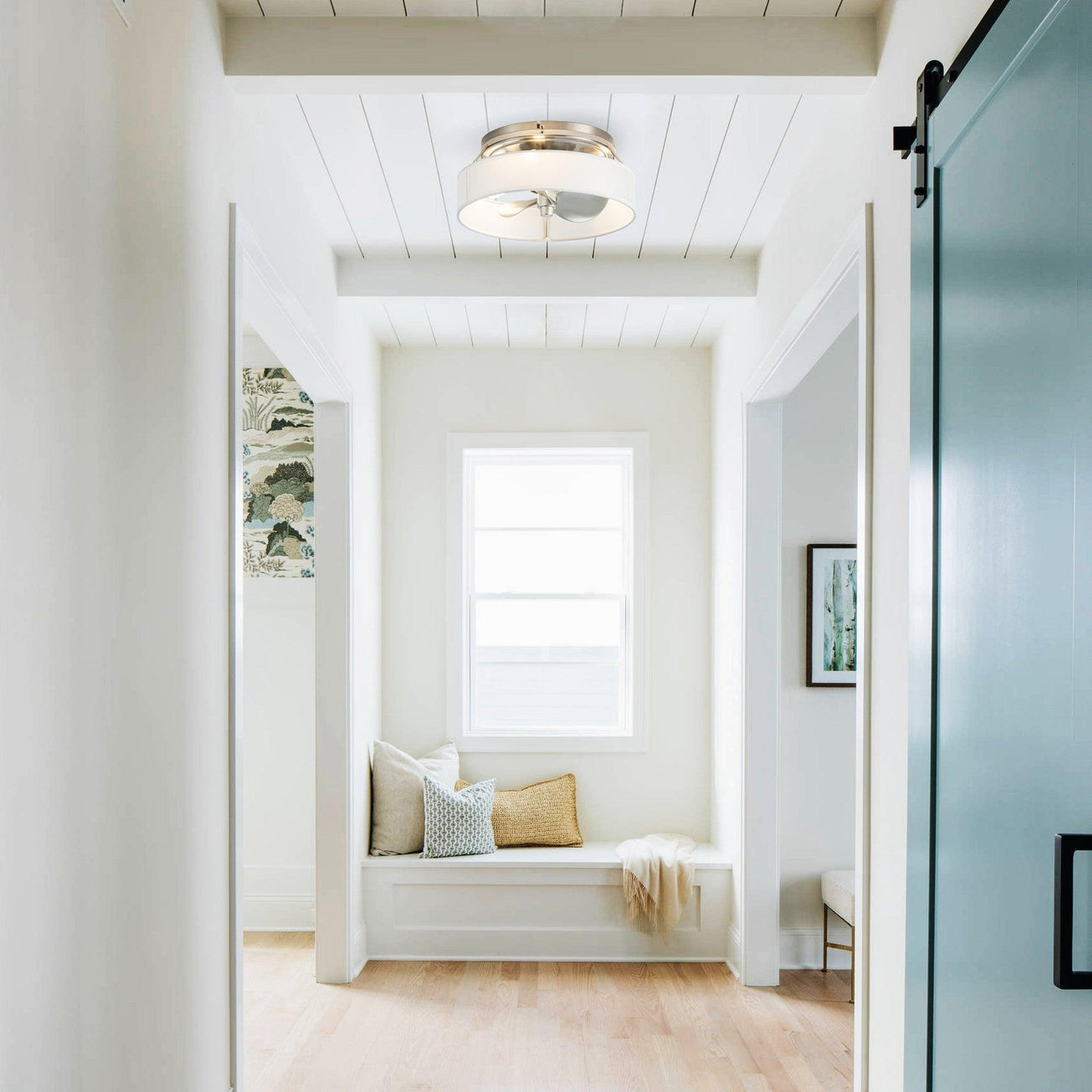
6 Best Low-Profile Ceiling Fans: A Detailed Comparison
Now, let’s take a look at six of the best low-profile ceiling fans currently available on the market.
We’ll compare their features, performance, and price to help you make an informed decision.
- Hunter Dempsey Low Profile Ceiling Fan: Known for its reliability and quiet operation. It features a WhisperWind motor and reversible blades.
- Casa Vieja Turbina Hugger Ceiling Fan: A stylish option with a sleek design and integrated LED light.
- Minka-Aire Simple Hugger Ceiling Fan: Offers a minimalist design with a powerful motor and adjustable speed settings.
- Prominence Home Alvina Hugger Ceiling Fan: An affordable option with a reversible motor and integrated light kit.
- Westinghouse Lighting Alloy Ceiling Fan: Features a contemporary design with a brushed nickel finish and frosted glass light.
- Craftmade Baron Low Profile Ceiling Fan: Known for its energy efficiency and quiet operation.
Table 1: Comparison of Top Low-Profile Ceiling Fans
| Feature | Hunter Dempsey | Casa Vieja Turbina | Minka-Aire Simple | Prominence Home Alvina | Westinghouse Alloy | Craftmade Baron |
| Ceiling Height Suitability | 7.5 ft+ | 8 ft+ | 7.5 ft+ | 7.5 ft+ | 8 ft+ | 7.5 ft+ |
| Blade Span | 44 inches | 52 inches | 44 inches | 52 inches | 52 inches | 52 inches |
| Light Kit | Optional | Included | Optional | Included | Included | Optional |
| Remote Control | Optional | Optional | Included | Optional | Optional | Optional |
| Number of Speeds | 3 | 3 | 3 | 3 | 3 | 3 |
| Motor Type | WhisperWind | Standard | Standard | Standard | Standard | Energy Efficient DC |
| Price Range | $$ | $$$ | $$$ | $$ | $$ | $$$ |
Note: Price range is indicated as follows: $ (Under $100), $$ ($100-$200), $$$ ($200-$300), $$$$ (Over $300)
Pain Points & Solutions
Many homeowners struggle with the following issues related to ceiling fans:
- Low ceilings: As discussed earlier, this is the primary reason for choosing a low-profile fan.
- Noise: Some ceiling fans can be noisy, especially at higher speeds.
- Wobbling: An unbalanced ceiling fan can wobble, creating a distracting and potentially dangerous situation.
- Energy inefficiency: Older ceiling fans can consume a significant amount of energy.
- Difficult installation: Installing a ceiling fan can be challenging, especially for those with limited electrical experience.
Low-profile ceiling fans can address these pain points by offering:
- Reduced height: Allowing for safe installation in rooms with low ceilings.
- Quiet operation: Many models feature advanced motor technology for whisper-quiet performance.
- Balanced blades: Ensuring smooth and wobble-free operation.
- Energy-efficient motors: Reducing energy consumption and lowering utility bills.
- Simplified installation: Some models are designed for easy DIY installation.
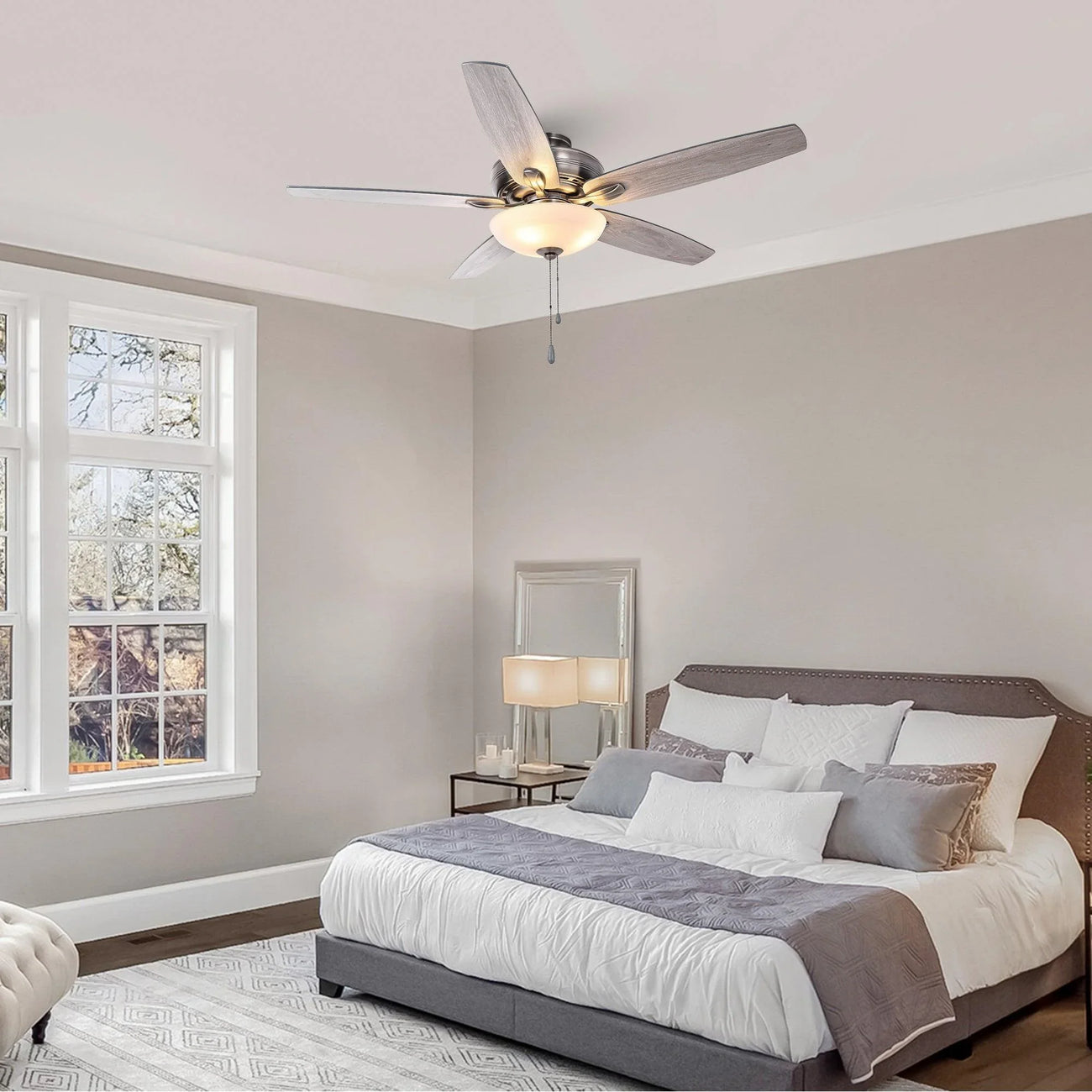
Low Profile VS Standard Ceiling Fans: Pros and Cons
Choosing between a low-profile and standard ceiling fan depends on the specific needs of your space. Here’s a breakdown of the pros and cons of each:
Low-Profile Ceiling Fans:
Pros:
- Ideal for low ceilings: The primary advantage, allowing for safe installation where standard fans would be impractical.
- Modern aesthetics: Many low-profile fans feature sleek and contemporary designs.
- Easier installation: Due to their simpler design, they can be easier to install than standard fans.
Cons:
- Potentially less airflow: Depending on the design, they might not circulate air as effectively as standard fans with longer blades.
- Limited selection: The range of styles and features might be more limited compared to standard fans.
Standard Ceiling Fans:
Pros:
- Greater airflow: Typically provide more powerful air circulation due to longer blades and lower mounting height (relative to the blades).
- Wider selection: A larger variety of styles, finishes, and features are available.
- Greater customization: More options for blade types, light kits, and accessories.
Cons:
- Not suitable for low ceilings: Can be a safety hazard and make the room feel cramped.
- More complex installation: May require professional installation due to wiring and balancing.
Table 2: Pros and Cons of Low-Profile vs. Standard Ceiling Fans
| Feature | Low-Profile Ceiling Fan | Standard Ceiling Fan |
| Ceiling Height Suitability | Low Ceilings | High Ceilings |
| Airflow | Moderate | High |
| Style Selection | Limited | Wide |
| Installation Complexity | Easier | More Complex |
| Price | Varies | Varies |
Effective Strategies for Maximizing Your Low-Profile Fan’s Performance
Here are some effective strategies to ensure your low-profile ceiling fan operates at its peak performance:
- Choose the right size: Ensure the fan size is appropriate for the room’s square footage. Too small and it won’t be effective; too large and it could be overwhelming.
- Optimize blade direction: In the summer, set the blades to rotate counter-clockwise to create a downdraft for cooling. In the winter, reverse the direction to circulate warm air trapped near the ceiling. This is especially important for low-profile fans as they are closer to the ceiling.
- Regularly clean the blades: Dust buildup can reduce airflow and decrease efficiency. Wipe down the blades with a damp cloth every few months.
- Ensure proper installation: Double-check all connections and mounting hardware to prevent wobbling and ensure safe operation.
- Consider adding a light kit: If the room requires additional lighting, choose a low-profile fan with an integrated light kit or add one separately.
- Use a remote control: For convenience, select a fan with a remote control to adjust speed and lighting from anywhere in the room.
Airnovative Applications: Thinking Outside the Box
Let’s explore some “airnovative” applications for low-profile ceiling fans beyond their traditional use in living rooms and bedrooms.
- Closets and Pantries: Install a small, low-profile fan in walk-in closets or pantries to improve air circulation and prevent moisture buildup, which can lead to mold and mildew.
- Bathrooms: Choose a moisture-resistant, low-profile fan for bathrooms to help ventilate the space and reduce humidity after showers or baths.
- Home Offices: A low-profile fan can provide a gentle breeze in your home office, helping you stay cool and focused while working.
- Entryways and Hallways: Improve air circulation in narrow entryways and hallways with a low-profile fan that doesn’t obstruct traffic flow.
- Garages: Consider a heavy-duty, low-profile fan for your garage to help ventilate the space and remove fumes and odors.
Tips and Tricks for Choosing the Right Low Profile Ceiling Fan
- Consider the Motor: Look for fans with energy-efficient DC motors. They consume less power and run quieter than traditional AC motors.
- Blade Pitch Matters: The blade pitch (the angle of the blades) affects airflow. A steeper pitch generally provides more airflow, but it can also increase noise.
- Check for Reversible Motor: A reversible motor allows you to change the blade direction seasonally, optimizing airflow for both summer and winter.
- Read Customer Reviews: Before making a purchase, read reviews from other customers to get an idea of the fan’s performance, reliability, and ease of installation.
- Look for Damp-Rated Fans: If you plan to install the fan in a bathroom or covered outdoor area, choose a damp-rated model that is designed to withstand moisture.
- Smart Home Integration: If you’re building a smart home, consider a fan that can be controlled via a smartphone app or voice assistants like Amazon Alexa or Google Assistant.

Common Mistakes to Avoid
- Choosing the wrong size: Selecting a fan that is too small or too large for the room will result in inefficient airflow and wasted energy.
- Ignoring ceiling height: Failing to consider the ceiling height can lead to safety hazards and discomfort.
- Neglecting maintenance: Neglecting to clean the blades and inspect the fan regularly can reduce performance and lifespan.
- Improper installation: Incorrectly installing the fan can cause wobbling, noise, and even safety hazards.
- Forgetting about lighting: If the room requires additional lighting, failing to choose a fan with an integrated light kit or adding one separately can be a costly oversight.
How to Install a Low Profile Ceiling Fan: A Step-by-Step Approach
While professional installation is always recommended, here’s a general step-by-step guide for installing a low-profile ceiling fan:
- Turn off the power: Before starting any electrical work, turn off the power to the circuit at the breaker box.
- Remove the old fixture: Carefully remove the existing light fixture or ceiling fan.
- Install the mounting bracket: Attach the mounting bracket to the ceiling joist, ensuring it is securely fastened.
- Wire the fan: Connect the fan’s wires to the household wiring according to the manufacturer’s instructions. Typically, this involves connecting the black (hot) wire, white (neutral) wire, and green (ground) wire.
- Attach the fan body: Carefully lift the fan body and attach it to the mounting bracket.
- Install the blades: Attach the fan blades to the motor housing.
- Install the light kit (if applicable): Connect the light kit wiring and install the light bulbs.
- Test the fan: Turn the power back on and test the fan to ensure it is operating correctly.
Important Note: This is a simplified guide. Always refer to the manufacturer’s instructions for specific installation details. If you are not comfortable with electrical work, hire a qualified electrician.
Why Energy Efficiency Matters and How Low Profile Fans Benefit You
Energy efficiency is crucial for both environmental and economic reasons. Energy-efficient appliances reduce our carbon footprint and lower our utility bills. Low-profile ceiling fans can contribute to energy savings in several ways:
- Circulating air: By circulating air, ceiling fans make the room feel cooler in the summer, allowing you to raise the thermostat and reduce air conditioning usage.
- Distributing heat: In the winter, ceiling fans can distribute warm air trapped near the ceiling, reducing the need to crank up the heating system.
- Energy-efficient motors: Modern low-profile fans often feature energy-efficient DC motors that consume significantly less power than traditional AC motors.
Table 3: Energy Savings with Ceiling Fans
| Appliance | Average Wattage | Estimated Annual Energy Cost (Based on national average of $0.14/kWh) |
| Standard Ceiling Fan (AC Motor) | 75W | $9.19 (assuming 4 hours/day usage) |
| Energy-Efficient Fan (DC Motor) | 30W | $3.68 (assuming 4 hours/day usage) |
| Air Conditioner (Window Unit) | 500-1500W | $61.32 – $183.96 (assuming 4 hours/day usage) |
Data based on average wattage and a national average electricity cost of $0.14/kWh. Actual costs may vary.

Market Insights: Current Status and Future Trends
The low-profile ceiling fan market is experiencing steady growth, driven by increasing demand for energy-efficient and space-saving solutions. Key market trends include:
- Smart Home Integration: Growing adoption of smart home technology is fueling demand for ceiling fans with Wi-Fi connectivity and voice control.
- LED Lighting: Integrated LED light kits are becoming increasingly popular due to their energy efficiency and long lifespan.
- Stylish Designs: Manufacturers are focusing on creating stylish and aesthetically pleasing low-profile fans to complement modern home décor.
- DC Motor Technology: DC motors are becoming the standard for energy-efficient ceiling fans, offering quieter operation and lower energy consumption.
Looking ahead, we can expect to see further advancements in low-profile ceiling fan technology, including:
- Improved Airflow Designs: Innovations in blade design and motor technology will lead to more efficient airflow and better cooling performance.
- Advanced Sensor Technology: Integration of sensors to automatically adjust fan speed based on room temperature and occupancy.
- Sustainable Materials: Increased use of eco-friendly and sustainable materials in fan construction.

How to Stand Out: Highlights and Key Features
When shopping for a low-profile ceiling fan, consider these highlights and key features to help you stand out from the crowd:
- Ultra-Quiet Operation: Look for fans with advanced motor technology that minimizes noise and ensures a peaceful environment.
- Sleek and Modern Designs: Choose a fan that complements your home décor and adds a touch of style to the room.
- Energy Star Certification: Opt for Energy Star-certified fans to ensure energy efficiency and cost savings.
- Integrated LED Lighting: Select a fan with a dimmable LED light kit to create the perfect ambiance and save energy.
- Remote Control Convenience: A remote control allows you to adjust fan speed and lighting from anywhere in the room.
Case Detail: Comparing Low Profile Fans in Different Room Settings
Let’s analyze how low-profile ceiling fans perform in different room settings:
Case 1: Small Bedroom (10ft x 12ft) with 7.5ft Ceiling
- Fan Choice: 42-inch Hunter Dempsey Low Profile Ceiling Fan.
- Why: The smaller blade span is ideal for the room size, and the low-profile design ensures adequate headroom.
- Benefits: Improved air circulation for comfortable sleep, quiet operation, and energy efficiency.
Case 2: Living Room (15ft x 20ft) with 8ft Ceiling
- Fan Choice: 52-inch Casa Vieja Turbina Hugger Ceiling Fan.
- Why: The larger blade span provides sufficient airflow for the room size, and the integrated LED light adds functionality and style.
- Benefits: Enhanced cooling during summer months, even distribution of heat in winter, and modern aesthetic.
Case 3: Kitchen (12ft x 15ft) with 7.8ft Ceiling
- Fan Choice: 44-inch Minka-Aire Simple Hugger Ceiling Fan.
- Why: A smaller, more minimalist fan is better to place at the kitchen as it’s simple and practical.
- Benefits: Improved air circulation and reduction of the smell and the excess heat when cooking.
Table 4: Case Studies: Low Profile Fans in Different Room Settings
| Room Type | Room Size | Ceiling Height | Fan Choice | Benefits |
| Small Bedroom | 10ft x 12ft | 7.5ft | Hunter Dempsey (42-inch) | Comfortable sleep, quiet operation, energy efficiency |
| Living Room | 15ft x 20ft | 8ft | Casa Vieja Turbina (52-inch) | Enhanced cooling, even heat distribution, modern aesthetic |
| Kitchen | 12ft x 15ft | 7.8ft | Minka-Aire Simple (44-inch) | Improved air circulation and reduction of the smell and the excess heat when cooking |
Future Trends and How to Improve
The future of low-profile ceiling fans is bright, with several exciting trends on the horizon:
- AI-Powered Automation: Integration of artificial intelligence to automatically adjust fan speed and lighting based on user preferences and environmental conditions.
- Wireless Charging: Development of ceiling fans with integrated wireless charging pads for smartphones and other devices.
- Personalized Airflow: Customizable airflow patterns that allow users to direct air circulation to specific areas of the room.
- Biometric Sensors: Integration of biometric sensors to monitor air quality and adjust fan speed to optimize comfort and health.
To improve the current state of low-profile ceiling fans, manufacturers should focus on:
- Enhancing Airflow: Designing more efficient blades and motors to maximize airflow without increasing noise.
- Simplifying Installation: Developing easier-to-install fans with clear and concise instructions.
- Expanding Style Options: Offering a wider range of styles and finishes to meet diverse consumer preferences.
6-8 FAQs
- What is the ideal ceiling height for a low-profile ceiling fan? Generally, a ceiling height of 7.5 feet or higher is recommended.
- How do I determine the right size fan for my room? Use a fan size chart based on the room’s square footage. A 42-inch fan is suitable for rooms up to 100 square feet, a 44-inch fan for rooms up to 225 square feet, and a 52-inch fan for rooms up to 400 square feet.
- Can I install a low-profile ceiling fan myself? If you are comfortable with electrical work, you can install a low-profile ceiling fan yourself. However, professional installation is always recommended.
- How do I clean a low-profile ceiling fan? Turn off the power and wipe down the blades with a damp cloth. Use a mild detergent if necessary.
- Are low-profile ceiling fans energy efficient? Many low-profile ceiling fans are energy efficient, especially those with DC motors and Energy Star certification.
- Can I use a low-profile ceiling fan in a bathroom? Yes, but you should choose a damp-rated model that is designed to withstand moisture.
- How do I reverse the direction of a ceiling fan? Most ceiling fans have a switch on the motor housing that allows you to reverse the blade direction.
- What are the benefits of a remote control? A remote control allows you to adjust fan speed and lighting from anywhere in the room.
Reviews
Review 1: Sarah M.
“I love my new Hunter Dempsey low-profile ceiling fan! It’s so quiet, and it provides great air circulation in my small bedroom. The installation was easy, and it looks great too!”
Review 2: John B.
“The Casa Vieja Turbina hugger fan is a fantastic addition to our living room. It’s stylish, the LED light is bright, and it really helps to cool the room down during the summer. Highly recommended!”
Review 3: Emily L.
“I purchased the Prominence Home Alvina low-profile fan for my guest room, and I’m very happy with it. It’s an affordable option, and it works great. The installation was straightforward, and the light kit is a nice bonus.”
Review 4: David K.
“The Minka-Aire Simple hugger fan is perfect for my office. It’s sleek, quiet, and provides just the right amount of airflow. I love the remote control, which makes it easy to adjust the settings.”
Conclusion
In conclusion, low-profile ceiling fans offer a practical and stylish solution for cooling and air circulation in rooms with low ceilings.
By understanding your needs, comparing different models, and following the tips and tricks outlined in this guide, you can choose the perfect low-profile ceiling fan for your home and create a more comfortable and energy-efficient living space. E
Embrace the “airnovative” possibilities and enjoy the benefits of a well-ventilated and stylish home!