Last Updated on October 23, 2026 by Rosslyn Tebbutt
In an elegant Bath townhouse, traditional Shaker cabinetry, warm neutrals, and dramatic marble define this Georgian kitchen design.
It celebrates period architecture while embracing contemporary living.
There is a beauty in a room that doesn’t try too hard.
At Clements House, a Georgian townhouse in Bath, England, deVOL has created a kitchen that fits its historic surroundings.
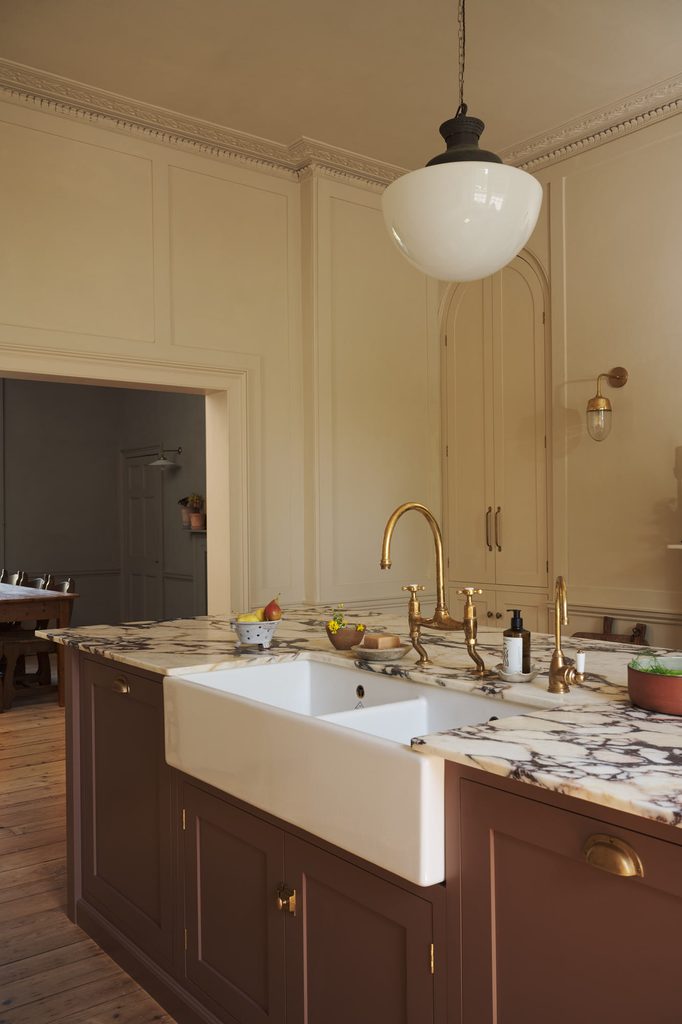
This Georgian kitchen design feels entirely at home within those surroundings. Original architectural details and understated cabinetry define the space.
Expressive natural stone completes it, elegant without feeling formal or dated.
This design contrasts pale timber with richly colored cabinetry and it pairs quiet cream walls with dramatic marble.
The Georgian architecture feels grand yet softened by everyday objects.
Rather than relying on elaborate decoration, the room draws its character from the relationship between materials, proportions and light.
A Kitchen That Respects Its Architecture
The architecture sets the tone.
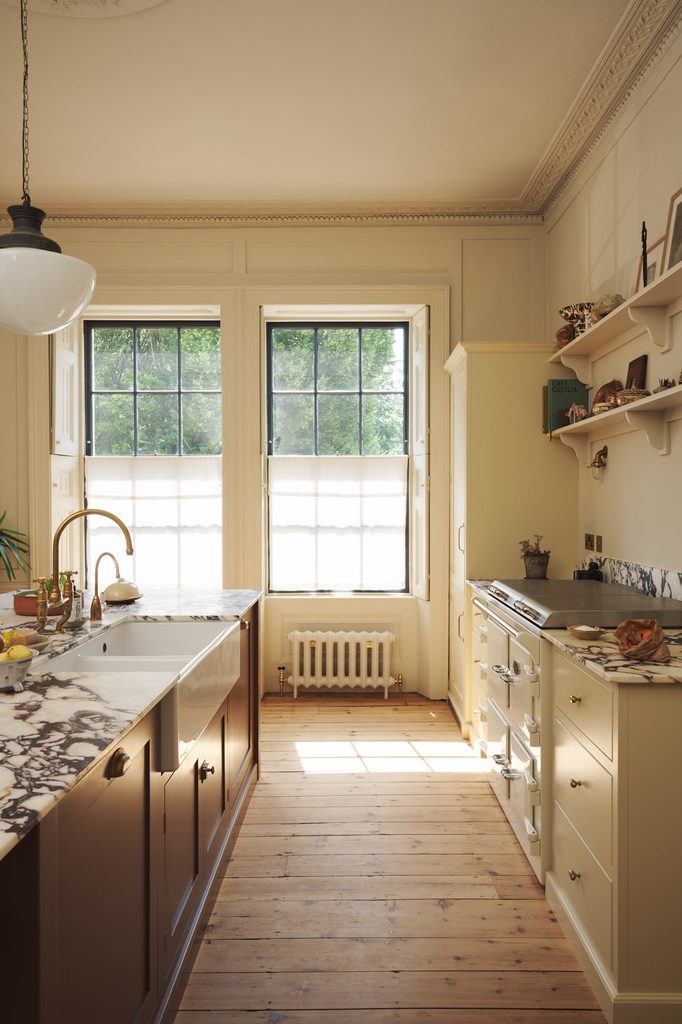
Decorative cornicing, paneled walls, traditional doors and generous Georgian windows give the room a strong sense of history.
These details have been sympathetically restored, allowing the original character of the house to remain central to the design.
The kitchen cabinetry works with this architectural framework rather than competing with it.
Shaker-style doors, simple detailing and carefully integrated storage create a functional kitchen that feels like a natural extension of the building.
The result is a space that avoids the temptation to make everything a feature.
Instead, the architecture, cabinetry and finishes work together to create a cohesive whole.
For designers working with period properties, it is a useful reminder that the existing building often provides the strongest starting point for a new interior.
Understanding what to preserve can be just as important as deciding what to introduce.
The Warmth of a Layered Neutral Palette
Color plays a defining role in the atmosphere of Clements House.
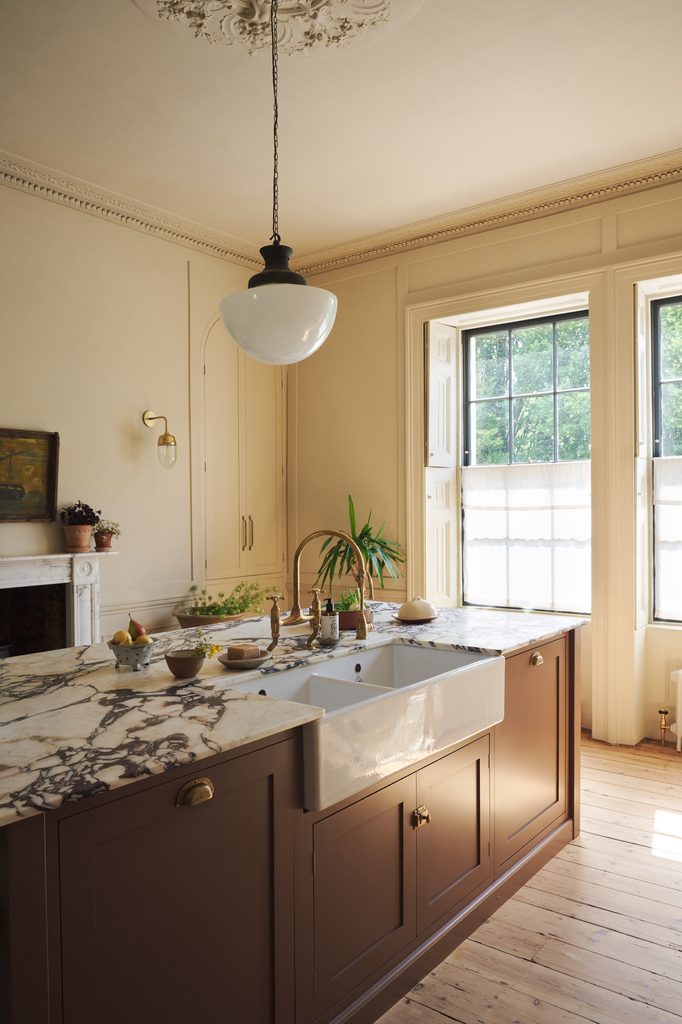
The walls and cabinetry are finished in warm, muted tones that soften the formality of the Georgian architecture.
Natural light enters through the tall windows, filtered by delicate cafe curtains, creating a gentle interplay of light and shadow across the room.
Underfoot, pale pitch pine floorboards introduce warmth, texture and a sense of age.
Their natural variation prevents the restrained color palette from feeling overly polished or uniform.
This is what makes the neutral scheme so effective.
Rather than relying on a single shade of cream, the design brings together different tonal and material qualities: painted surfaces, natural timber, soft textiles and reflective stone.
The effect is warm and quietly atmospheric.
Design insight: A successful neutral interior is rarely about using fewer colors alone. It is about choosing undertones that work together and introducing enough variation in texture, finish and natural material to give the space depth.
Calacatta Viola Marble: The Statement Material
The most dramatic element of the kitchen is its Calacatta Viola marble.
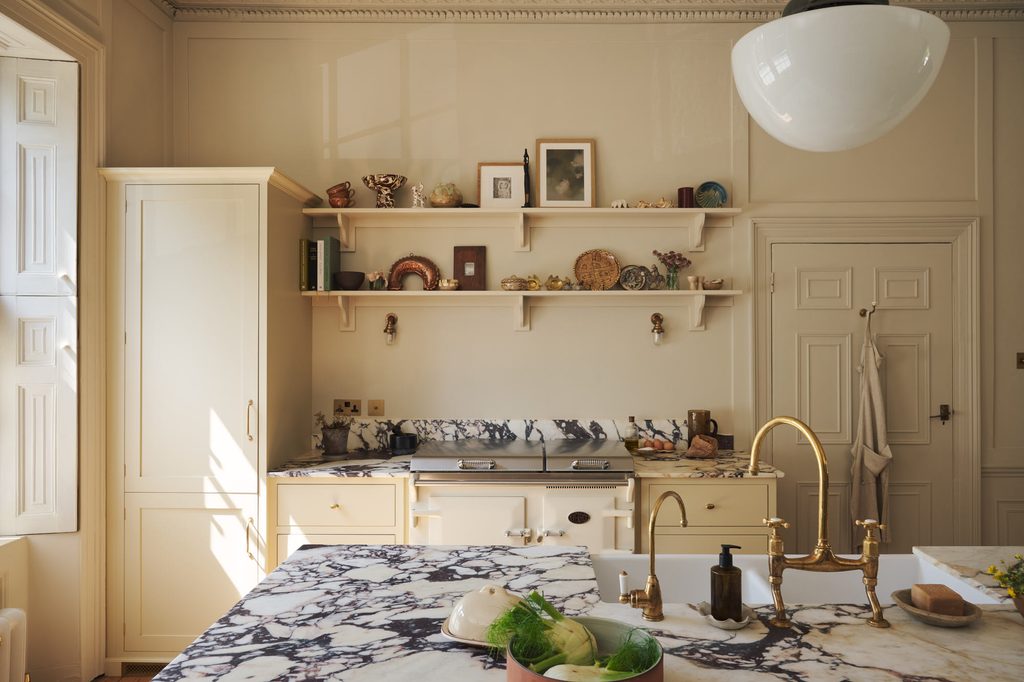
The stone’s distinctive veining introduces movement and visual intensity, creating a striking contrast with the simplicity of the Shaker cabinetry.
Rather than limiting the marble to a small accent, the design allows it to become a defining feature across the worktops and island.
Its expressive pattern brings an almost painterly quality to the room.
Deep veins travel across the pale surface, connecting the different work areas while adding a sense of individuality to the otherwise restrained palette.
The choice demonstrates the value of allowing one material to carry the visual weight of a space.
With the marble providing the drama, the cabinetry can remain relatively simple. The result feels balanced rather than busy, with each element having a clear purpose.
Aged brass taps and hardware introduce another layer of warmth.
Their golden tones complement the timber flooring and warm painted finishes, while their traditional character feels appropriate to the setting.
Design insight: When working with a highly expressive material, consider simplifying the surrounding finishes. A strong natural stone can provide all the visual interest a room needs without requiring additional patterns or decorative details.
A Deeper Color at the Center
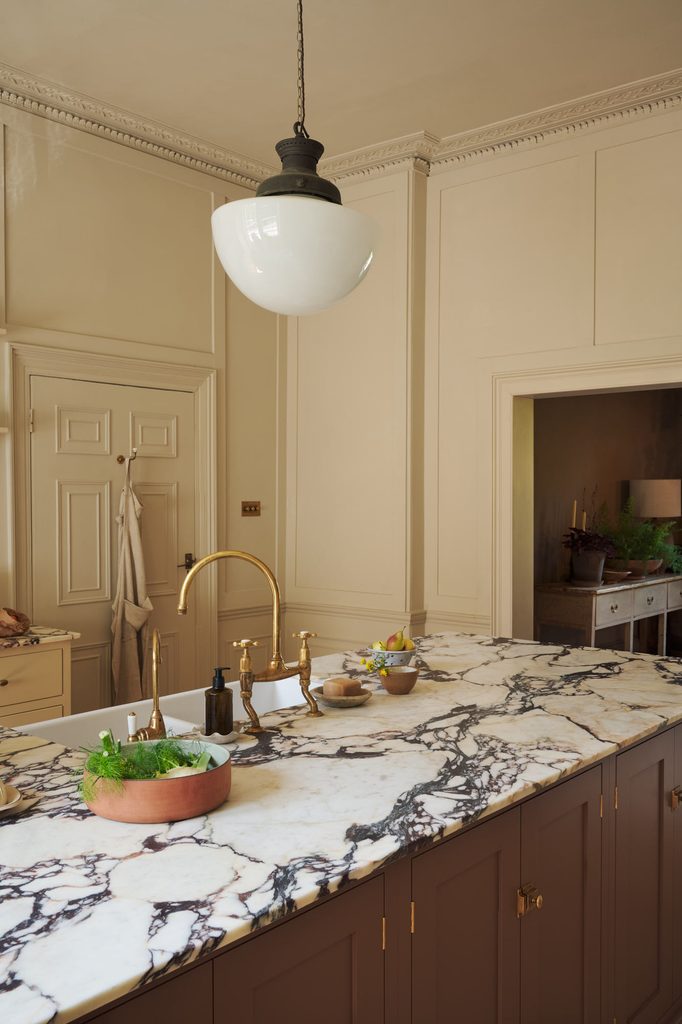
One of the most interesting decisions is the darker, plum-brown finish on the central island.
Against the pale floorboards and warm cream cabinetry, the island introduces depth and anchors the composition.
It gives the kitchen a clear focal point without disrupting the softness of the overall palette.
The color also creates a connection with the darker veining in the marble, allowing the cabinetry and stone to relate to one another rather than appearing as separate design statements.
This approach demonstrates how a restrained palette can accommodate a deeper, more characterful color.
The contrast is sufficient to define the island, but the earthy undertone keeps it connected to the surrounding materials.
It is a useful alternative to the more familiar combination of white cabinetry and a black island. Here, the contrast is softer, warmer and more nuanced.
Traditional Details, Contemporary Function
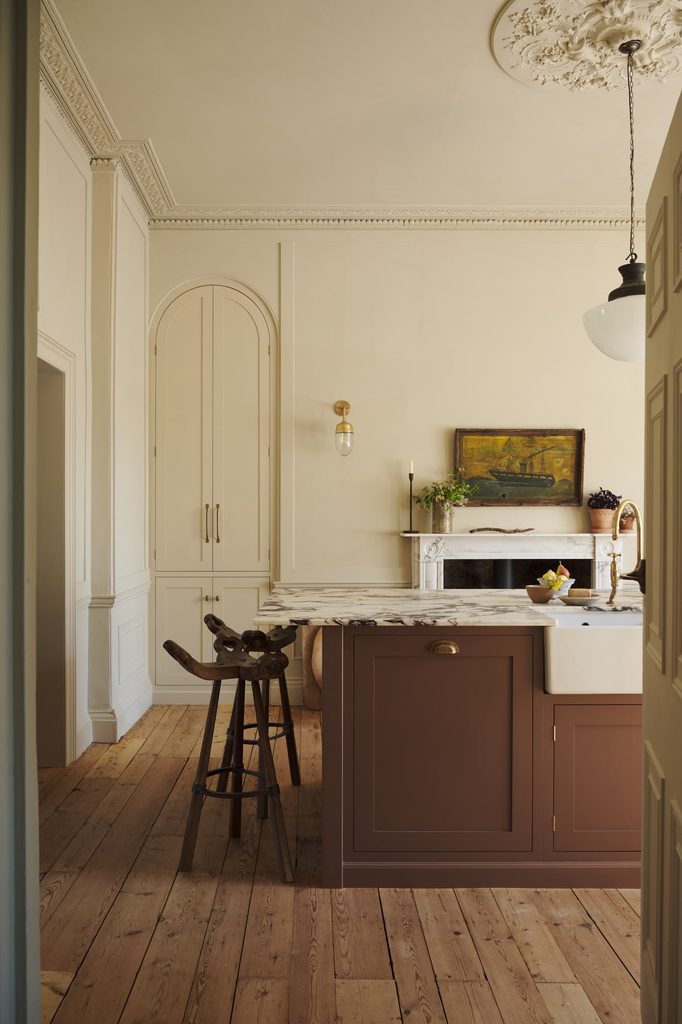
The kitchen’s traditional appearance does not come at the expense of functionality.
Storage is integrated into the cabinetry, allowing modern appliances and everyday essentials to sit discreetly within the overall design.
Open shelving provides space for ceramics, books and collected objects, bringing personality to the room without making it feel overly styled.
The shelves are particularly effective because they introduce an element of informality.
The displayed objects suggest a kitchen that is used and enjoyed, rather than one designed solely to be photographed.
A substantial farmhouse-style sink, traditional brass taps and practical work surfaces reinforce this balance between beauty and everyday use.
The kitchen feels considered, but not precious.
For contemporary interiors, this distinction matters. A successful kitchen needs to accommodate the routines of daily life while maintaining a clear design direction.
Concealed storage, durable working areas and carefully chosen display spaces can help achieve both.
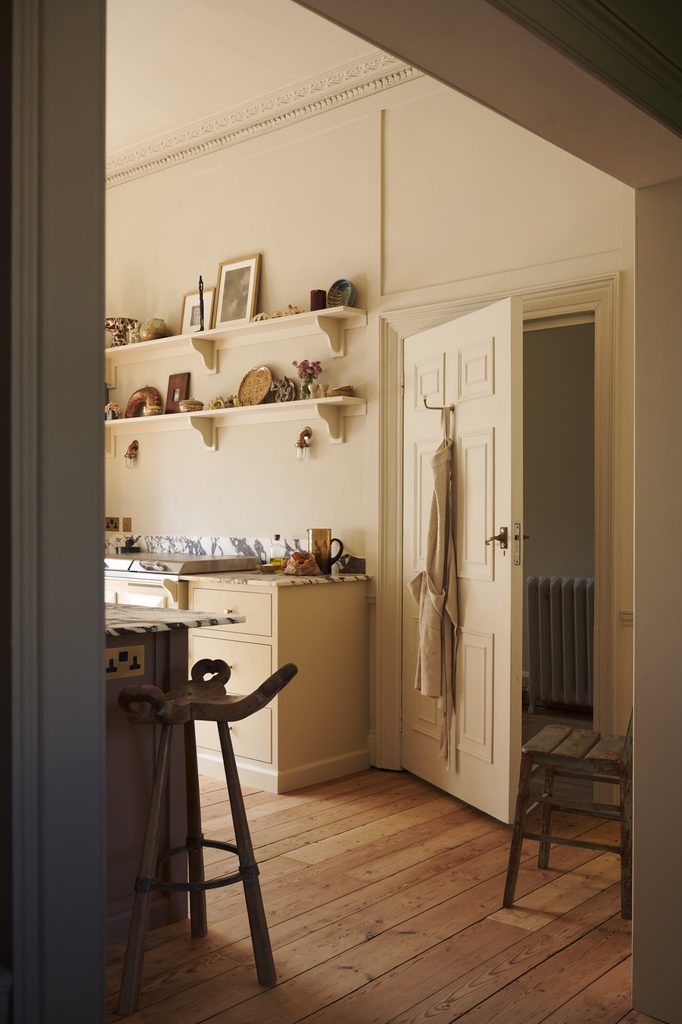
The Beauty of an Unforced Interior
What makes Clements House memorable is not any single feature, but the way its elements work together.
The restored Georgian architecture establishes the framework. Warm paint colors soften the room.
Pale timber introduces natural texture, while the Calacatta Viola marble provides a confident focal point.
The darker island adds depth, and the collected accessories bring a sense of personal history.
Nothing feels disconnected from the architecture, yet the room does not attempt to recreate a historical kitchen.
Instead, it finds a balance between heritage and modern living.
This is the enduring appeal of a well-designed traditional interior.
It respects the past without becoming a period recreation, and it accommodates contemporary needs without sacrificing character.
Clements House demonstrates that timelessness is not achieved by avoiding bold decisions.
It comes from knowing where to introduce contrast, where to exercise restraint and when to let the materials speak for themselves.
The result is a kitchen with what deVOL describes as humble grandeur: a space that feels elegant, functional and entirely at ease within its surroundings.
Project Details
Project: Clements House
Designer: deVOL Kitchens
Location: Bath, England
Kitchen style: Traditional Shaker
Key materials: Calacatta Viola marble, pitch pine floorboards, painted cabinetry and brass fittings
Featured collection: The Real Shaker Kitchen by deVOL
Explore the collection at deVOL Kitchens.
Photography courtesy of deVOL. Photographer credit and image-use permissions should be confirmed before publication.