Last Updated on June 12, 2026 by Rosslyn Tebbutt
Moroccan interior design is a vibrant celebration of culture, craftsmanship, and sensory experience.
Rooted in centuries of Berber, Arab, Moorish, and Mediterranean influences, this style is known for its layered textures, bold colors, geometric patterns, and artisan details.
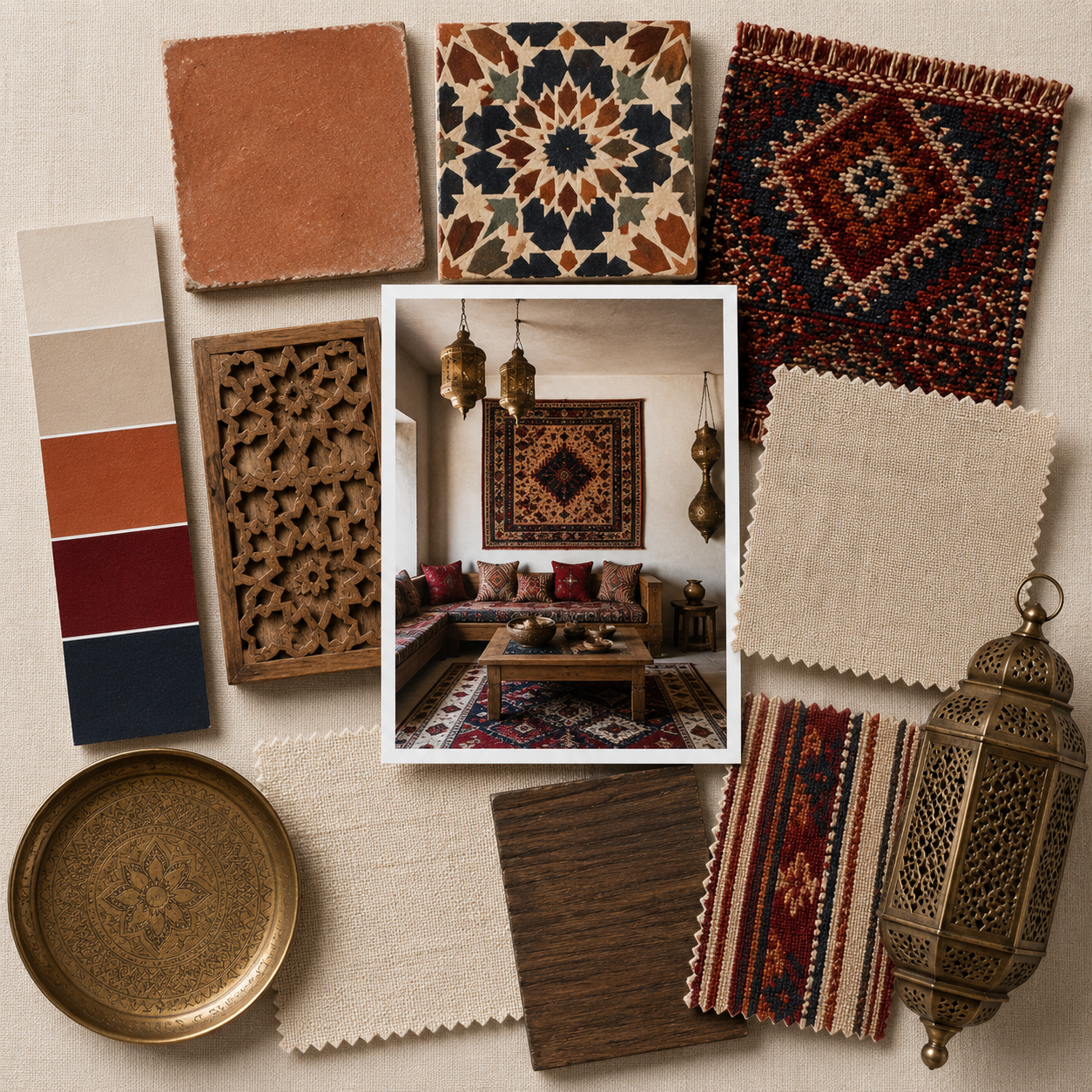


More than just aesthetics, Moroccan interiors tell stories—through handcrafted tiles, carved wood, woven textiles, and metalwork passed down through generations. Every corner invites warmth, curiosity, and connection.
Whether you’re drawn to the rich jewel tones, the intricate zellige tiles, or the laid-back luxury of a riad-inspired retreat, Moroccan design allows you to create a home full of soul, history, and sensual beauty.
This guide explores the core principles of Moroccan design, its stylistic variations, and how to bring its exotic elegance into your home—room by room.

Core Principles of Moroccan Design
To capture the essence of Moroccan interiors, it’s important to understand the foundational elements that bring this style to life.
1. Rich Color Palettes
Moroccan interiors embrace deep, saturated colors like emerald green, sapphire blue, ochre, ruby red, and terracotta. These tones are often contrasted with neutrals like sand, ivory, and warm wood.
2. Intricate Patterns and Geometry
Zellige tiles, arabesque motifs, and latticework feature heavily in walls, floors, and decor. Patterns are often symmetrical and repetitive, inspired by Islamic art and architecture.
3. Layered Textures
From handwoven rugs and carved wood to hammered metals and silk curtains, Moroccan design is all about tactile richness. The more layers, the more inviting the space becomes.
4. Artisanal Craftsmanship
Moroccan interiors highlight the handmade. Every item—whether a lantern, pouf, or mirror—is an opportunity to showcase artistry and detail.
5. A Balance of Opulence and Comfort
While Moroccan design can feel luxurious, it also emphasizes softness and comfort. Floor cushions, low seating, and flowing fabrics invite relaxation.

Moroccan Style Variations
Moroccan interior design can be interpreted in different ways, depending on your color and style preferences.
Traditional Moroccan
Features bold color palettes, classic mosaic tiles, arched niches, and layered rugs. A rich, maximalist aesthetic full of ornamentation and texture.
Modern Moroccan
Simplifies the style using neutral backgrounds, subtle patterns, and clean-lined furniture. Keeps key Moroccan details like lanterns, tiles, or carved woodwork.
Boho Moroccan
A relaxed, eclectic interpretation with an emphasis on nomadic style. Think faded textiles, layered rugs, and global-inspired accessories with Moroccan roots.
Coastal Moroccan
Inspired by homes along the Mediterranean coast—whitewashed walls, light blues, sandy tones, and breezy fabrics. More airy and minimal, with touches of Moroccan decor.
Room-by-Room Moroccan Styling Guide
Living Room
Seating: Use low, cushioned seating like floor poufs, Moroccan sofas, or daybeds. Upholster in velvet, leather, or richly patterned textiles.
Décor: Add layered Beni Ourain rugs, mosaic-topped tables, and ornate mirrors.
Lighting: Hang pierced brass lanterns or iron pendants for a warm, ambient glow.
Color: Use bold walls or accents—deep red, indigo, or emerald paired with gold or wood tones.

Kitchen
Cabinetry: Natural wood or painted finishes in earthy tones. Add carved details or antique hardware.
Backsplash: Install zellige tiles in geometric or floral patterns—either colorful or neutral.
Countertops: Use stone, marble, or concrete with a handmade finish.
Décor: Include ceramic tagines, hand-painted bowls, and copper utensils.

Dining Room
Table and Chairs: Choose a carved wood or mosaic inlay table with vintage-style wooden chairs or upholstered benches.
Lighting: Feature a grand Moroccan lantern or cluster of pendant lights.
Table Styling: Use colorful ceramics, brass trays, or fresh herbs for a rustic touch.

Bedroom
Bed Frame: Opt for a carved wooden headboard or upholstered frame with tassel or fringe details.
Textiles: Layer kilim or silk pillows, a richly embroidered bedspread, and textured throws.
Lighting: Use wall sconces, table lanterns, or hanging pendants with intricate cutouts.
Décor: A woven basket, an arched mirror, or calligraphy art can complete the look.

Bathroom
Vanity: Choose a tiled or carved wood vanity with a vessel sink in copper, stone, or ceramic.
Tiles: Cover walls or floors with zellige or patterned tiles for visual interest.
Lighting: Use low, warm lighting with antique brass or hammered metal fixtures.
Details: Add ornate trays, perfume bottles, and natural soaps for a spa-like experience.


Workspace
Desk Area: Use a handcrafted wooden desk with a patterned inlay or vintage finish.
Chair: Pair with a rattan, leather, or carved wood chair.
Décor: Keep a woven basket for storage, a patterned rug underfoot, and a brass desk lamp.

Styling Small Spaces in Moroccan Design
- Use mirrors with arched frames to reflect light and add depth.
- Opt for multi-use furniture like poufs, nesting tables, or storage benches.
- Stick to a few statement pieces—like a tiled table or lantern—to avoid visual clutter.
- Use warm neutrals as your base, adding color through textiles and accessories.
Moroccan Lighting Guide
Chandeliers: Large pierced lanterns or metal chandeliers with colored glass insets.
Pendant Lights: Hang at various heights in groups or alone for dramatic effect.
Wall Sconces: Use brass, bronze, or iron with filigree detailing.
Table Lamps: Choose ceramic or mosaic bases with linen or silk shades.
Candlelight: Brass or glass lanterns with candles add authentic ambiance.

Sustainability in Moroccan Design
- Support fair-trade artisans and cooperatives producing handmade goods.
- Use natural materials like wool, clay, metal, and wood.
- Buy vintage Moroccan rugs or furniture to reduce new manufacturing.
- Avoid mass-produced knockoffs—invest in pieces with provenance and craftsmanship.

DIY and Budget-Friendly Moroccan Decor Ideas
Tile Tray: Use adhesive Moroccan-style tiles on a wood tray for a patterned centerpiece.
Mosaic Mirror Frame: Add broken tile pieces around a mirror using grout for a custom look.
Painted Lanterns: Upcycle old lanterns with brass spray paint and glass inserts.
Floor Pouf: Sew your own with kilim-style fabric or upcycled textile remnants.
Brass Wall Art: Frame brass cutout designs or stencil Moroccan motifs onto canvas.
Do’s
✔ Embrace bold patterns and rich colors
✔ Mix metals, woods, and woven textures
✔ Layer textiles—rugs, pillows, throws—for warmth
✔ Use handcrafted and artisanal décor
✔ Celebrate cultural storytelling through design
Don’ts
✖ Don’t match everything—Moroccan style loves contrast
✖ Don’t rely on minimalism—this style thrives in detail
✖ Don’t overlook lighting—ambient layers are essential
✖ Don’t use synthetic imitations of traditional materials
✖ Don’t crowd the space—balance vibrancy with flow

Conclusion
Moroccan interior design invites you to escape the ordinary and immerse your home in color, culture, and craft. It’s a style that’s both luxurious and grounded, vibrant yet comfortable—a true expression of warmth and artistry.
Whether you’re inspired by a Moroccan riad or just want to add soulful details to your home, this guide can help you bring the magic of Marrakesh, Fez, or the Atlas Mountains into your everyday life.
Looking for more globally inspired style guides? Stay tuned for more cultural interiors, timeless design trends, and thoughtful home inspiration.