Last Updated on March 26, 2026 by Rosslyn Tebbutt
Choosing the right fabric is one of the most important decisions when installing outdoor blinds Perth.
The fabric you select affects privacy, airflow, heat control, durability, and how your outdoor space feels throughout the year.
With Perth’s strong sun, coastal breezes, and winter rain, fabric choice is not just about appearance.
It directly impacts performance. Here is what to consider before making your decision.
What You Want the Blinds to Do?
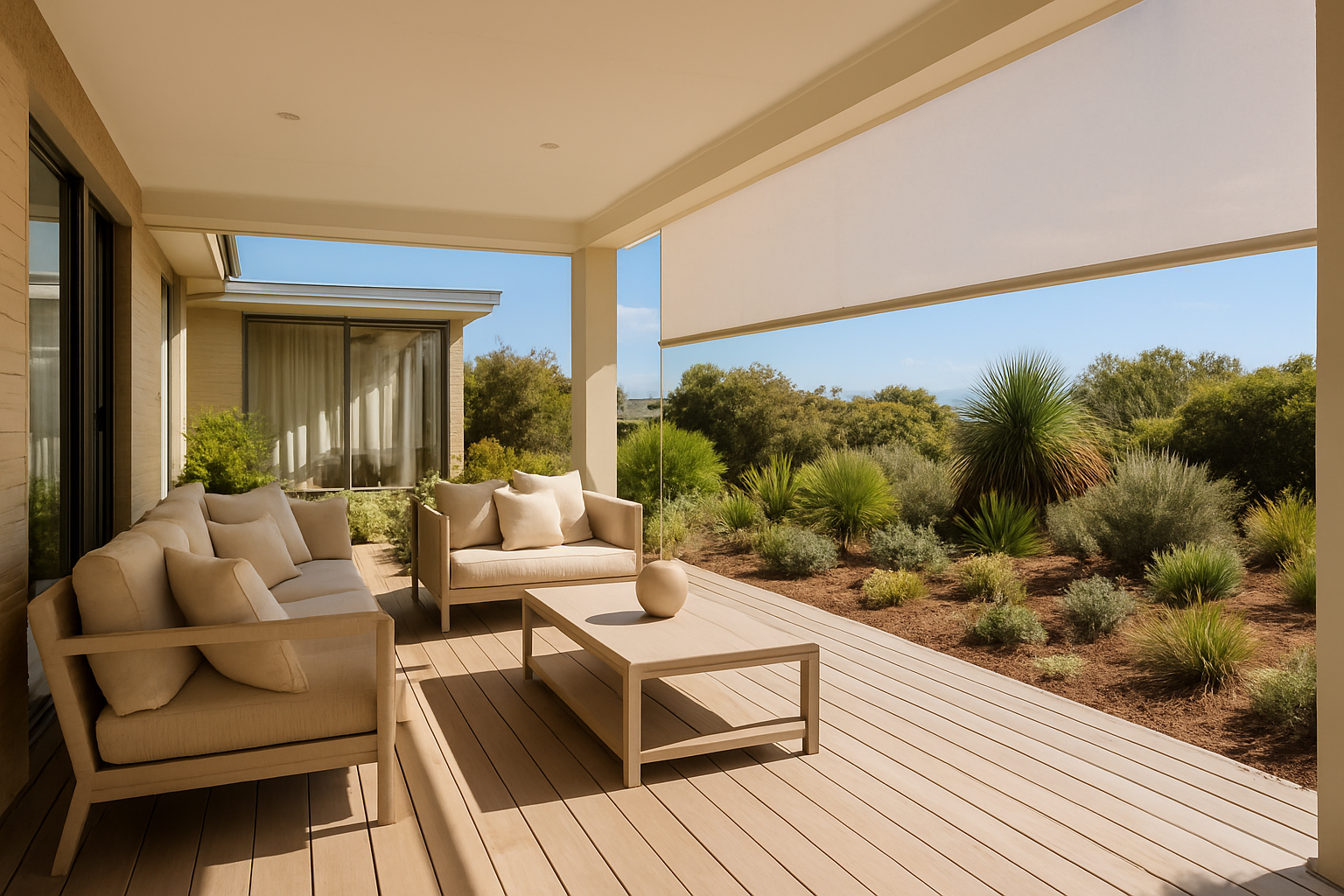
Start by clarifying the main purpose of your outdoor blinds.
Are you trying to block the wind? Reduce glare? Keep rain out? Increase privacy from neighbours? Or create a more enclosed, all-weather alfresco area?
Different fabrics are designed to solve different problems. Choosing the wrong one can leave you disappointed, even if the blinds look great.
Mesh Fabrics: Ideal for Sun and Airflow
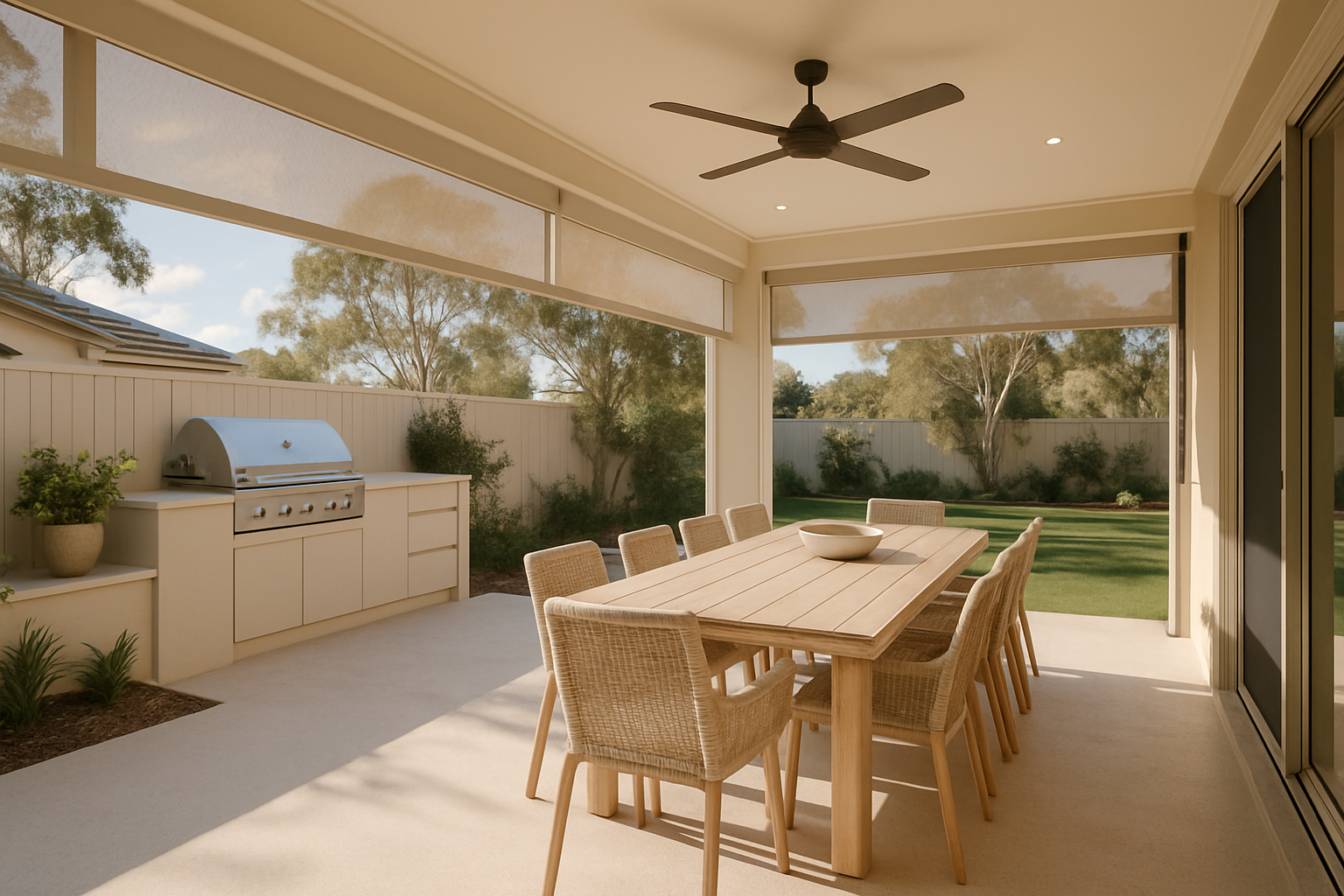
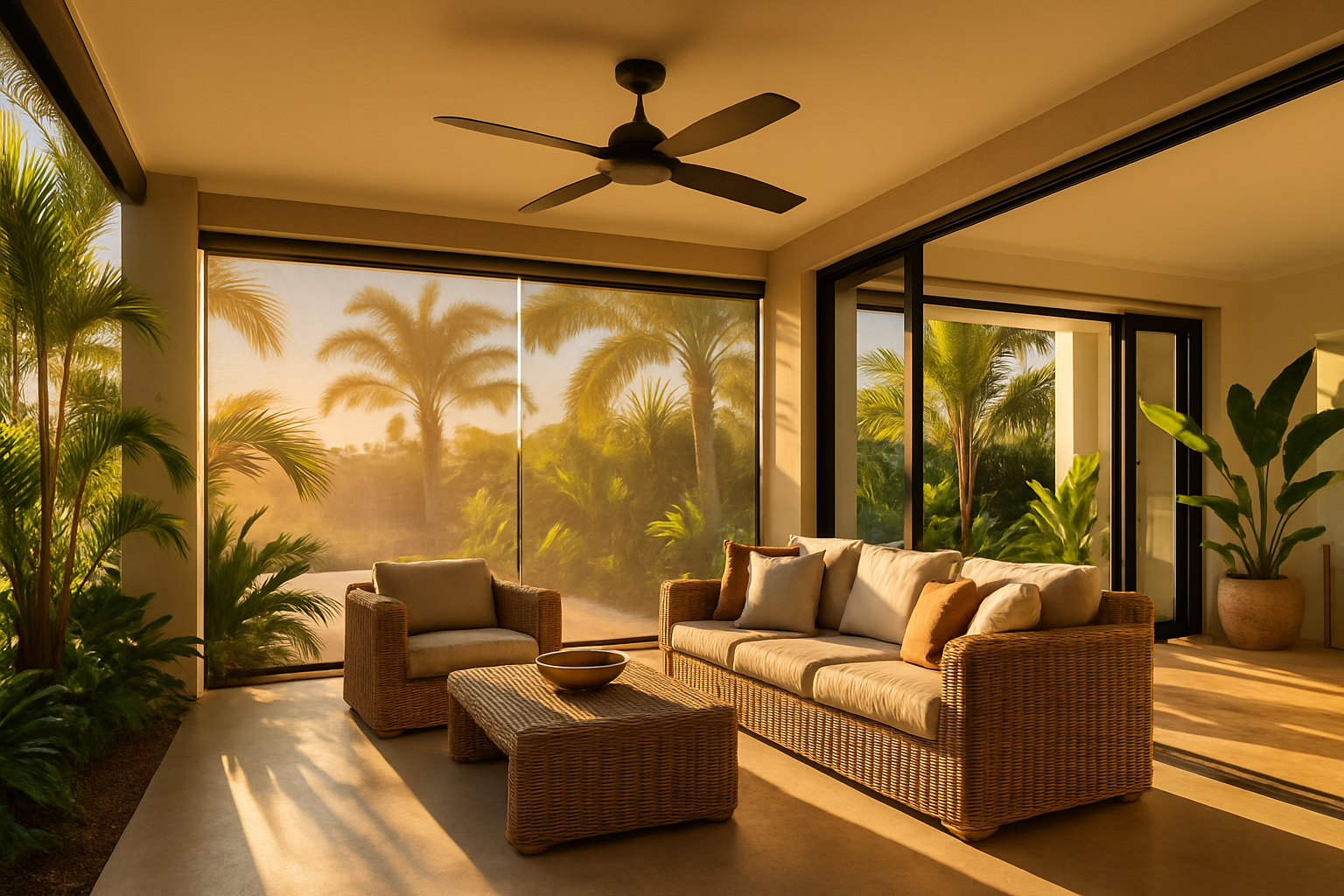
Mesh fabrics are one of the most popular choices for outdoor blinds in Perth. They are designed to reduce glare and UV exposure while still allowing air to circulate.
High-quality mesh fabrics block a large percentage of UV rays, which helps protect furniture and keeps the space cooler. At the same time, they maintain outward visibility during the day.
Mesh blinds are ideal for patios and balconies where airflow is important. They reduce heat without creating a fully sealed environment.
However, mesh fabrics do not completely block wind or rain. They are better suited for shade and privacy rather than full weather protection.
Clear PVC: Maximum Weather Protection
If your priority is wind and rain protection, clear PVC is often the better choice.
Clear PVC outdoor blinds create a physical barrier that blocks wind and keeps rain out while still allowing light through. This makes them popular for enclosing alfresco areas and verandahs.
In winter, clear PVC helps retain warmth, especially when combined with outdoor heaters. It can effectively turn an exposed patio into a usable extension of the home.
The trade-off is reduced airflow. In summer, fully enclosed PVC blinds can trap heat if ventilation is not managed carefully.
Tinted or Tinted PVC Options
Tinted PVC offers a middle ground between clear PVC and mesh. It reduces glare and heat more effectively than clear PVC while still providing weather protection.
This option suits areas exposed to strong afternoon sun where brightness is a concern. It also adds a modern look compared to completely transparent panels.
However, visibility may be slightly reduced, especially at night.
Consider Perth’s Climate
Perth’s climate plays a major role in fabric selection. With intense UV exposure and strong sea breezes in many suburbs, durability matters.
UV-stabilised fabrics are essential to prevent fading, cracking, or brittleness over time. Coastal homes in particular need materials resistant to salt exposure.
For homes near the coast, choosing corrosion-resistant fittings alongside the right fabric also supports long-term performance.
Think About Privacy Levels
Privacy needs vary from home to home. Mesh fabrics provide daytime privacy because it is harder to see in from outside when it is brighter outdoors.
At night, however, mesh offers less privacy if lights are on inside the enclosed area.
PVC options provide stronger privacy when tinted but still allow some visibility. If privacy is a primary concern, discuss fabric openness ratings with your installer.
Openness Factor and Light Control
Mesh fabrics come in different openness factors, which determine how much light and air pass through.
A lower openness factor blocks more sun and increases privacy but reduces airflow and visibility. A higher openness factor allows more airflow and view but offers slightly less sun protection.
For outdoor blinds Perth installations, selecting the right openness factor ensures the blinds perform as expected during both summer and winter.
Maintenance and Cleaning
Different fabrics require different levels of maintenance.
Mesh fabrics are generally low maintenance and can be cleaned with mild detergent and water. Clear PVC may require more careful cleaning to prevent scratching and maintain clarity.
If your outdoor area is exposed to dust, salt, or tree debris, consider how easy the fabric is to maintain over time.
Aesthetic Considerations
Fabric choice also affects how your outdoor space looks from both inside and outside.
Neutral tones such as grey, charcoal, and beige tend to complement most Perth homes and provide a modern finish. Lighter colours reflect more heat but may show dirt more easily.
The fabric should blend with your home’s exterior and enhance the overall design rather than dominate it.
Professional Advice Makes a Difference
Choosing outdoor blinds is not just about fabric samples. Installation method, track systems, and orientation all influence performance.
Professional installers familiar with Perth conditions can recommend fabrics suited to your location, sun exposure, and wind patterns.
They can also explain how different materials behave throughout the year.
A tailored recommendation ensures you get the best balance of shade, airflow, privacy, and weather protection.
Final Thoughts on Choosing Outdoor Blind Fabric
Selecting the right fabric for outdoor blinds Perth comes down to purpose, climate, and personal preference.
Mesh fabrics are excellent for sun control and airflow. Clear PVC provides stronger wind and rain protection. Tinted options offer a compromise between the two.
By carefully considering how you use your outdoor space and the conditions it faces, you can choose a fabric that delivers comfort and durability for years to come.