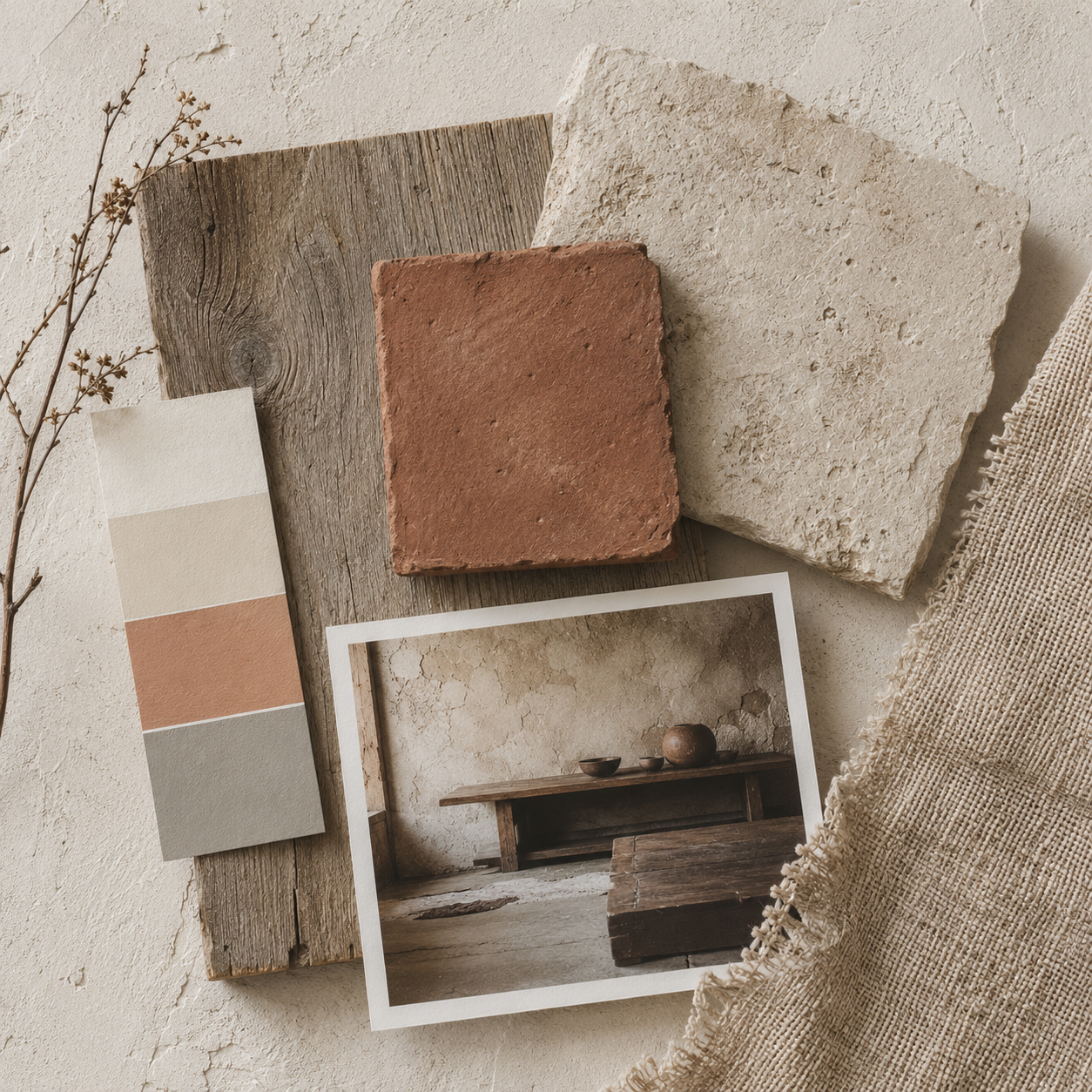
Wabi-Sabi interior design is a serene, minimalist style rooted in Japanese philosophy, celebrating the beauty of imperfection, impermanence, and authenticity. It encourages a slower, more intentional way of living by focusing on natural materials, weathered textures, and spaces that feel grounded, lived-in, and deeply human.
Unlike styles that prioritize perfection and symmetry, Wabi-Sabi finds elegance in the imperfect and incomplete — a cracked ceramic bowl, a weathered wooden beam, or an uneven plaster wall. These subtle imperfections aren’t flaws but features that reflect the passage of time and the richness of real life.
Color palettes are muted and earthy: warm neutrals, greige, stone gray, moss green, and raw beige form the foundation. Materials are organic and tactile, such as linen, clay, stone, reclaimed wood, and handmade ceramics. Surfaces are matte, textures are rough or unfinished, and every item has a purpose — whether practical or poetic.
Furniture in Wabi-Sabi interiors is simple, low to the ground, and chosen for comfort and authenticity rather than ornamentation. Lighting is soft and ambient, casting shadows that add dimension and quiet beauty. Décor is minimal but deeply meaningful — a single branch in a vase, a handcrafted tea set, or a linen throw adds depth without clutter.
This style overlaps naturally with minimalism, Japandi, and Zen interiors, but Wabi-Sabi sets itself apart by embracing the natural decay and aging process. It’s not about sleekness or cold precision — it’s about feeling, presence, and quiet appreciation.
Ideal for those seeking calm, connection, and mindfulness in their home, Wabi-Sabi offers a gentle design philosophy that brings peace to modern living. It’s a perfect choice for bedrooms, bathrooms, studios, and any retreat-like space that benefits from stillness and soul.
👇 Scroll down to explore SampleBoard’s curated collection of Wabi-Sabi interior design mood boards, styling guides, and material inspirations. Discover how to bring quiet beauty, humble elegance, and meaningful simplicity into your space — one imperfect detail at a time.
✨ Explore More Interior Design Styles
See how Wabi-Sabi connects with organic, minimalist, and Japanese-inspired design philosophies.
Explore the full Interior Design Styles Guide →