Last Updated on July 7, 2026 by Rosslyn Tebbutt
Japandi interior design is the perfect fusion of two minimalist powerhouses: Japanese Zen and Scandinavian simplicity.
This aesthetic combines the timeless elegance of Japanese craftsmanship with the cozy, functional sensibility of Nordic design—creating interiors that feel both tranquil and livable.
Japandi belongs to a broader cluster of calm, considered aesthetics — explore all interior design styles to understand how it relates to adjacent movements.
- Core Principles of Japandi Design
- Japandi Style Variations
- Japandi Furniture Edit
- Room-by-Room Japandi Styling Guide
- Styling Small Spaces in Japandi Design
- Japandi Lighting Guide
- Sustainability in Japandi Design
- DIY and Budget-Friendly Japandi Decor Ideas
- Japandi Decor Edit
- Japandi Design: Do's and Don'ts
- Japandi Sourcing Notes
- Japandi Style Guide
- Take it Further
- Conclusion
Continue the Journey
Love Japandi? Build it inside Studio.
Explore the complete JUNIPER toolkit — every resource you need to develop, present, and deliver this style with confidence.
Rooted in natural materials, muted tones, and mindful curation, Japandi celebrates intentional living. It’s not just about how a space looks, but how it feels—calm, clutter-free, and deeply connected to nature.
Whether you’re redesigning a room or refreshing a small corner of your home, Japandi invites you to slow down, simplify, and surround yourself with beauty that serves a purpose.
In this guide, we’ll explore the core elements of Japandi design trend, its stylistic variations, and practical ways to bring this understated yet sophisticated style into every room.
Core Principles of Japandi Design
To embrace Japandi interiors, it’s important to understand the design philosophy behind the style’s seamless blend of East and West.
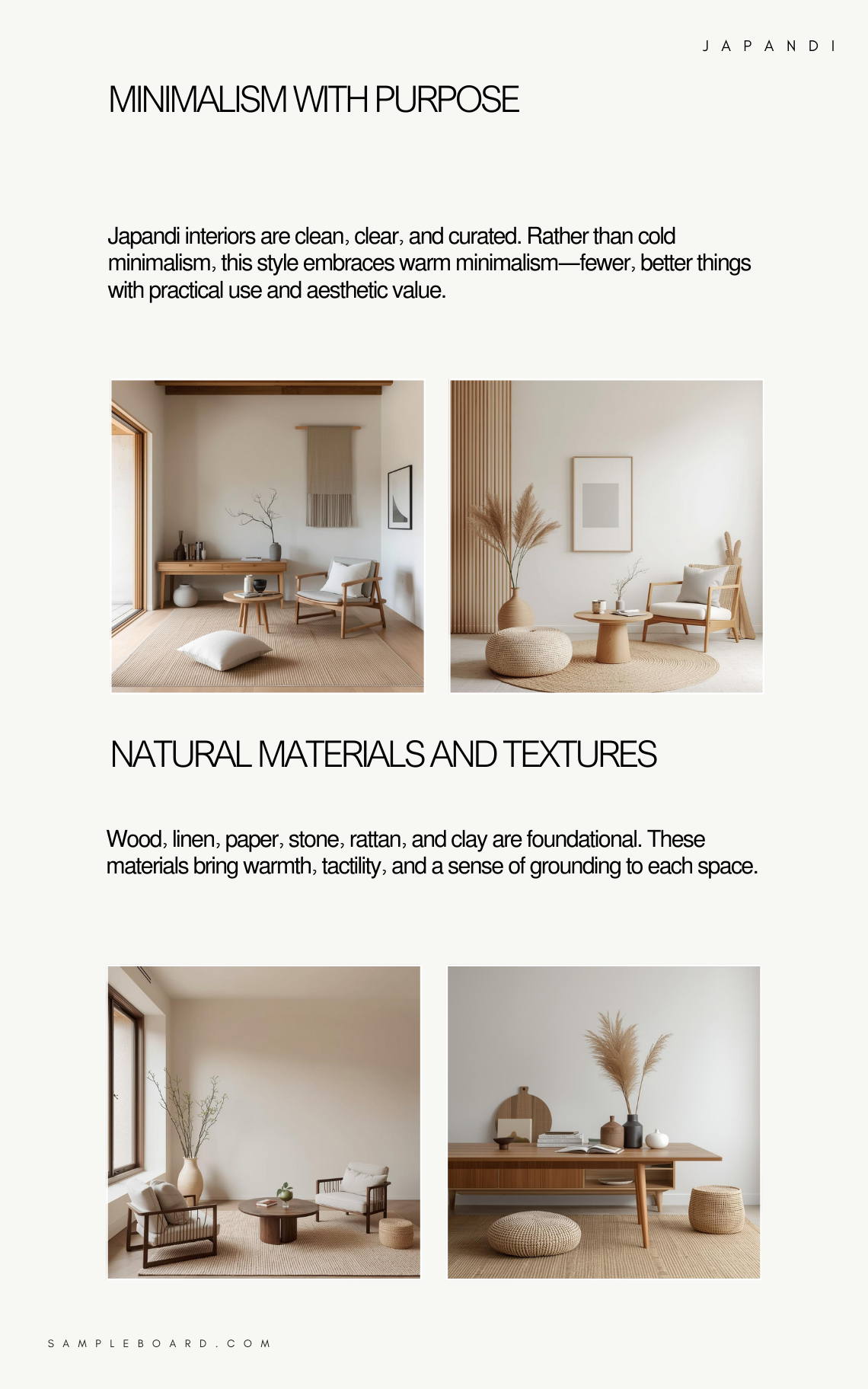
1. Minimalism with Purpose
Japandi interiors are clean, clear, and curated. Rather than cold minimalism, this style embraces warm minimalism—fewer, better things with practical use and aesthetic value.
2. Natural Materials and Textures
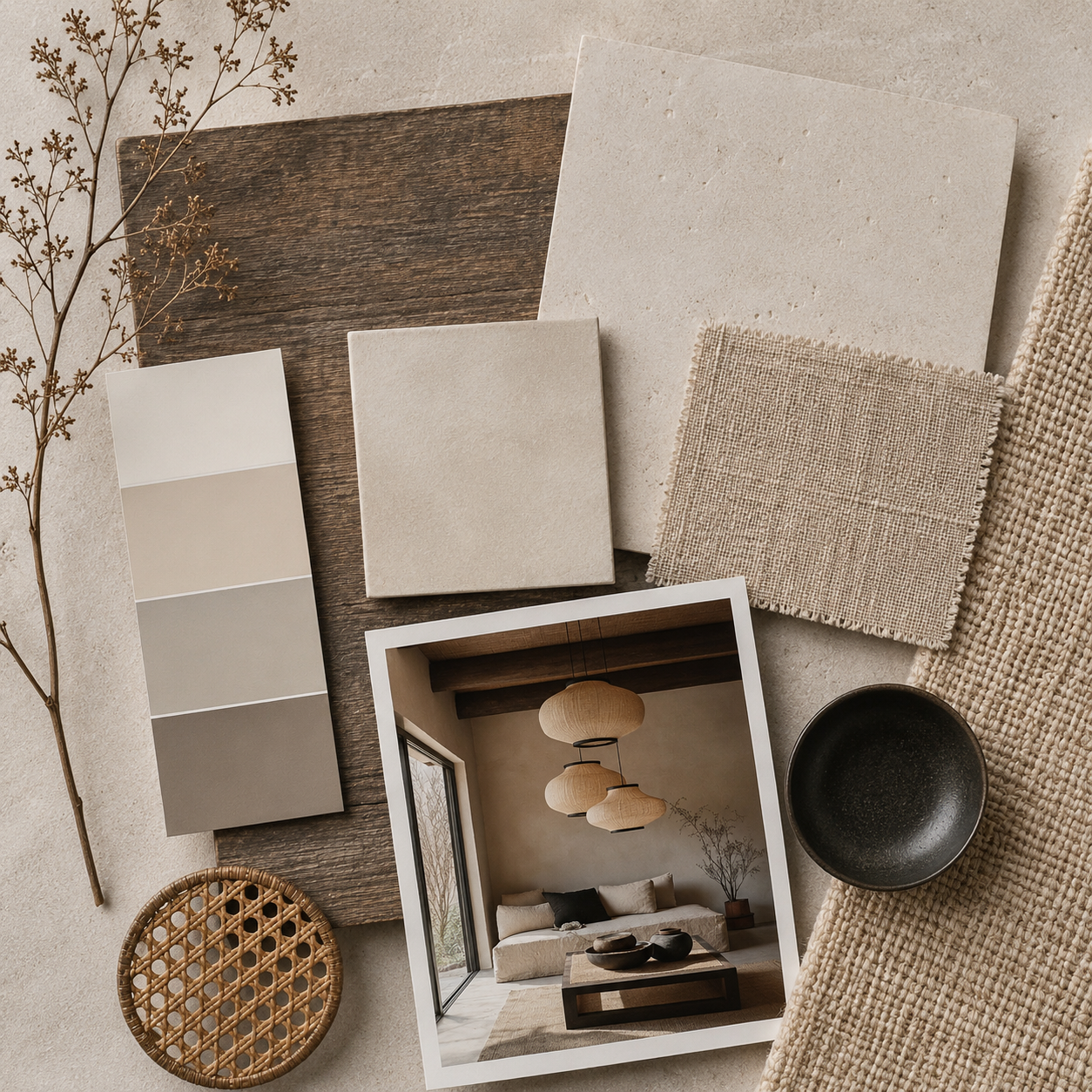
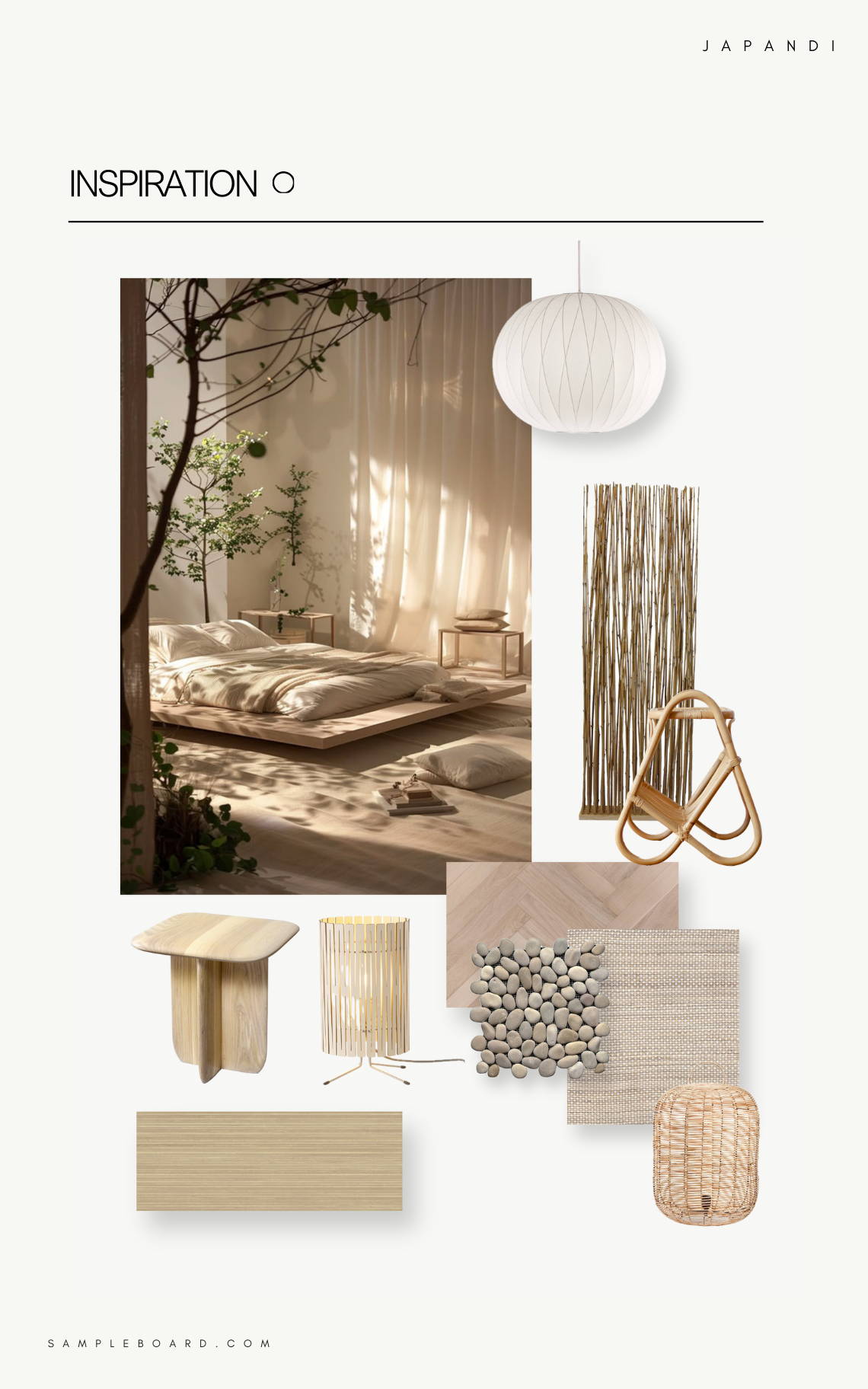
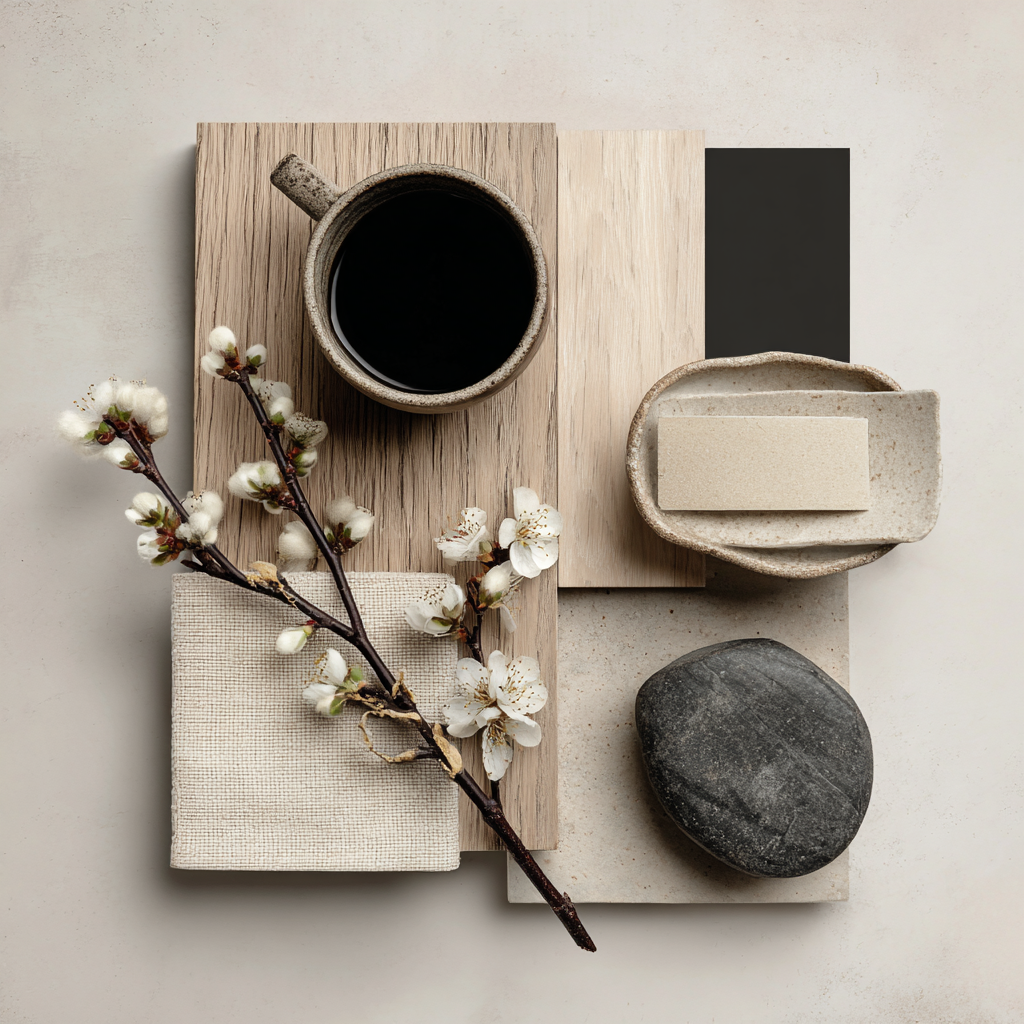
Wood, linen, wool, and natural textiles, paper, stone, rattan, and clay are foundational. These materials bring warmth, tactility, and a sense of grounding to each space.

3. Neutral and Muted Color Palette
Think soft beiges, warm whites, dusty greys, muted greens, and occasional black accents. Inspired by the 2026 Emotional Neutrals palette.
Japandi tones are subdued, reflecting the calm of Japanese Zen and the coziness of Scandinavian design.
4. Balance of Form and Function
Each element in a Japandi space is both beautiful and useful. Furniture is low-profile, ergonomic, and built with craftsmanship in mind.
5. Wabi-Sabi Meets Hygge
The Japanese concept of wabi-sabi (the beauty of imperfection) meets the Danish idea of hygge (cozy comfort). The result is an aesthetic that’s visually restrained yet emotionally warm.


Japandi Style Variations
While the core values stay consistent, Japandi design can lean more toward Japanese or Scandinavian influences depending on personal taste.
Zen-Leaning Japandi
Emphasizes clean lines, open floor plans, and muted palettes. Spaces feel serene and sparse, with strong Japanese influences like shoji screens and low furniture.

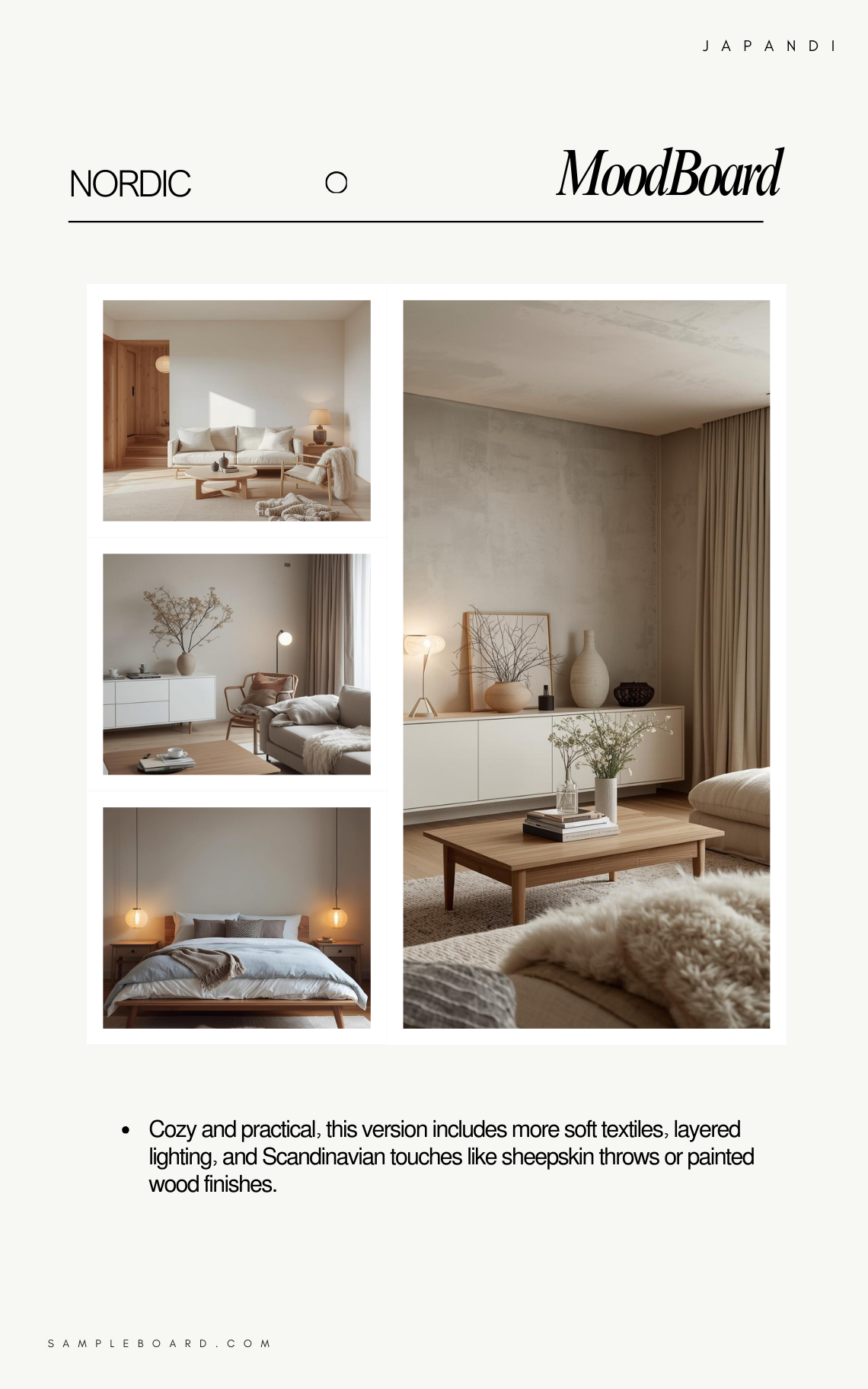
Nordic-Leaning Japandi
Cozy and practical, this version includes more soft textiles, layered lighting, and Scandinavian touches like sheepskin throws or painted wood finishes.
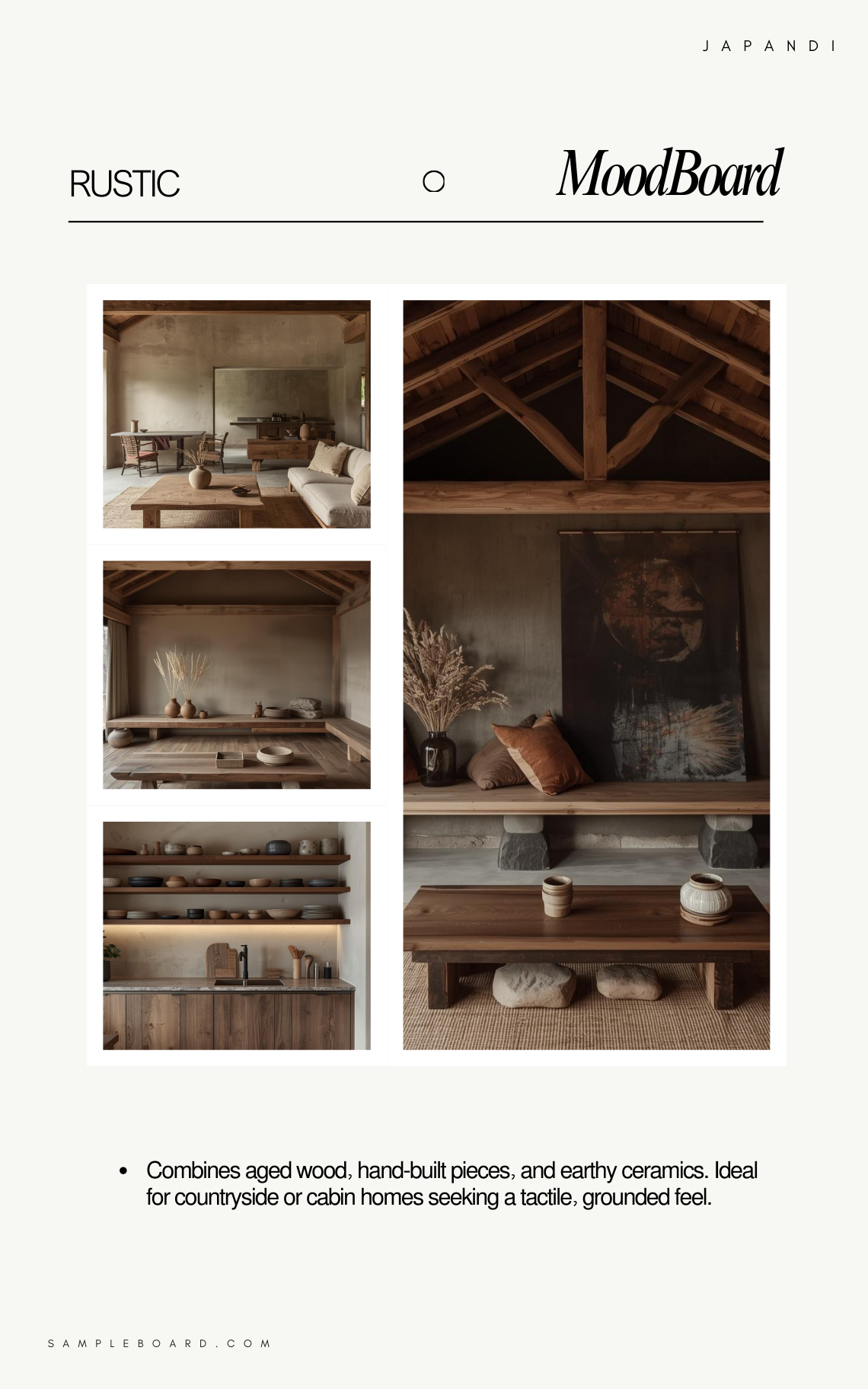
Rustic Japandi
Combines aged wood, hand-built pieces, and earthy ceramics. Ideal for countryside or cabin homes seeking a tactile, grounded feel.
Contemporary Japandi
Pairs minimalist silhouettes with modern materials like matte black metal, tinted glass, or clean-cut stone for an elevated, urban approach.

Japandi Furniture Edit
Room-by-Room Japandi Styling Guide
Living Room
- Seating: Choose a low-profile sofa in linen, cotton, or boucle. Add a wood-framed armchair for contrast.
- Décor: Use a simple ceramic vase, a single bonsai, or sculptural branches. Keep surfaces mostly clear.
- Materials: Oak, ash, and walnut wood work well, paired with woven textures and stone accents.

Kitchen
- Cabinetry: Flat-panel wood cabinets in light or mid-tones, or muted painted finishes like sage or charcoal.
- Finishes: Use matte hardware, concrete or wood countertops, and natural stone backsplashes.
- Accessories: Keep counters clear except for beautiful essentials—think handmade mugs or a breadboard.

Dining Room
- Table and Chairs: A long wooden table with bench seating or mixed minimalist chairs.
- Lighting: Opt for paper lantern pendants, sculptural LED fixtures, or clay dome lights.
- Table Styling: Keep it minimal—one centerpiece like a shallow ceramic bowl or small potted plant.


Bedroom
- Bed Frame: Low wood platform beds are ideal, often paired with simple fabric or slatted headboards.
- Textiles: Layer linen sheets, cotton throws, and neutral cushions. Use texture, not pattern.
- Lighting: Choose soft bedside lamps or wall sconces with paper or fabric shades.
- Décor: A single art piece or scroll, a branch arrangement, or a small stack of books works well.


Bathroom
- Vanity: Clean-lined wood or concrete with open shelving for baskets or towels.
- Tiles: Choose handmade-look tiles in soft neutrals or earth tones.
- Lighting: Wall lights with diffused light and no harsh glare.
- Décor: Add a small plant, natural soapstone dishes, or bamboo accessories.

Workspace
- Desk Area: A pared-back wood desk with a single drawer and minimal clutter.
- Chair: Opt for ergonomic wood or padded Scandinavian-style seating.
- Décor: Include a small ceramic tray, a calming candle, or a minimal pinboard.

Styling Small Spaces in Japandi Design
- Use light-colored woods and mirrors to expand visual space.
- Select furniture with exposed legs to create openness.
- Avoid crowding—leave negative space around each item.
- Choose one or two textural accents (e.g. a linen curtain or woven lamp shade).

Japandi Lighting Guide
- Chandeliers: Minimalist wood or paper lantern-style chandeliers with simple silhouettes.
- Pendant Lights: Ideal over dining tables or counters—choose hand-formed or matte finishes.
- Wall Sconces: Clean, curved forms in wood, ceramic, or brass.
- Recessed Lighting: Use sparingly—opt for ambient floor or table lamps instead.
- Table Lamps: Rounded, low-profile bases with paper or linen shades are best.
Sustainability in Japandi Design
- Embrace slow design—choose timeless pieces that age beautifully.
- Source sustainably harvested wood and non-toxic finishes.
- Use organic textiles, such as linen, hemp, or cotton.
- Shop local and handmade when possible.
- Invest in fewer, high-quality items rather than fast furniture.

DIY and Budget-Friendly Japandi Decor Ideas
- Minimalist Wall Shelf: Install a floating wood shelf to display a curated vignette.
- Clay Decor: Make your own bowls, candle holders, or incense trays with air-dry clay.
- Fabric Wall Art: Frame neutral linen or create a scroll with painted symbols.
- Upcycled Wood Bench: Sand and stain an old bench for a rustic-modern entryway piece.
- Handmade Paper Lanterns: Create soft pendant lights with rice paper and bamboo frames.
Japandi Decor Edit
Japandi Design: Do’s and Don’ts
Do’s
✔ Choose natural, sustainable materials
✔ Stick to a muted, earthy color palette
✔ Prioritize craftsmanship and functional design
✔ Leave open space and allow rooms to breathe
✔ Mix Japanese and Scandinavian influences intentionally
Don’ts
✖ Don’t overdecorate—Japandi is about restraint
✖ Don’t use glossy or synthetic finishes
✖ Don’t add bold colors or graphic patterns
✖ Don’t mix too many furniture styles—consistency is key
✖ Don’t overcrowd surfaces—minimalism is essential
Japandi Sourcing Notes
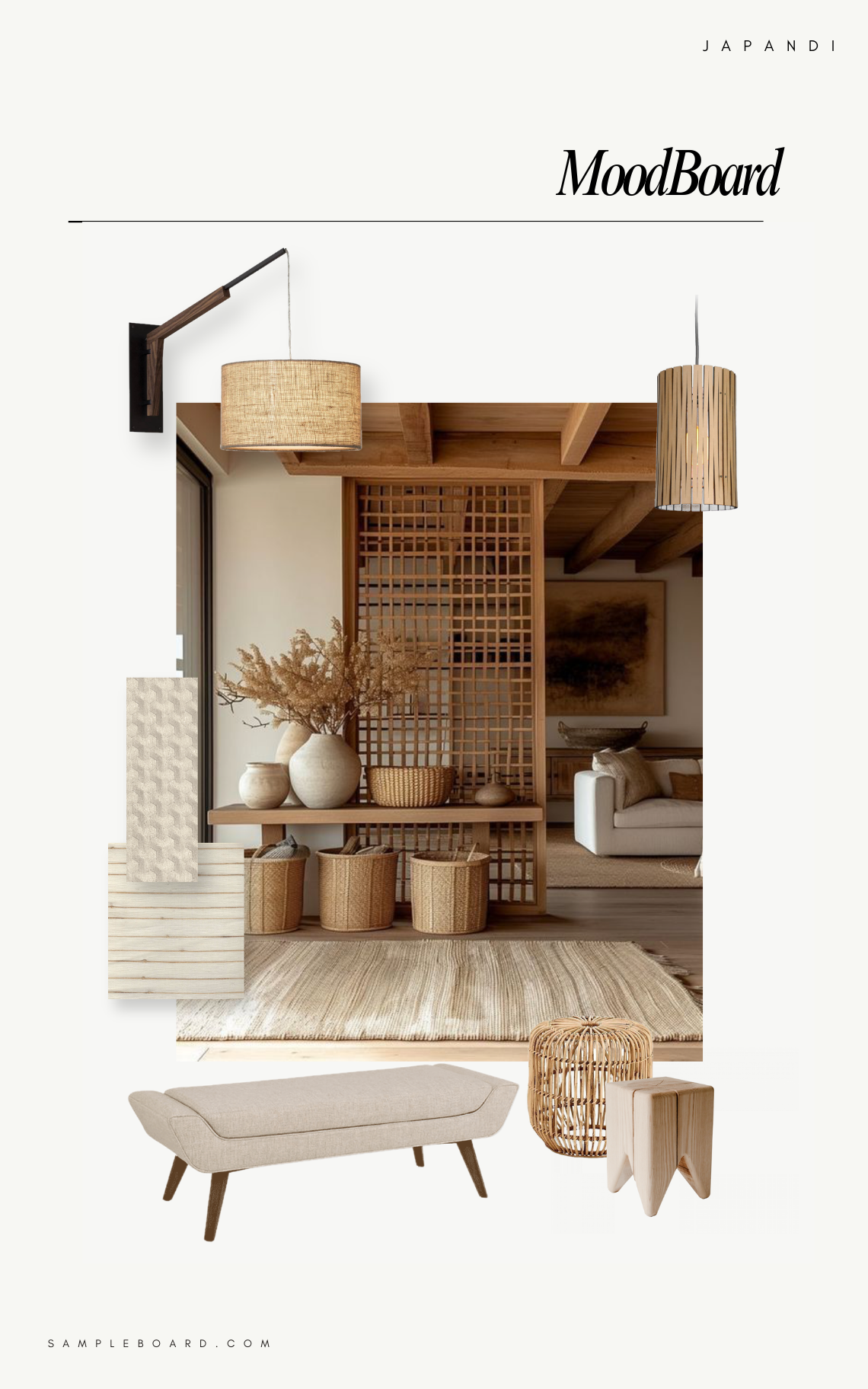
One of the challenges with Japandi is that many products imitate the aesthetic without sharing the underlying principles. The goal is not simply to find pale timber and neutral textiles, but to select pieces with material honesty, restraint, and longevity.
To help readers explore the style in practice, I’ve curated a collection of furniture, lighting, textiles, and accessories that align with Japandi’s material and spatial philosophy.
Use it as a reference point rather than a shopping list. The strongest Japandi interiors are built around proportion, material relationships, and restraint — not individual products.
Japandi Style Guide
- Japandi: A Fusion of Zen and Nordic Minimalism: Japandi combines Japanese Zen craftsmanship with Scandinavian simplicity to create interiors that feel tranquil and livable.
- Core Principles of Japandi Design: It centers on minimalism with purpose, natural materials and textures, a neutral palette, a balance of form and function, and a harmony that blends wabi-sabi with hygge.
- Japandi Style Variations: Variations include Zen-Leaning, Nordic-Leaning, Rustic, and Contemporary Japandi, each emphasizing different influences while maintaining core values.
- Room-by-Room Styling Emphasis: Focus on low-profile, functional furniture in natural materials, uncluttered surfaces, muted tones, and simple decor to maintain calm and cohesion across spaces.
- Sustainability and Sourcing in Japandi: Embrace slow design with timeless pieces, source sustainably harvested wood and non-toxic finishes, use organic textiles, shop local and handmade, and invest in fewer, high-quality items.
Take it Further
You’ve covered the principles. Now see how design professionals are applying the Japandi framework — from client mood boards to structured style presentations.
The Japandi Foundational Style Guide from SampleBoard Studio goes deeper — material palettes, colour frameworks, spatial balance and furniture direction, all formatted for professional use.
What is Japandi interior design?
Japandi interior design is the fusion of Japanese Zen and Scandinavian simplicity, pairing timeless Japanese craftsmanship with Nordic practicality to create spaces that feel tranquil and livable.
What are the core principles of Japandi design?
Japandi design centers on minimalism with purpose, natural materials and textures, a neutral and muted color palette, a balance of form and function, and a harmony that blends wabi-sabi with hygge.
What are the variations of Japandi style?
Japandi variations include Zen-Leaning Japandi, Nordic-Leaning Japandi, Rustic Japandi, and Contemporary Japandi, each emphasizing different influences while maintaining core values.
How should I approach styling rooms in Japandi design?
Apply low-profile, functional furniture in natural materials, keep surfaces uncluttered, use muted tones, and incorporate simple decor elements like a single plant or ceramic piece to maintain calm and cohesion.
What should I consider regarding sustainability and sourcing in Japandi design?
Embrace slow design with timeless pieces, source sustainably harvested wood and non-toxic finishes, use organic textiles, shop local and handmade when possible, and invest in fewer, high-quality items rather than fast furniture.
Conclusion
Japandi design brings together the best of two worlds—Japanese serenity and Scandinavian warmth. Through thoughtful curation, natural materials, and a focus on well-being, Japandi interiors evoke a sense of calm, cohesion, and balance.
Explore the Scandinavian Interior Design Style Guide →
Organic modern interiors share many principles with Japandi design, particularly in their focus on natural materials and calm, intentional spaces.
Explore the Organic Modern Interior Design Style Guide →
Looking for more design inspiration rooted in calm, comfort, and beauty? Explore our timeless style guides and interior trends.