Last Updated on August 11, 2026 by Rosslyn Tebbutt
When trying to determine the value of any clothing piece, there are many things to consider.
Sure, we think something is luxurious because it comes at a high price, or it carries a certain brand name.
But there are items with a value that goes a little deeper. Items with a sort of subtle luxury that becomes more apparent the more you know about them.
And for those who are familiar with Harris Tweed, this luxury might not even be subtle, as it is an impressive material for both practical reasons and fashionable ones.
But if you are reading this thinking, “What’s so special about Harris Tweed?”, you are in for a treat. Read along and discover Harris Tweed’s ties to history, culture, and authenticity.
It might be well known that Harris Tweed comes from Scotland, but if you’re thinking about Edinburgh or Glasgow, you are a bit off.
The History of Harris Tweed
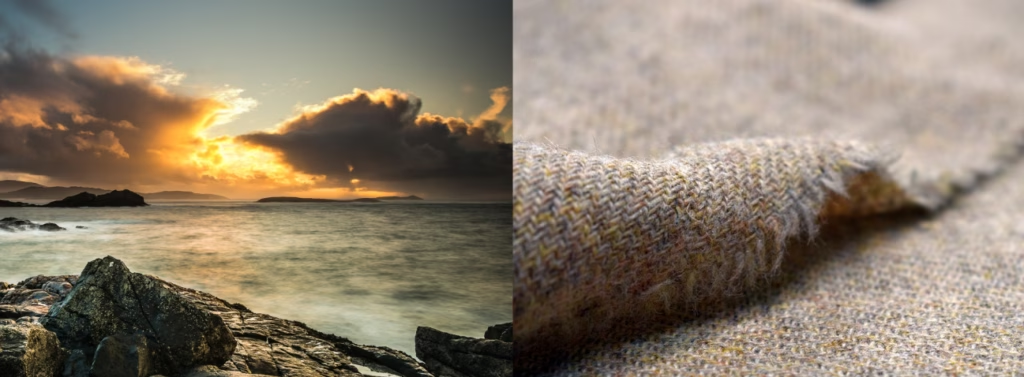
Up in the North-West of Scotland, right on the coast, there is a place called the Isle of Harris.
We know, quite the coincidence! It was such a long time ago that a specific year can’t be determined, but on a tiny island called the Outer Hebrides, people started hand-weaving cloth.
And if this sounds like the start of a fairytale, it’s because it does feel like quite a magical story.
They were using this woven cloth locally until Lady Dunmore, the widow of the Isle of Harris’ owner, came along. She asked for the clan tartan to be woven in tweed.
When the result impressed her, she spread the word, getting Harris Tweed to its first wave of fame in the 19th century.


Certified Authenticity
Now, this wave of fame and the rising demand for Harris Tweed came with many changes in the industry, but also with the threat of this authentic craft being replicated.
It is important to understand why the authenticity of Harris Tweed is part of its charm.
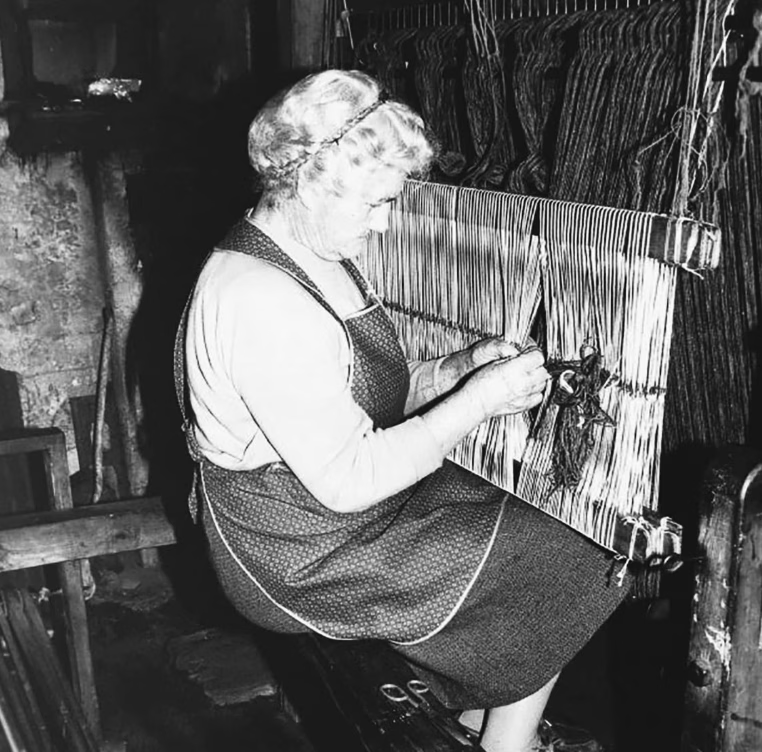
As the name says, it is a weave specific to the Isle of Harris, dyed, spun, and handwoven by the people of the Outer Hebrides.
Therefore, if it is made in any other place, using any other techniques, it can not be called Harris Tweed.
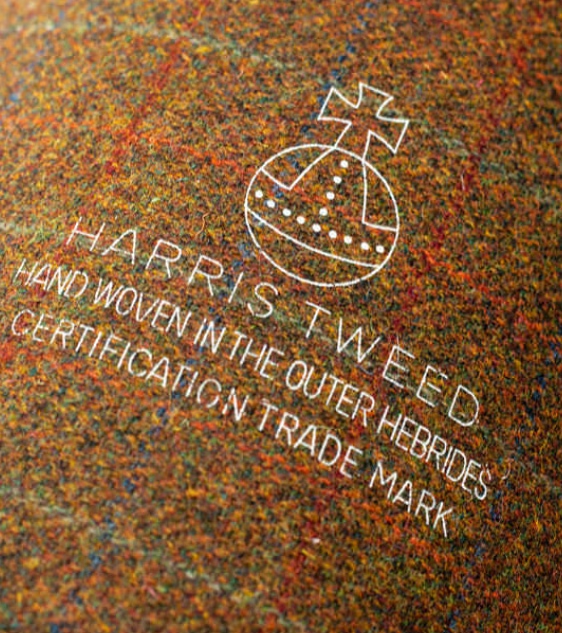
That’s exactly what the founders of The Harris Tweed Association Limited had in mind in 1909, when they created the official trademark and certificate of authenticity for Harris Tweed.
The Orb and Maltese cross, with “Harris Tweed” written underneath, became the official certification, registered in 1910.
There are certain rules regarding how authentic Harris Tweed is made and certified, which, as we said before, adds a lot of value to this material.
Of course, adaptations have been made over the years. Despite these adaptations, Harris Tweed is still a handcrafted good, maintaining its subtle luxury through the people making it and the culture behind it.
Of course, it evolved so much that it reached all parts of the world and many designer houses, proudly representing Scottish culture and the islanders who crafted it.
Standards of production got higher to promote the cultural preservation of the material.
The Harris Tweed Authority, as it’s called today, has forever tied the definition of the woven piece to the islands of Scotland, binding the decision in an Act of Parliament issued by the UK.
No garment made of actual Harris Tweed is left without the authenticity certification, so you should look out for the Orb and Maltese Cross.
If you get an item that is authenticated, make sure you treasure it at its right value and keep the story behind it in mind. The craftsmanship and tale behind a piece show its subtle value.
Traditional Fabric, Modern Use
When you think of tweed, you might picture an old professor with elbow patches or a dark colored vest on a Scottish field worker.
And while these images aren’t entirely out of place, and these products are still worn and styled well, Harris Tweed today is much more than a piece of rural tradition.
Over the years, along with its popularity, the versatility of Harris Tweed also grew consistently.
It has made its way into a wide variety of products that balance the heritage of this material with modern designs and trends.
You can find it in tailored blazers and overcoats, which are more classic pieces that you’d probably expect it in. But you’ll also see sneakers, handbags, wallets, and even home decor pieces.
Let’s have a look at one of these categories and go a bit deeper into the use of Harris Tweed.
We’ll take handbags, as Harris Tweed is widely used in their production, and it’s a great example of how this material can be used with versatility.
Harris Tweed bags come in all sorts of designs, as you can see in Shamrock Gift’s collection.
In some of the designs, like the laptop handbag or the tartan satchel, the tweed is only an accent to the leather bag.
It is added to the front flap of these bags to add a pop of authenticity, color, and Scottish charm.
This is a great way of celebrating Harris Tweed, but combining it with other materials for both practicality and contrast.
However, if you want a full statement, the tote bags feature a lot more Harris Tweed, covering the whole bag, with only small accents of leather.
Of course, the same vibrant colors, patterns, and cultural pride can be seen on these bags. These bags are a bolder show of heritage, but their design is still very stylish and adaptable to modern looks.
If you check out Shamrock Gift’s collection, you’ll see many colors available for the bags, once again showing that it is brought to modern-day fashion in various ways.
You can also find wallets to go with the bags, giving you a cohesive style that celebrates Scottish craftsmanship.
If this surprises you, it’s because the fabric’s versatility is often underestimated, but it clearly shouldn’t be.
Because it’s 100% pure new wool, it’s breathable yet warm, textured but not rough, and it holds dye beautifully, resulting in rich tones that look just as good in muted neutrals as they do in vibrant checks and bold herringbones.
These qualities make it a dream material for designers, whether they’re crafting a runway collection or a small-batch line of artisanal accessories.
Speaking of designers, Harris Tweed has made it to the big runways as well, being part of high-end collections from Chanel, Prada, Ralph Lauren, Manolo Blahnik, and many more.
Considering the beginnings of this handcrafted material, it is quite an impressive success that the Scots are taking a lot of pride in.
And more than the fashion industry, Harris Tweed is a great material found in many interior design pieces.
Throw pillows covered in Harris Tweed? Absolutely.
Lampshades and even furniture upholstery? Yes again.
It brings a very natural feel to a space, and that combines beautifully with the trend of modern sleekness in interior design.
This contrast is probably why it’s been embraced so enthusiastically by both heritage brands and edgy newcomers.
And it’s not just Scottish or British labels that are making use of it. Designers from Japan, Italy, the US, and beyond incorporate Harris Tweed into their collections, precisely because it carries both global appeal and that pure authenticity.
These designers know they’re not just using a fabric, they’re borrowing a legacy and choosing to add a story to their pieces.
This is exactly why the certification of authenticity brings more value to Harris Tweed.
Its international use is a celebration of the piece, but because there is only one place where it can be produced, its cultural authenticity can never be doubted.
That’s the beauty of Harris Tweed, it can adapt and evolve without ever compromising on its identity.
Choosing to add Harris Tweed pieces to your home decor is a great way of celebrating this material without having to change your fashion style.
Wool pieces are not for everyone, so the option to add them to your home is the perfect alternative to embrace this material.


The Designer Stamp of Approval
It’s not just local artisans who celebrate Harris Tweed—global designers do too.
The fabric has graced runways from Chanel and Prada to Ralph Lauren and Manolo Blahnik, bridging traditional craftsmanship and high fashion.
Because it’s 100% pure new wool, it’s breathable, warm, richly textured, and dye-friendly.
These qualities make it a favorite among designers across cultures—from Scotland to Japan to the U.S.—who know they’re working with more than a material; they’re weaving a story into their collections.
Harris Tweed in Home Design
Beyond fashion, Harris Tweed has made a graceful entrance into interior design. Think:
- Throw pillows in rich tartans
- Upholstered furniture with rustic charm
- Lampshades that add texture and warmth
It’s a perfect contrast to sleek, modern interiors, offering a grounded, natural aesthetic. Designers love its tactile quality, and homeowners appreciate the cultural connection it brings into their spaces.
Storytelling as a Marketing Tool
Harris Tweed’s global success wasn’t accidental. Just as Lady Dunmore once marketed it to elites, modern marketing leans heavily into storytelling.
The narrative of Harris Tweed—rooted in sustainability, heritage, and slow fashion—is a powerful counter to mass production
The Harris Tweed Authority protects not just the fabric but its identity. Its branding doesn’t shout luxury—it whispers it, with a small stitched label or a thoughtfully crafted story card.
This quiet assurance speaks volumes in today’s mindful consumer landscape.
Where Tradition Meets Innovation
Harris Tweed occupies a rare space: deeply traditional yet effortlessly modern. It tells the tale of a product made with care, intention, and pride.
Before it was trendy to “know your maker” or shop ethically, Harris Tweed had already set the standard for transparency and traceability.
Today, when someone purchases a Harris Tweed item—whether it’s a handbag in New York or a cushion in Tokyo—they’re not just buying a product. They’re investing in a legacy.

Conclusion: Subtle Luxury That Lasts
Harris Tweed is not just a fabric—it’s a connection to history, culture, and the hands that crafted it.
Its luxury lies in its authenticity, sustainability, and quiet elegance. Whether worn or displayed in your home, Harris Tweed remains a timeless choice in a fast-changing world.