
Last Updated on August 11, 2026 by Rosslyn Tebbutt
With summer just around the corner, it’s more important than ever to find ways to keep cool from the ravenous sun.
Your AC unit plays a big role in that regard, helping maintain a cool and pleasant temperature in your home’s interior.
That said, your air conditioning unit—just like any other appliance in your home—is bound to need maintenance and repairs to maintain its cooling power.
This is especially true if you’re using an older AC unit, as power may decrease and an array of mechanical issues may build up over time.
Neglecting your home’s AC unit can lead to inefficiencies in its cooling capacity—resulting in a warm and uncomfortable temperature within the household. Certainly not enough to cool you off from the intense Aussie sun.
If you want to minimise AC downtime, you’re in the right place. We’ll give you some tips to help keep your AC unit in top shape to cool your house down.
Let’s jump right into it.

1. Wipe Down Your AC Unit
One frequent task you should do is to wipe your AC unit. This helps prevent the accumulation of dust and dirt on the outer shell of the air conditioning unit.
When too much dirt, mould, and dust build up on your AC’s exterior, it can accumulate to the point that it makes its way inside your AC.
This can reduce the efficiency of your AC unit, leading to reduced cooling capacity due to the dirt blocking the regular airflow.
It can also lead to poor and potentially hazardous (in the case of a mould outbreak) air circulating the room.
To prevent this problem from occurring, use a microfibre cloth or soft rag to scrub the dirty areas.
For hard-to-clean areas, gently soaking or spraying the cloth in a water and detergent mixture can help.
Be sure to wipe down the body, grills, coils, fan barrel, and vents of the AC unit thoroughly.
Make sure the AC is without power during this cleanup phase. Be careful not to soak electrical components with moisture, too.
For maximum effectiveness, it’s ideal to perform this step once a month.
This helps keep your AC clean for a long time, thus leading to reduced chances of developing major mechanical issues early on in the AC’s lifespan.
2. Clean the Area Around the AC Vents
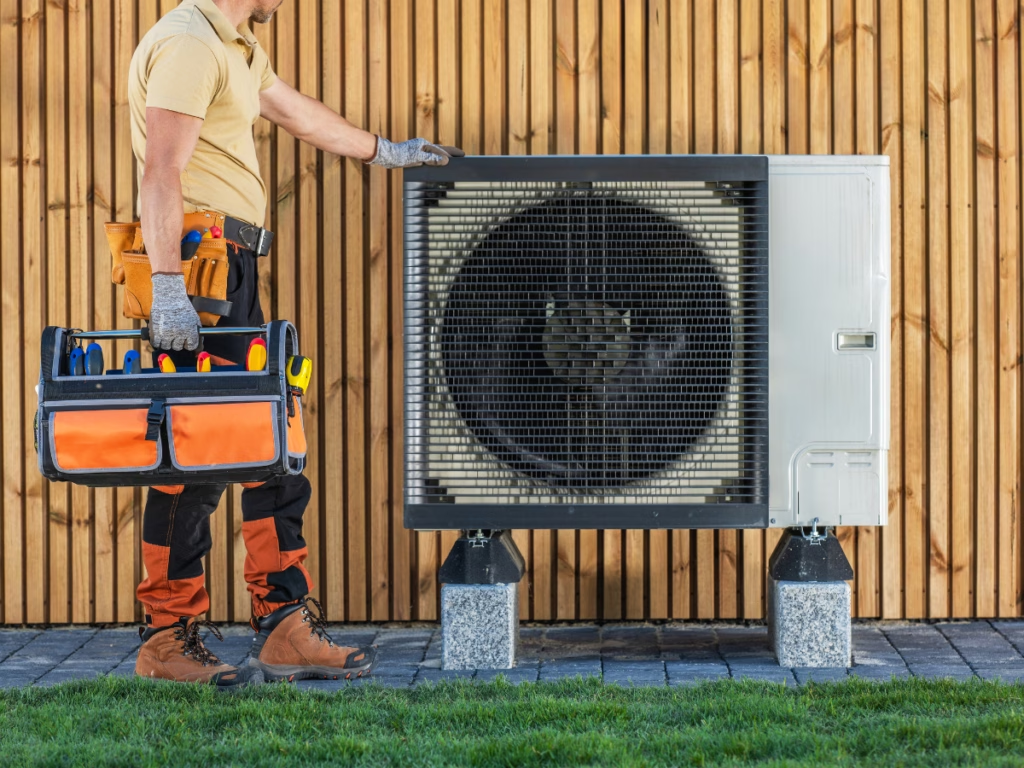
The environment surrounding the AC’s external unit is also something you have to pay close attention to and upkeep, particularly if you’re using a split or central AC unit.
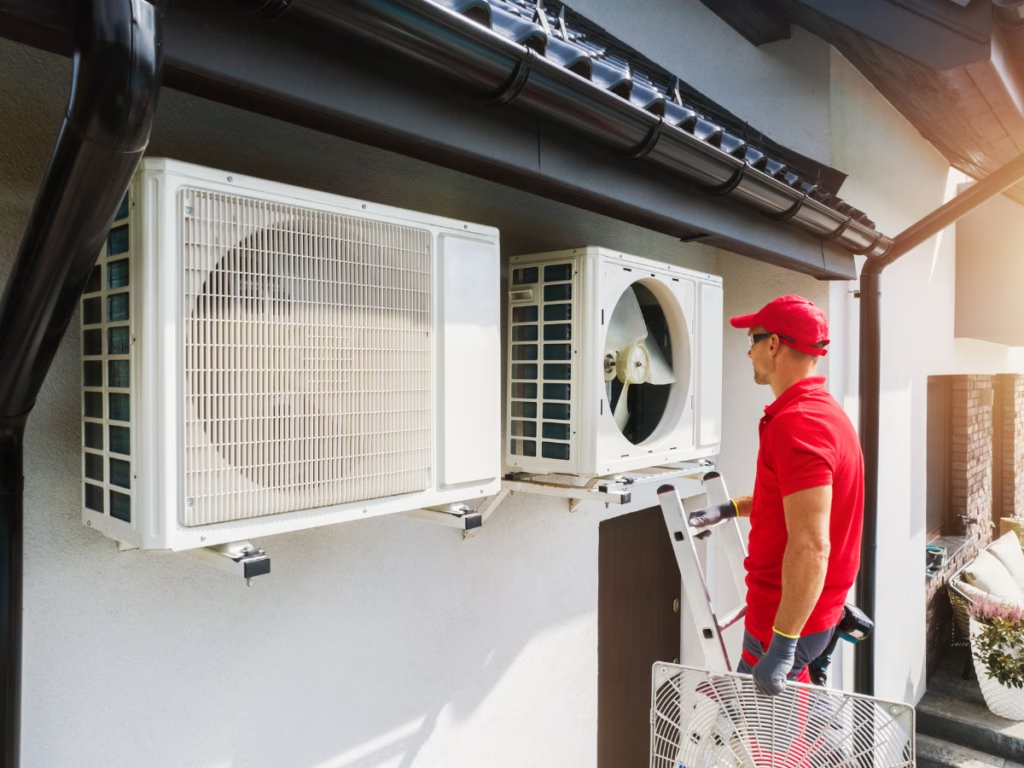
Typically, a few parts of the AC—namely the condenser and the compressor—are situated outdoors to facilitate effective heat transfer.
If not regularly maintained, or if put in the wrong spot, things like branches, leaves, and dirt can accumulate and rapidly slow down the efficiency of the air-conditioning unit.
Furthermore, if multiple items are closely clustered around the AC’s external unit—like cardboard boxes, wet laundry, or a set of gardening tools—this can also obstruct the unit’s ventilation and lower its cooling efficiency.
As such, the best thing to do is to clear the outside area where your AC unit’s condenser and compressor are located. Maintain an object distance of two feet from all sides except for the wall.
If a tree branch is hanging overhead, consider trimming it to reduce the chances of it falling and causing damage to your AC unit.
Inspect and clean the outside unit at least once a month as well. You can consult the Alliance’s guide to Fujitsu AC repair if you’re using a Fujitsu AC unit.
By sticking to this manual, you can prevent your unit from overheating and becoming inefficient over time.
That said, it’s much better to let expert mechanics do the cleaning for you, as they are much more adept at maintaining the sanitation of parts of the AC, like its coil fins, without risking any damage.
3. Clean or Replace Filters
Another essential step in the AC-cleaning process is keeping your filters in optimal condition.
Depending on your AC unit, you could be dealing with one of two filter types: disposable filters or reusable filters.
Each type of filter will require a specific clean-up process to help in effectively cooling down your household.
Disposable filters are made from pleated paper and aren’t made to withstand years of use. It’s ideal to dispose of them after three months of use to maintain room and AC unit cleanliness.
On the other hand, reusable filters, as the name implies, can be reused. They’re the most common type of filters you’ll encounter (particularly if you’re using split or window ACs)—and they’re the most convenient too, as you don’t have to stock up on them. These filters can be taken out of the AC unit and cleaned.
The cleaning process for this filter type is a simple scrub with a water and mild detergent mixture. Make sure that the filter is fully dry before reinserting it into your AC unit.
Perform cleanup once a month—or once every three months if you’re particularly busy and the AC is still operational.
By cleaning your filters, you can maintain a consistent stream of cool airflow within your house. You’re also maximising the AC’s effectiveness, helping improve AC air quality and reducing energy consumption as you do.
4. Clean the Condensate Drain
You should also clean the condensate drain to maintain the functionality of your air-conditioning unit.
This drain plays a critical role in the AC system, removing the moisture from the humidity within the room that’s being cooled.
The removed humidity turns into water, which is brought to the condensate drain and to the exterior side of the A/C unit.
If left uncleaned, the condensate drain can get clogged with mould, dirt, and algae. This can lower the efficiency of the condensation process.
It may even lead to water leaks and musty odours. Water leaks are a major source of low cooling efficiency, so it’s best to address that as soon as possible.
If you want to clean the condensate drain, flush down a water and vinegar solution inside it to dissolve any grime inside the piping. Use a wet-dry vacuum to extract the blockage and maintain the drain’s cleanliness.
By doing this regularly, like once every six months, you’ll keep your condensate drain clean. This can help your AC run smoothly and keep you cool during the hot summer months.

5. Address Refrigerant Insulation Issues
If the piping along your A/C unit is leaking or damaged in any way, address the problem urgently.
The refrigerant lines’ main purpose is to bring cooled air (the refrigerant) inside the home from the condenser outside. If there’s a leak or damage, the cooled air may escape before it gets transferred into your home.
If you’re using broken suction line insulation, your AC unit will work harder to maintain a cool and comfortable temperature.
This can increase energy usage, which translates to higher electricity bills. It also doesn’t guarantee a cool room—even if you have maximised the cooling level of the AC unit.
As such, it’s vital to inspect your insulation to ensure that it’s not cracked or damaged. This insulation comes in the form of a rubber or foam attached to the A/C unit’s pipes.
Be sure to check for damage at least once every few months—a year at most.
If damage has been noted, you can contact a professional to help replace the AC unit, adjust the placement of the insulation, or remove and replace the damaged pipe insulation for you.
By following these air-cooling tips, you can enjoy a cool sanctuary on even the hottest summer days. Take care!