Last Updated on June 12, 2026 by Rosslyn Tebbutt
Biophilic interior design is more than a trend—it’s a timeless philosophy that strengthens the connection between people and nature through thoughtfully designed spaces.
Rooted in the idea that humans are innately drawn to nature, biophilic design goes beyond aesthetics to create environments that support health, wellness, and emotional balance.

It’s not just about adding a few houseplants. It’s about designing spaces that make you feel more alive, more grounded, and more at peace.
From homes and offices to wellness retreats and urban apartments, this style has gained popularity for its ability to reduce stress, improve air quality, enhance creativity, and promote better sleep.
And it’s easy to see why—who doesn’t want to feel like they’re living inside a tranquil forest, even in the heart of the city?
This guide explores the core principles of biophilic design, variations of the style, and practical ideas to apply room by room.
Whether you’re starting with a single plant or planning a full home refresh, these tips will help you bring the outdoors in—beautifully and mindfully.


Core Principles of Biophilic Design
To truly embrace biophilic design, it’s essential to understand the key design principles that define this look.
1. Direct Connection to Nature
The essence of biophilic design lies in bringing the outdoors in. This includes live plants, indoor water features, natural light, and fresh air circulation. It’s about integrating nature in a way that’s both visual and experiential.
2. Natural Materials and Textures
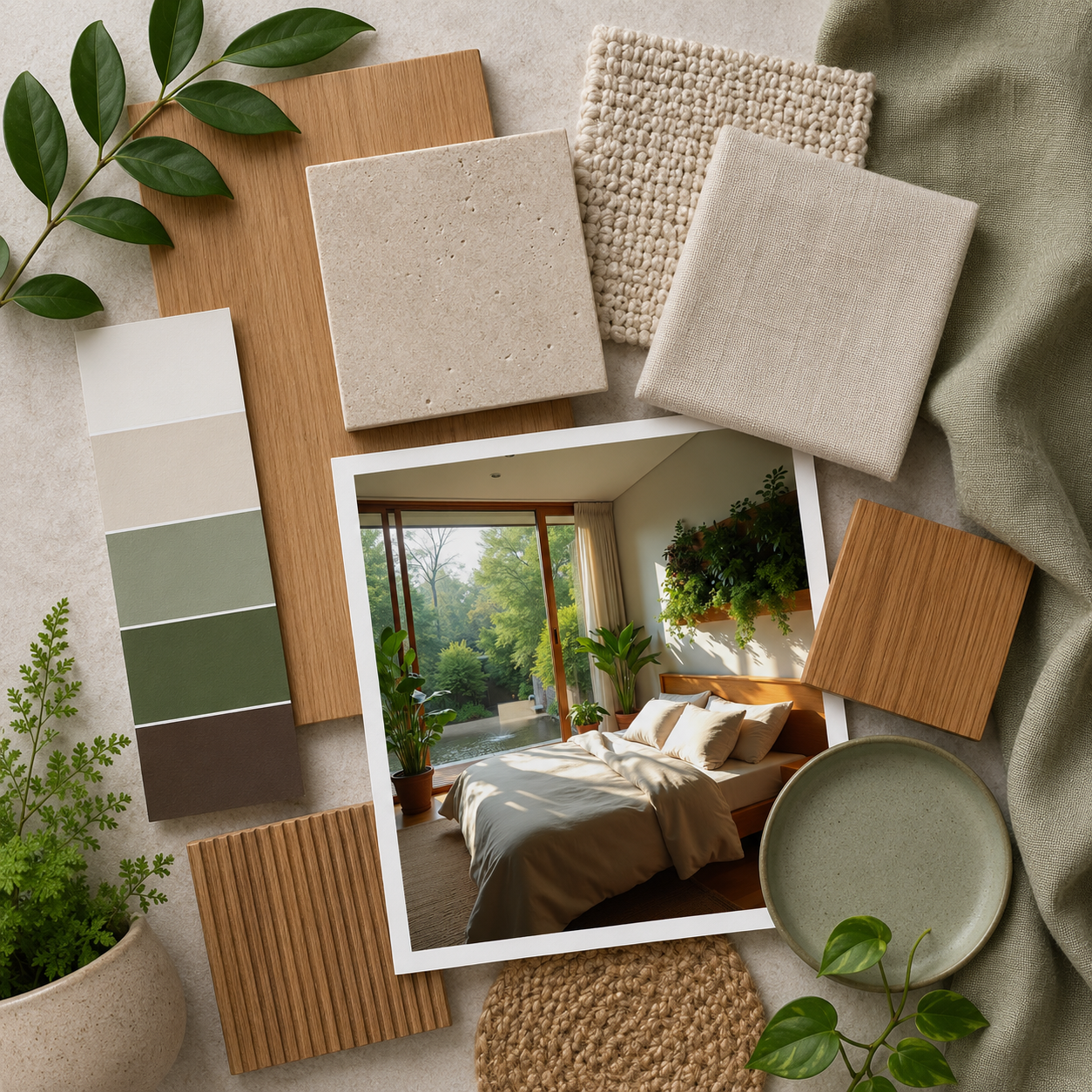
Biophilic spaces use organic materials such as wood, stone, linen, clay, cork, and wool. These materials evoke nature’s tactile richness and give each space warmth and texture.
3. Organic Shapes and Patterns
Inspired by forms found in nature, biophilic interiors favor curves, asymmetry, and botanical patterns. Furniture and décor should echo the flowing, imperfect beauty of the natural world.
4. Light and Air Flow
Abundant natural light, cross-ventilation, and unobstructed views of the outdoors are key. Maximize windows, use sheer curtains, and consider skylights to enhance the indoor-outdoor connection.
5. Sensory Experience
Biophilic interiors appeal to all the senses. Think calming water sounds, natural scents like eucalyptus or lavender, and tactile materials like stone or raw wood.


Biophilic Style Variations
Biophilic interior design isn’t one-size-fits-all. Here are a few variations to help define your space:
Modern Biophilic
Combines clean lines and minimal color palettes with large windows, potted trees, and nature-inspired finishes. Ideal for contemporary homes looking for softness and calm.
Boho Biophilic
A layered, textured look that mixes greenery with handcrafted objects, textiles, and relaxed styling. Macrame plant hangers, terracotta pots, and woven rugs are key elements.
Rustic Biophilic
Focuses on aged timber, exposed stone, and raw finishes. Incorporates natural light, warm neutrals, and an abundance of plants. Perfect for countryside homes and lodges.
Japandi Nature Fusion
A blend of Japanese simplicity and Scandinavian functionality, using low-profile furniture, muted tones, wood elements, and curated greenery for a calm and intentional aesthetic.
Room-by-Room Biophilic Styling Guide
Living Room
- Seating: Choose natural fabrics like linen or cotton in earthy tones. Low, deep seating creates a relaxed atmosphere.
- Décor: Layer in baskets, live plants, ceramic vases, and nature-inspired artwork.
- Materials: Use reclaimed wood tables, jute rugs, and rattan accents to create organic texture.


Kitchen
- Cabinetry: Opt for natural wood or hand-painted finishes with matte hardware.
- Plants: Display fresh herbs in terracotta pots on windowsills or hanging rails.
- Countertops and Finishes: Stone, butcher block, or recycled materials feel grounded and earthy.
- Accessories: Use wooden boards, woven trays, and natural fiber cloths.


Dining Room
- Table and Chairs: A solid wood table with mismatched wooden or upholstered chairs adds character.
- Lighting: Choose woven pendants, paper lanterns, or glass fixtures that soften the space.
- Centerpieces: Fresh branches, ceramic bowls, or a vase of seasonal blooms connect the room to nature.


Bedroom
- Bed Frame: Choose simple wooden or rattan headboards for a grounded feel.
- Textiles: Linen sheets, wool throws, and layered pillows in muted tones enhance comfort.
- Lighting: Use soft bedside lamps, candles, or dimmable sconces.
- Greenery: Add air-purifying plants like snake plants or peace lilies.


Bathroom
- Vanity: Look for solid wood or reclaimed timber pieces with vessel sinks.
- Tiles: Stone, terrazzo, or handmade tiles add texture and a natural look.
- Plants: Choose ferns or pothos that thrive in humidity.
- Details: Natural loofahs, wooden bath trays, and stone soap dishes complete the look.

Workspace
- Desk Area: Position near a window to benefit from daylight and views.
- Décor: Keep it clutter-free with a couple of sculptural plants and minimal accessories.
- Materials: Use wood, metal, and cork to create a warm, natural surface palette.

Styling Small Spaces in Biophilic Design
- Use multi-functional furniture like wooden benches with storage or plant stands that double as end tables.
- Choose light, neutral colours and mirror placements to create the illusion of more space.
Avoid over-cluttering—stick to one or two statement plants or natural textures per area.

Biophilic Lighting Guide
- Chandeliers: Choose handcrafted fixtures made from rattan, bamboo, or metal.
- Pendant Lights: Ideal for kitchens and dining spaces—especially in materials that reflect natural tones.
- Wall Sconces: Look for ceramic or stone finishes that mimic raw textures.
- Recessed Lighting: Keep it soft and ambient—avoid overly bright, artificial light.

Sustainability in Biophilic Design
- Use reclaimed wood and recycled materials where possible. Opt for non-toxic, VOC-free paints and finishes.
- Choose natural textiles like linen, hemp, and organic cotton. Incorporate energy-efficient lighting and appliances.
- Buy vintage, secondhand, or locally made décor items to reduce environmental impact.

DIY and Budget-Friendly Biophilic Decor Ideas
- Pressed Botanical Art: Collect and frame leaves or flowers from your garden.
- Herb Wall: Mount small pots or vertical planters on your kitchen wall.
- Upcycled Decor: Turn driftwood, pebbles, or shells into centerpieces or wall art.
- Macrame Hangers: Learn simple knots to create your own hanging plant holders.
- Branch Curtain Rods: Use natural branches to hang lightweight curtains.

Biophilic Design Dos and Don’ts
Dos
✔ Choose living plants over artificial ones
✔ Incorporate a mix of natural textures
✔ Maximize sunlight and outdoor views
✔ Add water elements or soundscapes
✔ Use earth-toned colour palettes
Don’ts
✖ Don’t overcrowd your space with too many plants
✖ Don’t use synthetic materials when natural options are available
✖ Don’t rely on bright artificial lighting
✖ Don’t forget ventilation and airflow
✖ Don’t over-style—simplicity is key to this aesthetic


Conclusion
Biophilic design is about more than just looks—it’s about how a space feels and supports your well-being. By using natural materials, embracing light, and surrounding yourself with living elements, you can transform your home into a peaceful, nature-inspired haven.
Whether you’re adding a few plants or rethinking your entire layout, this guide will help you bring the outside in—beautifully and intentionally.