Last Updated on July 13, 2026 by Rosslyn Tebbutt
Interior presentation has always been at the heart of design communication.
Long before a room takes shape in the physical world, it must first exist in the minds of the people who will commission it, approve it, and eventually live or work within it.
The designer’s job — alongside all the creative and technical work that it entails — is fundamentally one of translation: turning ideas, instincts, and knowledge into something another person can see and understand.
For much of the twentieth century, that translation happened through a familiar set of tools. Sketches captured initial concepts.
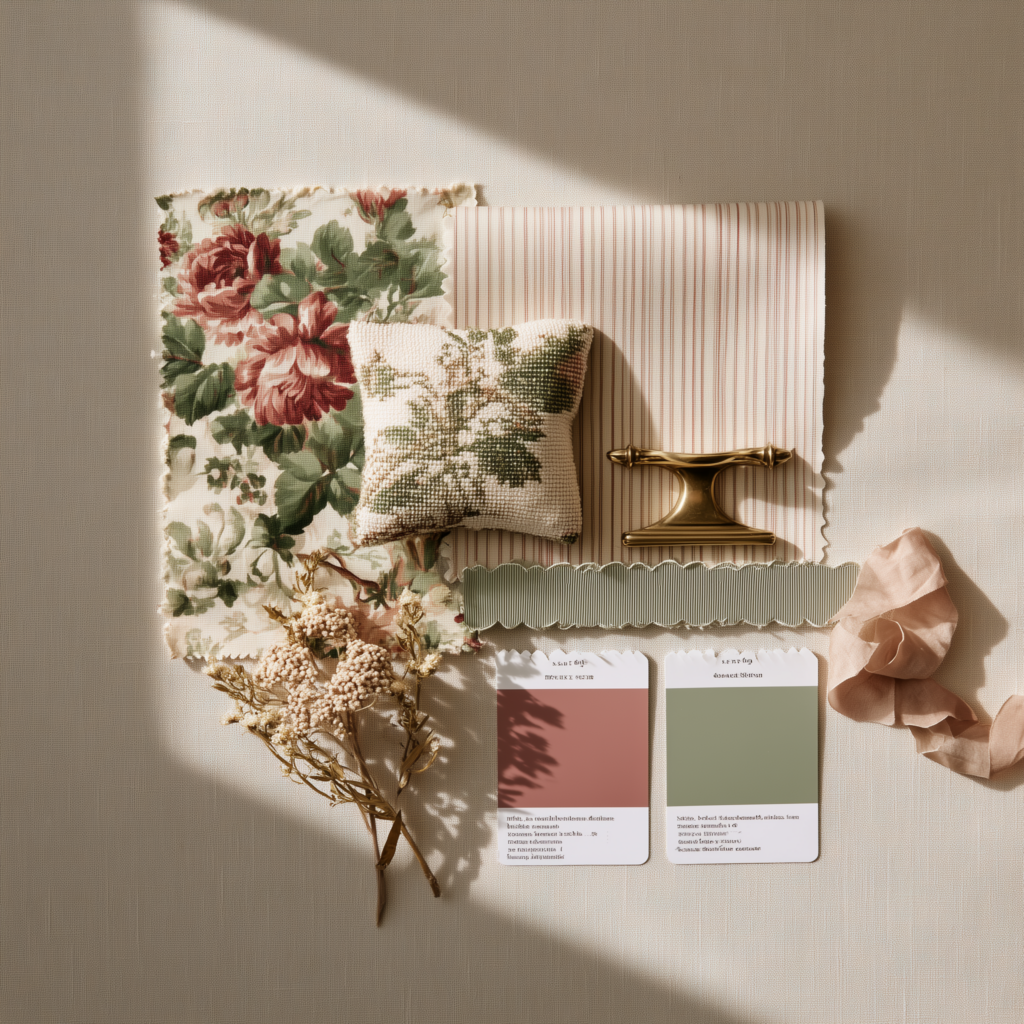
Material boards brought together fabric swatches, paint chips, and tile samples. Mood boards assembled reference photography into a collage of atmosphere and intent.
These methods are still used, and rightly so.
But over the past two decades, the standard of interior presentation has shifted considerably — not because the traditional tools stopped working, but because clients and collaborators began expecting something more complete.
The evolution from mood boards to photorealistic rendered spaces is not simply a story about software and technology.
It is a story about communication, clarity, and the growing demand for design ideas to be understood — not merely imagined — before they are built.
The Original Language of Interior Presentation
Traditional interior presentation tools developed organically alongside the profession itself.
Each one solved a particular communication problem, and together they formed a visual language that designers and clients learned to read in tandem.
Sketches and hand-drawn elevations gave clients a sense of proportion and spatial arrangement.
Material boards brought the tactile qualities of a scheme into the room — the warmth of a timber sample, the sheen of a glazed tile, the pile of a fabric swatch.
Reference photography curated from magazines, travel, and other interiors helped establish stylistic context and gave clients a visual shorthand for taste and atmosphere.
Why mood boards became essential
The mood board emerged as perhaps the most powerful of these tools — not because it communicates a design precisely, but because it communicates it emotionally.
A well-assembled mood board establishes aesthetic direction without prescribing every detail. It defines the palette before individual finishes are selected.
It sets an emotional tone — serene, energetic, luxurious, informal — that grounds all the decisions that follow.
For early-stage design conversations, mood boards remain genuinely valuable. They open a dialogue, invite client response, and create a shared reference point.
A designer who shows a client three mood boards representing three distinct directions is doing something a CAD drawing cannot: asking them how they want to feel in their home.
Where traditional boards fall short
But mood boards and material boards are inherently interpretive.
They ask clients to do a significant amount of imaginative work. A collection of reference images suggests a direction — it does not show a room.
A palette of finish samples communicates material quality — it does not show how those materials interact under a given light, across a specific floor area, or in relationship to the furniture that will share the space.
The limitations become especially apparent when clients are being asked to approve decisions that involve real money, significant disruption, and long-term commitment.
A client who has seen a mood board and a material board may still have only a vague sense of what their finished dining room will actually look and feel like.
That interpretive gap is where misunderstandings begin, and where revision cycles tend to expand.
From Selection to Simulation
The shift toward digital visualization changed the nature of interior presentation at a fundamental level.
It moved the designer’s role from curator — someone who selects and assembles references — to simulator: someone who constructs a believable version of the future space itself.
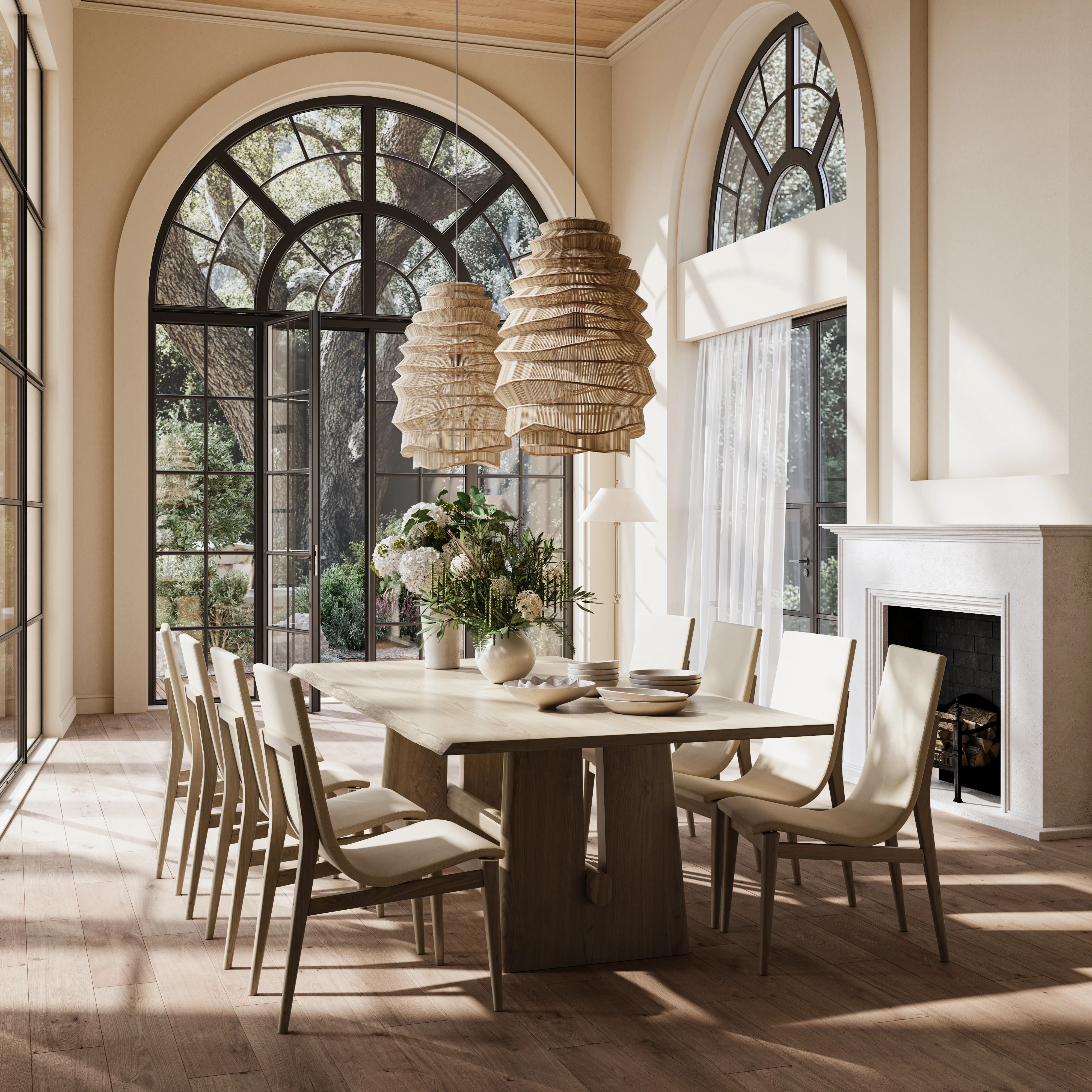
With 3D modeling, a designer can build a digital scene that accurately reflects the dimensions of the room, the position of windows, the height of ceilings, and the precise placement of every piece of furniture.
Materials and finishes can be applied to surfaces with accuracy. Lighting — both daylight and artificial — can be simulated at different times of day and in different configurations.
The result is not a suggestion of what the room might look like. It is a close representation of what it will.
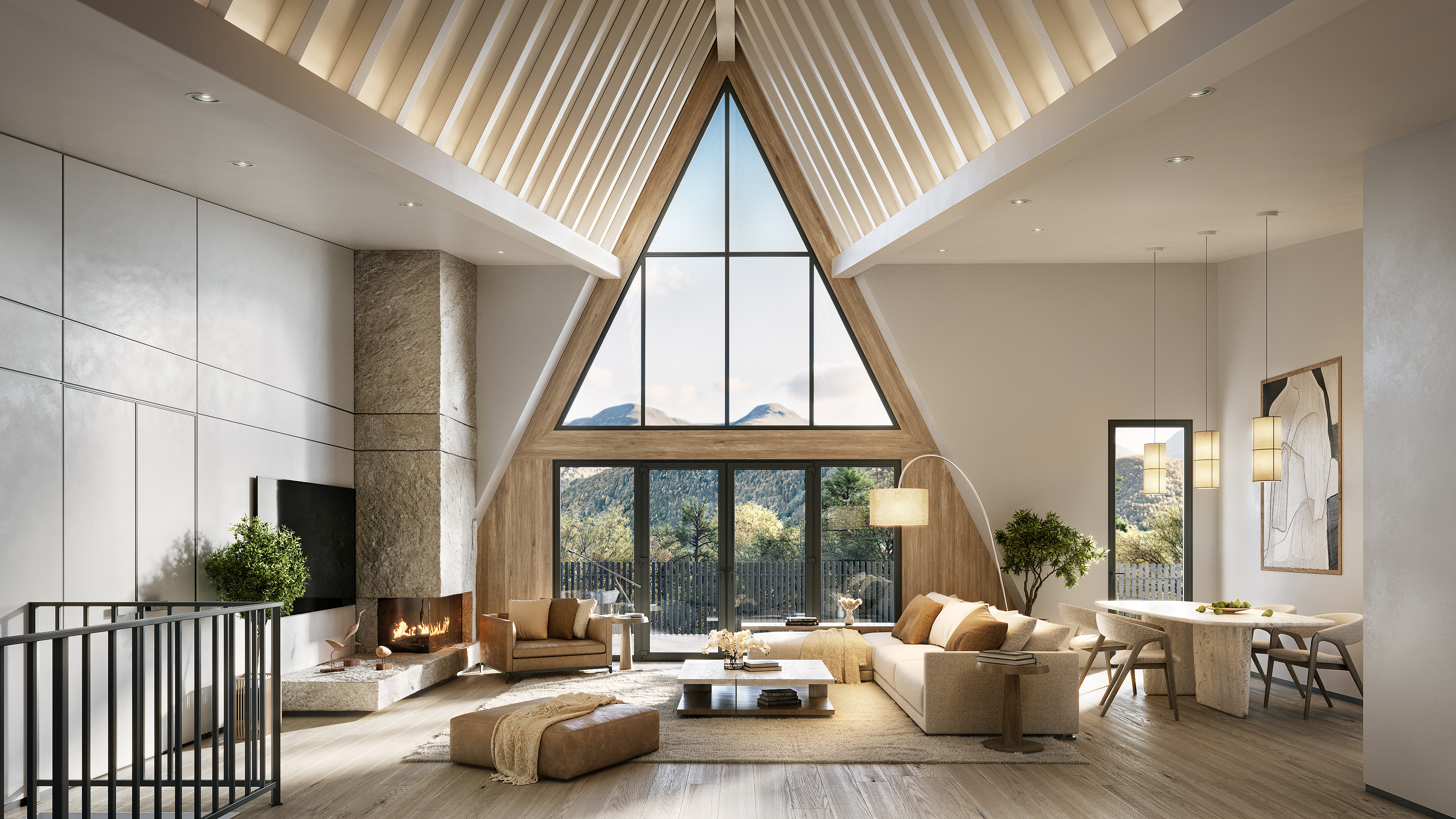
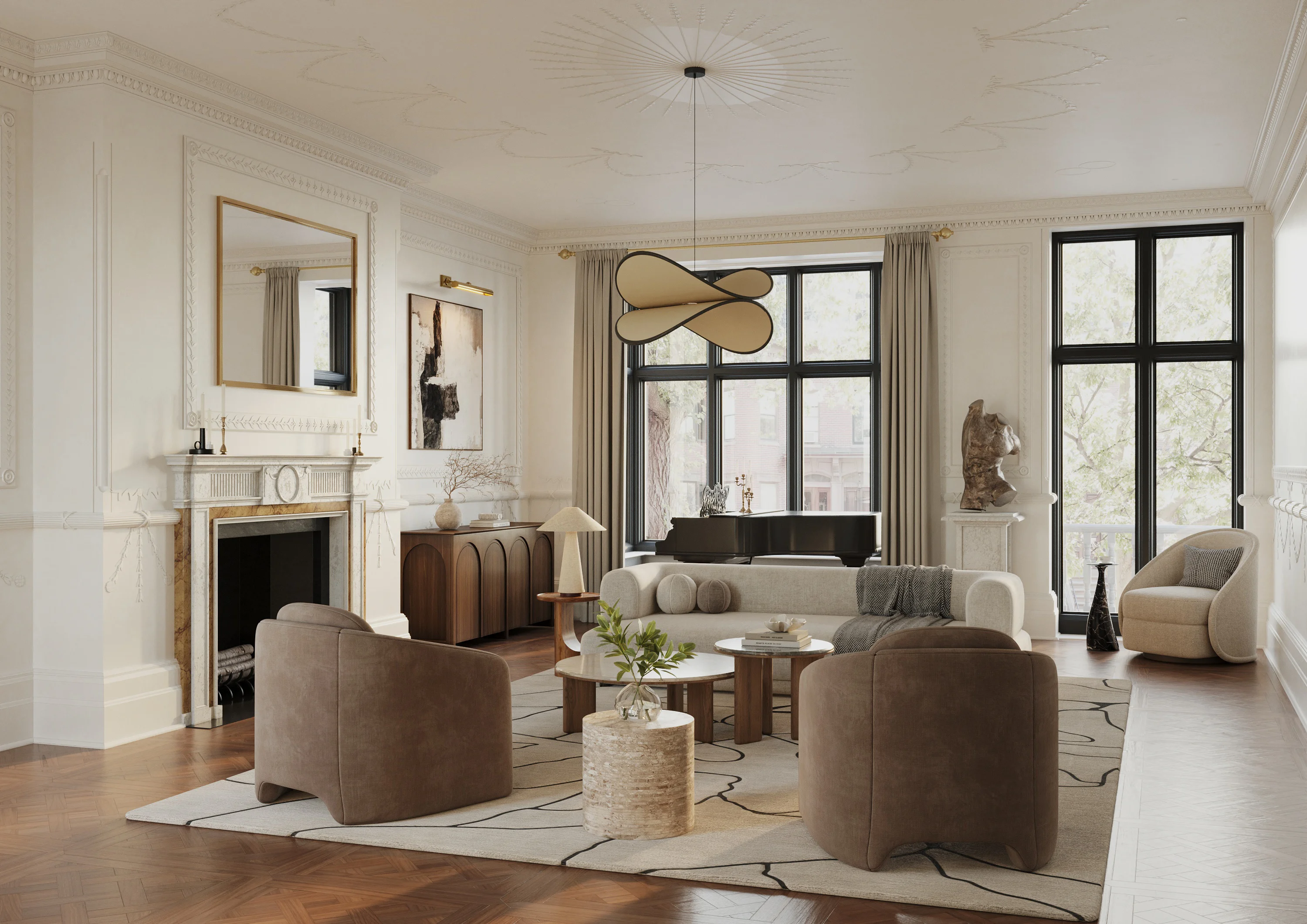
Today, many studios use 3D interior visualization to communicate not only layout and furniture placement, but also atmosphere, materials, lighting, and the emotional character of a space — turning abstract selections into environments that clients can genuinely read and respond to.
What changed with digital visualization
The workflow transformation is worth examining closely.
In a traditional presentation process, a designer might spend significant time sourcing reference imagery that approximates their vision, then hope that a client can bridge the gap between that reference and the actual project.
With visualization, that gap largely closes. The designer builds the room, not a metaphor for it.
This changes the nature of client conversations.
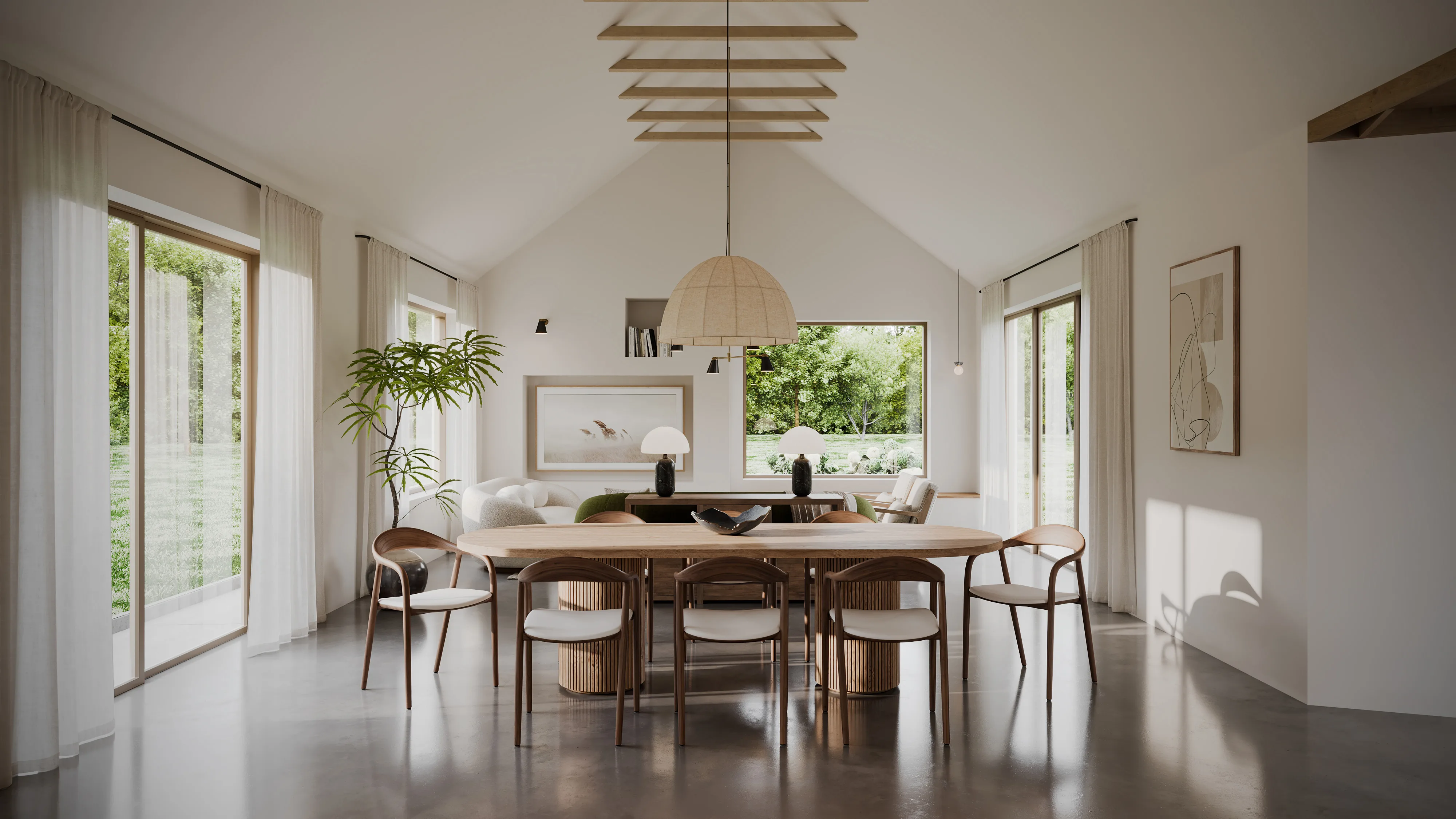
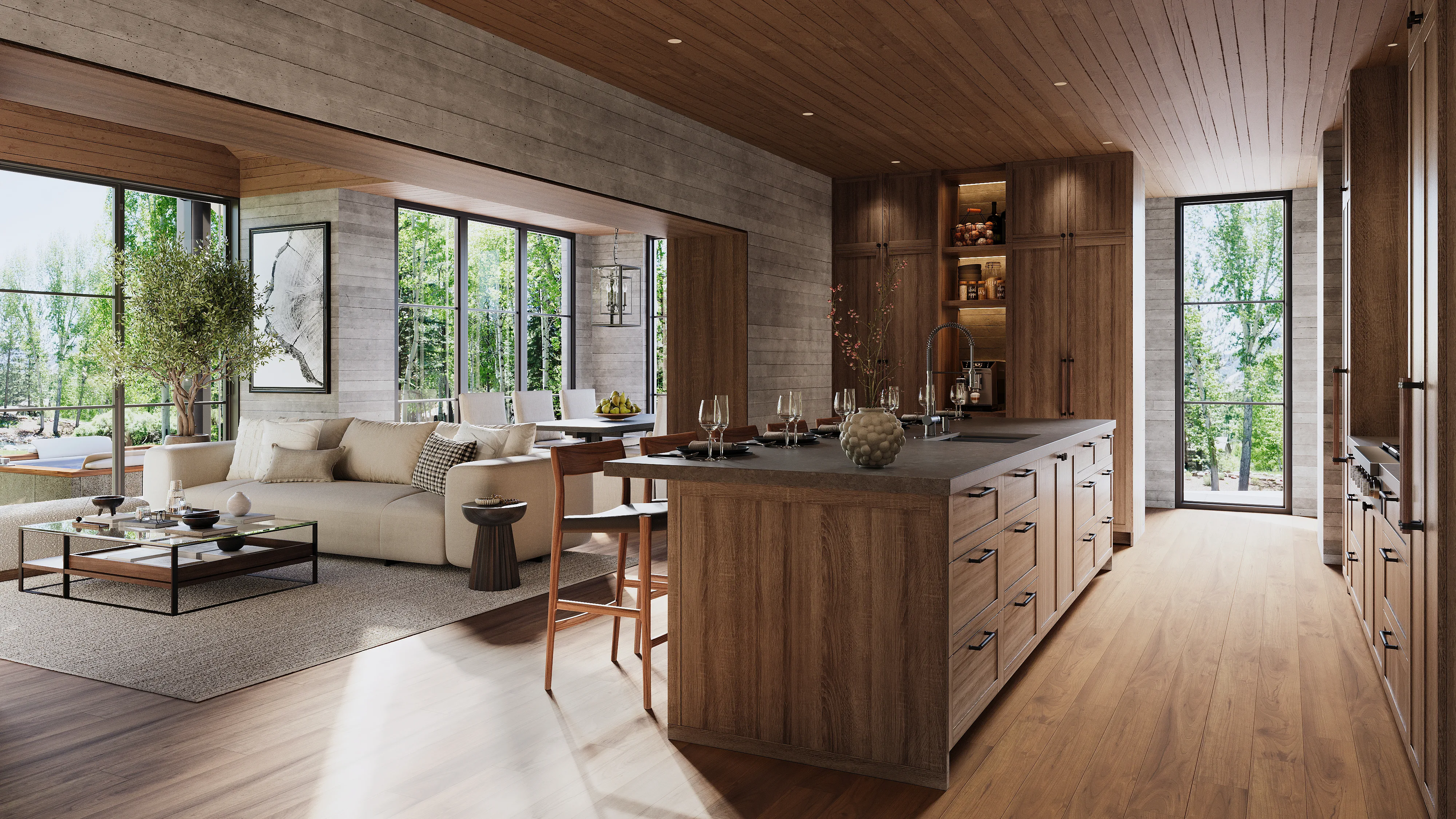
Rather than asking clients to project themselves into a mood board, the designer can show them a specific view of their future kitchen, taken from a camera angle that corresponds to where they will stand when they enter the room.
The conversation becomes more precise, more grounded, and ultimately more productive.
Why photorealism matters
There is sometimes a temptation to see photorealistic rendering as primarily an aesthetic ambition — a desire to make the images look as beautiful as possible.
But the functional value of visual realism runs deeper than that. Clarity of representation directly affects the quality of client understanding.
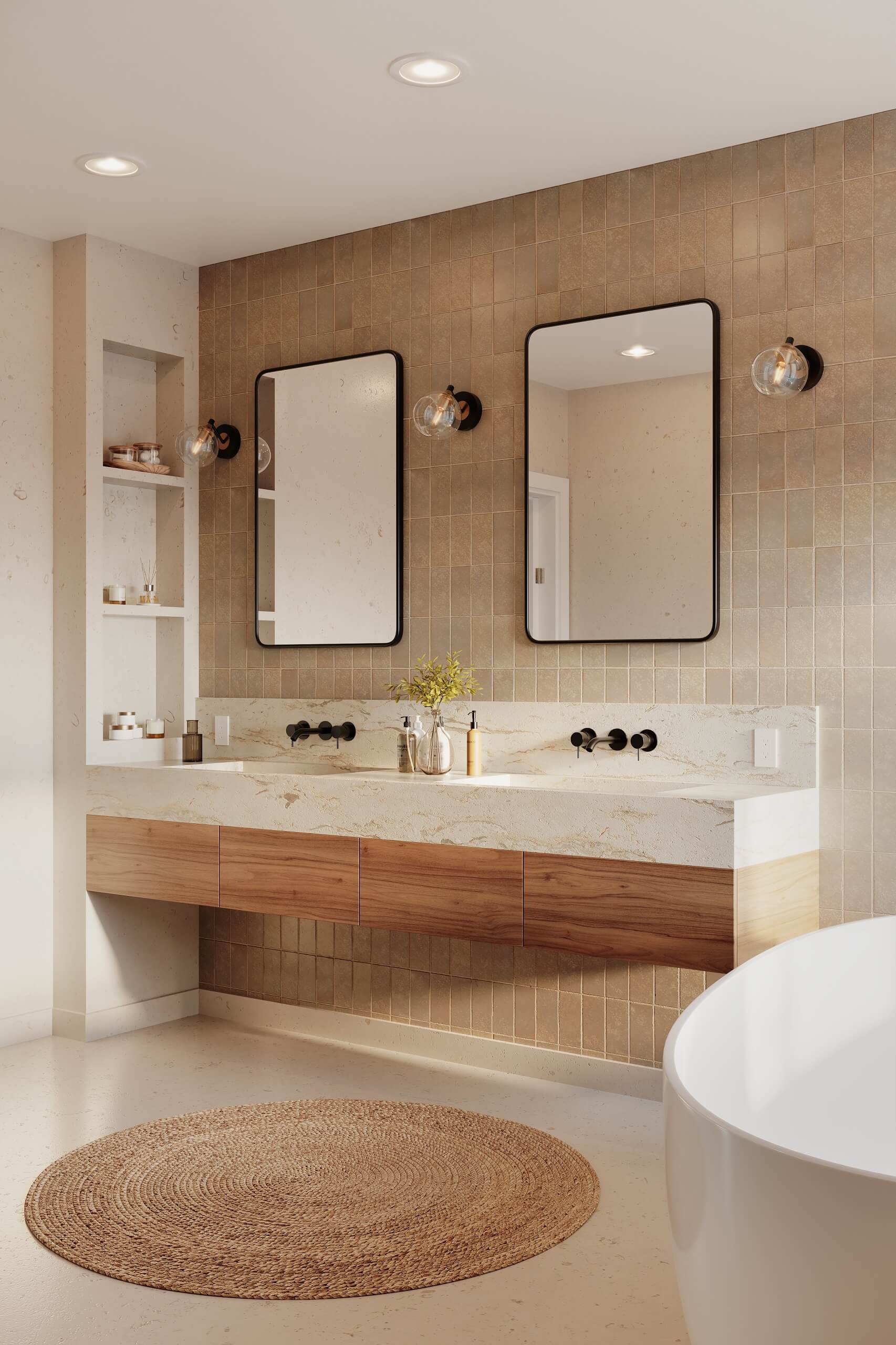
When a client can see exactly how a marble countertop will catch the light, or how a dark paint colour will read against pale timber flooring, they can engage meaningfully with those choices. Approval becomes more confident and more informed.
Misalignments between the designer’s intent and the client’s expectation are identified before they become expensive problems.
Mood, Atmosphere, and the Emotional Reading of Space
Interior design is not solely a discipline of objects and finishes. It is equally concerned with mood, rhythm, comfort, and identity — the qualities that determine how a space feels to inhabit, not just how it looks in a photograph.
These are precisely the qualities that are most difficult to communicate through traditional presentation tools, and most powerfully expressed through well-crafted photorealistic imagery.
Lighting, in particular, is a dimension of interior design that mood boards almost never capture adequately.
The quality of afternoon light entering a west-facing kitchen through linen curtains is a fundamentally different experience from the same room under recessed downlighters in the evening.
Both are real, both matter to the person living there, and both can be rendered in a way that a client can understand and respond to.
Spatial composition — the way furniture sits in relation to walls, doorways, and other pieces — is another quality that requires real spatial context to read.
The scale of a sofa relative to a room, the breathing space around a dining table, the visual weight of a large artwork on a painted wall: these are relationships that exist in three dimensions, and that photorealistic rendering can communicate with a fidelity that elevates the entire design conversation.
Why Clients Respond Better to Photorealistic Presentation
The most practical benefit of photorealistic interior presentation is also the most straightforward: clients respond to it.
Technical drawings, abstract concept boards, and isolated finish samples all place a cognitive burden on the viewer.
They require interpretation, spatial literacy, and a degree of imaginative projection that varies widely from person to person.
A rendered image that shows the room as a complete environment asks for none of that. It simply shows what the designer intends.
This directness accelerates the approval process.
Decisions that might have required several rounds of discussion and revision — because the client could not clearly visualise what was being proposed — become faster and more confident when both parties are looking at the same complete image.
Revisions become more precise too, because clients can point to specific elements rather than expressing vague discomfort with a direction they cannot quite articulate.
There is also a dimension of emotional investment.
A client who can see their future living room rendered with warmth and life — books on shelves, light falling across the rug, their own aesthetic preferences reflected in the furniture and finishes — develops a relationship with that space before it exists.
That emotional engagement supports commitment to the project and to the decisions it involves.
Presentation as a Design Workflow, Not Just a Final Deliverable
One of the more significant shifts in how visualization is used in interior practice is the move away from treating it as a purely end-stage activity.
Rendered imagery is no longer reserved for final client presentations or marketing materials. It has become an active part of the design process itself.
During concept development, visualization allows designers to test ideas quickly and compare alternatives in realistic context.
Two versions of a colour palette, three layout configurations, or a range of furniture references can be rendered side by side and reviewed in a client workshop — not as abstract options, but as actual spaces.
This kind of comparative testing shortens the distance between initial concept and resolved design, and it gives clients a meaningful role in shaping the direction of a project.
Internal design teams also benefit.
When a design direction is built and rendered in three dimensions, it becomes a shared reference that everyone on the team can interpret consistently.
The ambiguities that can creep into a scheme when it exists only on paper or in a Pinterest board disappear when the space itself is visible in three dimensions. Briefings, revisions, and handoffs become cleaner and faster.
The Future of Interior Presentation
The trajectory of interior presentation continues in a direction that rewards clarity, immersion, and speed of iteration.
Real-time rendering is making it possible to adjust lighting, materials, and furnishings on the fly during client meetings, turning what was previously a static image into a live conversation tool.
Virtual walkthroughs allow clients to move through a design at their own pace, pausing in rooms that interest them and exploring the space in a way that is closer to the experience of actually being there.
AI-assisted visualization is beginning to shorten the distance between concept and rendered output — allowing designers to generate initial visual explorations more quickly and to iterate with less friction between creative instinct and resolved image.
This does not replace the designer’s judgment; it amplifies it, removing some of the production overhead that has historically made high-quality visualization resource-intensive.
These developments do not make the mood board obsolete.
The early-stage, emotionally intuitive work that mood boards support — defining aesthetic direction, establishing tone, opening creative dialogue with a client — remains as valuable as ever.
But the presentational standard that clients expect, and that contemporary design practice increasingly demands, has moved considerably beyond what a curated board of references alone can deliver.
Conclusion
Mood boards are not relics.
They are still, in many ways, the ideal instrument for the early moments of a design relationship — open-ended, evocative, and deliberately impressionistic.
Their value lies precisely in what they do not pin down.
But interior design is ultimately a spatial discipline.
The rooms we design are experienced in three dimensions, over time, under changing light, by people who bring their whole sensory and emotional selves to the spaces they inhabit.
To present those rooms in a way that genuinely communicates their character and their quality, the tools used must eventually meet that spatial reality.
The evolution from mood boards to photorealistic rendered spaces reflects a growing understanding that interior ideas need to be not only imagined, but experienced — as fully as possible — before they are built.
That is not a loss of the intuitive, creative dimension of design. It is an extension of it: a way of carrying the designer’s intent through to the client’s understanding with less lost in translation, and more room for the design itself to speak.