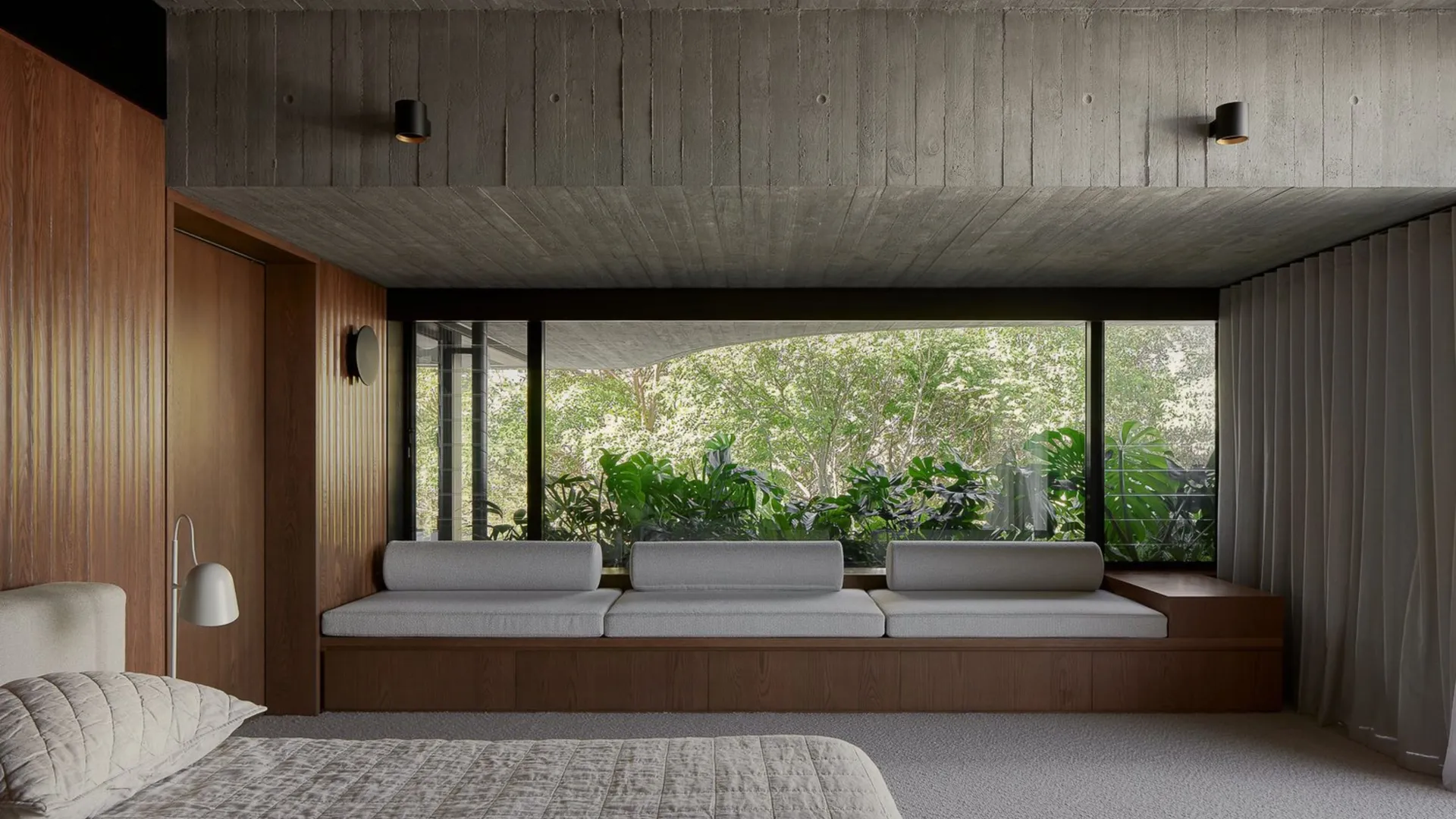
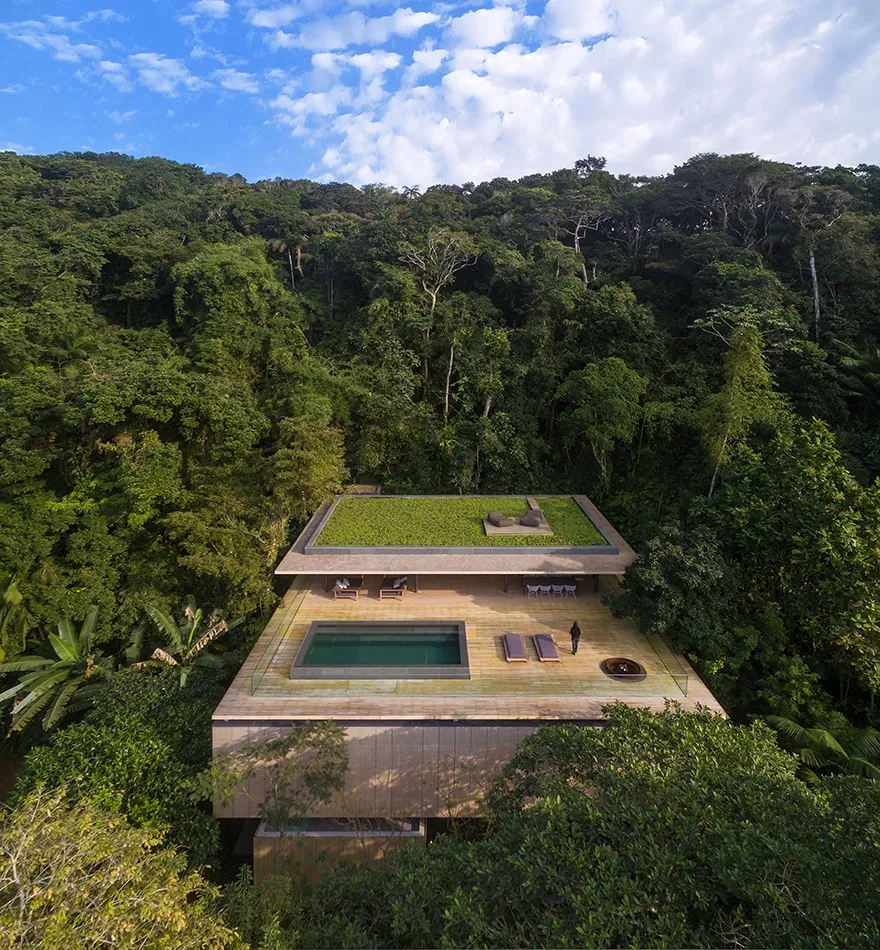
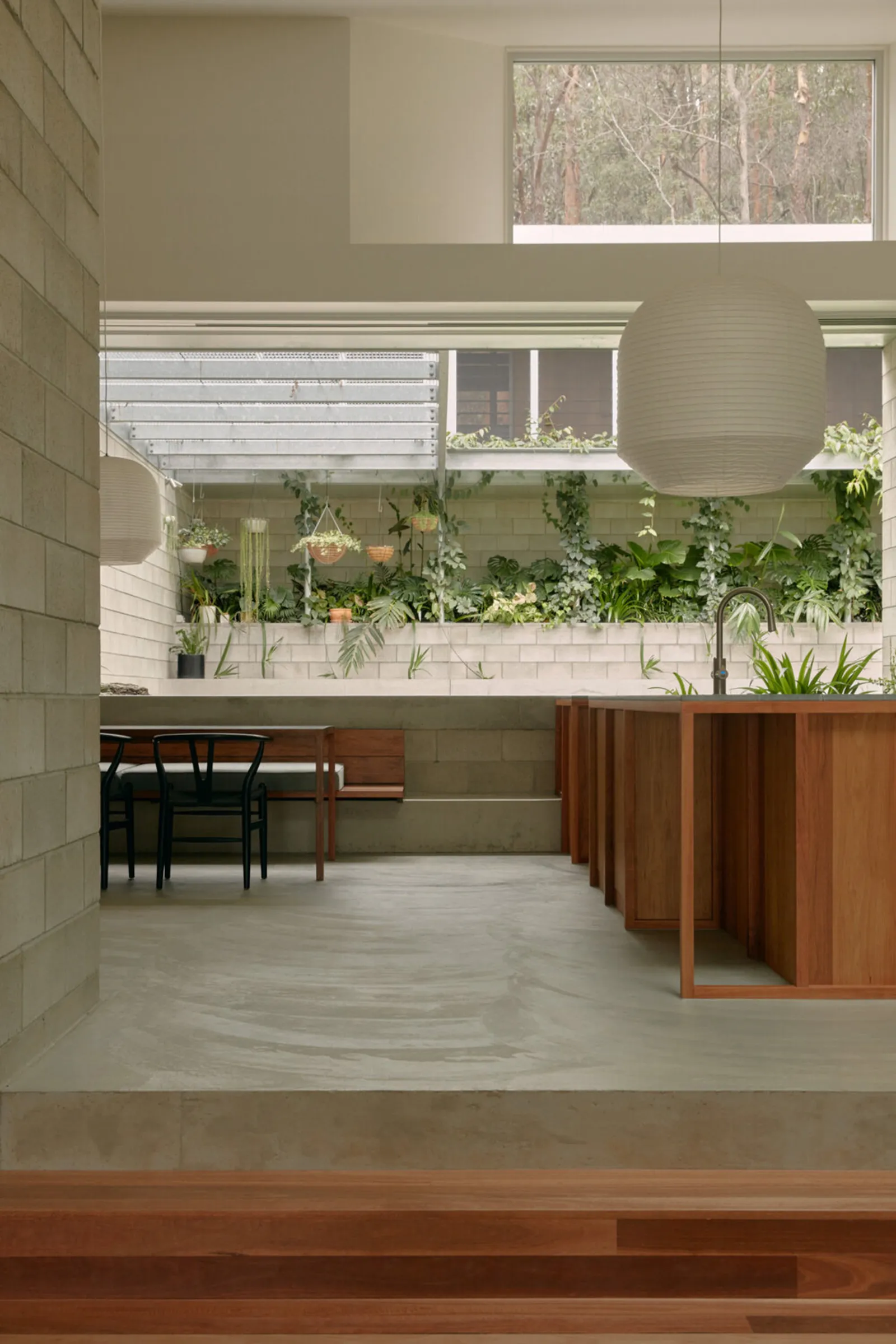
Welcome to the world of Green Brutalism—a powerful design movement that fuses the stark, uncompromising rawness of Brutalism with a new-age focus on sustainability, biophilia, and ecological harmony.
Designers, architects, and homeowners are increasingly embracing this style because it doesn’t shy away from making a statement.
Rosslyn Tebbutt, founder of SampleBoard and an international trend forecaster, describes it perfectly: “Green Brutalism takes Brutalism’s unapologetic rawness and softens it with ecological intent. It’s less about cold, imposing structures and more about honesty, responsibility, and creating spaces that feel both human and sustainable.”
Green Brutalism is an evolution of the mid-20th-century Brutalist movement, which favored raw concrete, rigid geometries, and monumental scale.
While Brutalism was often criticized for being stark and unwelcoming, Green Brutalism injects life, warmth, and purpose into those hard edges.
This trend isn’t just aesthetic—it’s a philosophy. It pairs architectural transparency (showing materials as they are, without pretension) with ecological mindfulness. Think:
Exposed concrete walls softened by climbing greenery
Steel-framed windows opening to lush courtyards
Natural ventilation and light are becoming central design elements
Recycled, reclaimed, and renewable materials are integrated seamlessly into the raw forms
It’s Brutalism redefined for a world where climate consciousness and sustainability are not optional—they’re essential.
To recognize Green Brutalism in interiors, look for these defining features:
Raw Materials with Eco-Intent
Concrete and steel remain the backbone, but their use is reconsidered. Designers are turning to low-carbon concrete, recycled aggregates, and bamboo reinforcement.
Concrete finishes are often left exposed but balanced with renewable materials like cross-laminated timber.
Integration of Greenery
Unlike traditional Brutalism, which leaned toward stark minimalism, Green Brutalism embraces biophilia.
Vertical gardens, hanging planters, and integrated green walls breathe life into the hardness of concrete and stone.
Honesty in Design
Surfaces aren’t masked. Pipes, beams, and frameworks are visible—truth to materials is central. Yet, unlike older Brutalism, these details are softened by warm, organic additions.
Monumental Yet Minimal
Spaces often retain Brutalism’s monumental scale, but interiors are pared back to minimalist essentials. The aesthetic is functional, pared-down, and uncluttered.
Natural Light as a Material
Large apertures, skylights, and light wells invite the outdoors in, creating a dynamic dialogue between shadows, surfaces, and greenery.
Several cultural and environmental forces are pushing this trend to the forefront:
Climate Urgency: Consumers are demanding eco-conscious materials and practices. Green Brutalism provides a way to meet sustainability goals without compromising aesthetic boldness.
Backlash Against “Soft Minimalism”: While Japandi and other soft minimal aesthetics have dominated, 2026 sees a swing back toward boldness and authenticity. People crave rawness—but with heart.
Wellness & Biophilia: Studies consistently show that integrating greenery into built spaces improves mental health and productivity. Green Brutalism’s natural elements appeal to this growing wellness movement.
Cultural Shift Toward Transparency: Just as brands and politics are pressured to be transparent, so too are interiors. Exposed structures reflect honesty—a value that resonates in 2026.
Rosslyn Tebbutt adds: “It’s about moving away from disposable design and creating spaces that last. Green Brutalism feels like the architecture of accountability—bold, enduring, and mindful.”
In homes, Green Brutalism is showing up in open-plan layouts with concrete floors, timber accents, and indoor plant walls. Instead of sterile minimalism, these homes feel earthy, raw, and alive.
Workspaces
Architects are using Green Brutalism to reimagine office spaces: exposed beams, modular concrete furniture, and vertical greenery create work environments that are grounded yet inspiring.
Hospitality & Retail
Boutique hotels and cafes are particularly drawn to the Instagrammable boldness of Green Brutalism.
Imagine a café with raw cement walls, brass accents, and a canopy of greenery—an aesthetic both memorable and inviting.
How to Incorporate Green Brutalism at Home
Even without major renovations, you can embrace this trend in small but impactful ways:
Concrete Finishes: Try polished or raw concrete countertops, coffee tables, or flooring.
Statement Greenery: Invest in oversized planters or create a vertical plant wall.
Natural Accents: Balance raw finishes with warm wood, clay, or cork details.
Lighting: Choose large-scale industrial fixtures, but pair them with warm LED bulbs.
Sustainable Choices: Opt for reclaimed furniture or recycled materials wherever possible.
Green Brutalism is more than a passing trend. It’s the embodiment of where design is heading: toward honesty, sustainability, and bold individuality.
The style acknowledges the past but refuses to remain trapped by it, choosing instead to merge Brutalism’s iconic character with the ecological awareness of the future.
As Rosslyn Tebbutt says, “2026 isn’t about hiding imperfections. It’s about celebrating them. Green Brutalism tells us that beauty isn’t polished—it’s real, it’s raw, and it’s rooted in responsibility.”
Green Brutalism is an evolution of Brutalism that fuses raw concrete and steel with biophilia and ecological mindfulness, creating spaces that are honest about materials while integrating life and sustainability.
What are the Key Characteristics of Green Brutalism?
Key characteristics include raw materials with eco-intent such as low-carbon concrete and recycled aggregates, integration of greenery, honesty in design with visible pipes and structures, monumental yet minimal interiors, and natural light used as a material.
Why Is Green Brutalism Emerging in 2026?
Its emergence is driven by climate urgency, a backlash against soft minimalism, a wellness and biophilia movement, and a cultural shift toward transparency in design.
How Are Designers Using Green Brutalism?
Designers apply Green Brutalism across residential spaces with open plans and plant walls, workspaces with exposed beams and greenery, and hospitality and retail settings like boutique hotels and cafes that emphasize bold, memorable aesthetics.
How to Incorporate Green Brutalism at Home?
In homes, embrace concrete finishes such as countertops or flooring, statement greenery with vertical walls or oversized planters, natural accents like warm wood and clay, large-scale industrial lighting with warm LEDs, and sustainable choices through reclaimed furniture or recycled materials.
Conclusion
Green Brutalism is set to define interiors in 2026, not just because of its bold aesthetics, but because it reflects the values of our time—transparency, sustainability, and a desire for deeper connection with nature.
For designers, architects, and homeowners, this trend offers a new way forward: interiors that are dramatic yet nurturing, monumental yet human, raw yet green.
And in many ways, Green Brutalism isn’t just about design. It’s about rethinking how we live, build, and connect with the world around us.
Rosslyn TebbuttFounder, SampleBoard
Interior Architect and trend forecaster with 20+ years experience in interior design, colour direction and visual systems.
What begins as a trend often becomes a style. We document both. Interior design trends, style guides, colour stories and visual systems delivered weekly.