Last Updated on July 7, 2026 by Rosslyn Tebbutt
Organic modern interior design is the art of balance—where minimalism meets nature.
It combines the sleek, functional sensibility of modern design with the warmth, softness, and grounding qualities of organic materials.
The result is a home that feels fresh, calming, and deeply connected to the earth.
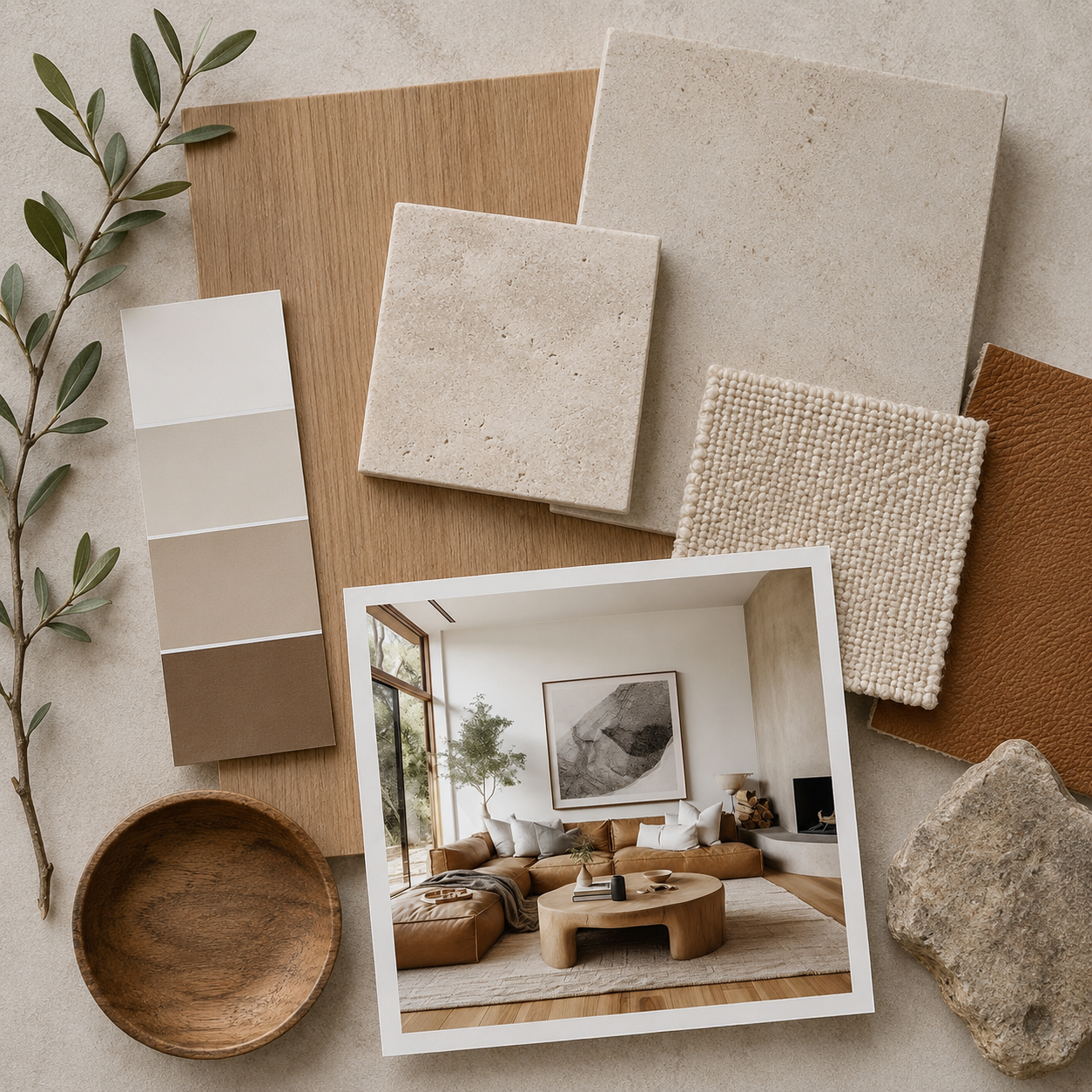
Rooted in the idea that form and function should coexist beautifully, organic modern spaces are clutter-free yet inviting, neutral yet dynamic.
This style thrives on natural textures, earthy tones, and thoughtful design that puts well-being at the forefront.
Whether you’re building a serene retreat or simply updating a few elements, this guide will help you embrace the organic modern aesthetic—effortlessly blending nature and simplicity, warmth and refinement.
Continue the Journey
Love Organic Modern? Build it inside Studio.
Explore the complete JUNO toolkit — every resource you need to develop, present, and deliver this style with confidence.
Core Principles of Organic Modern Design
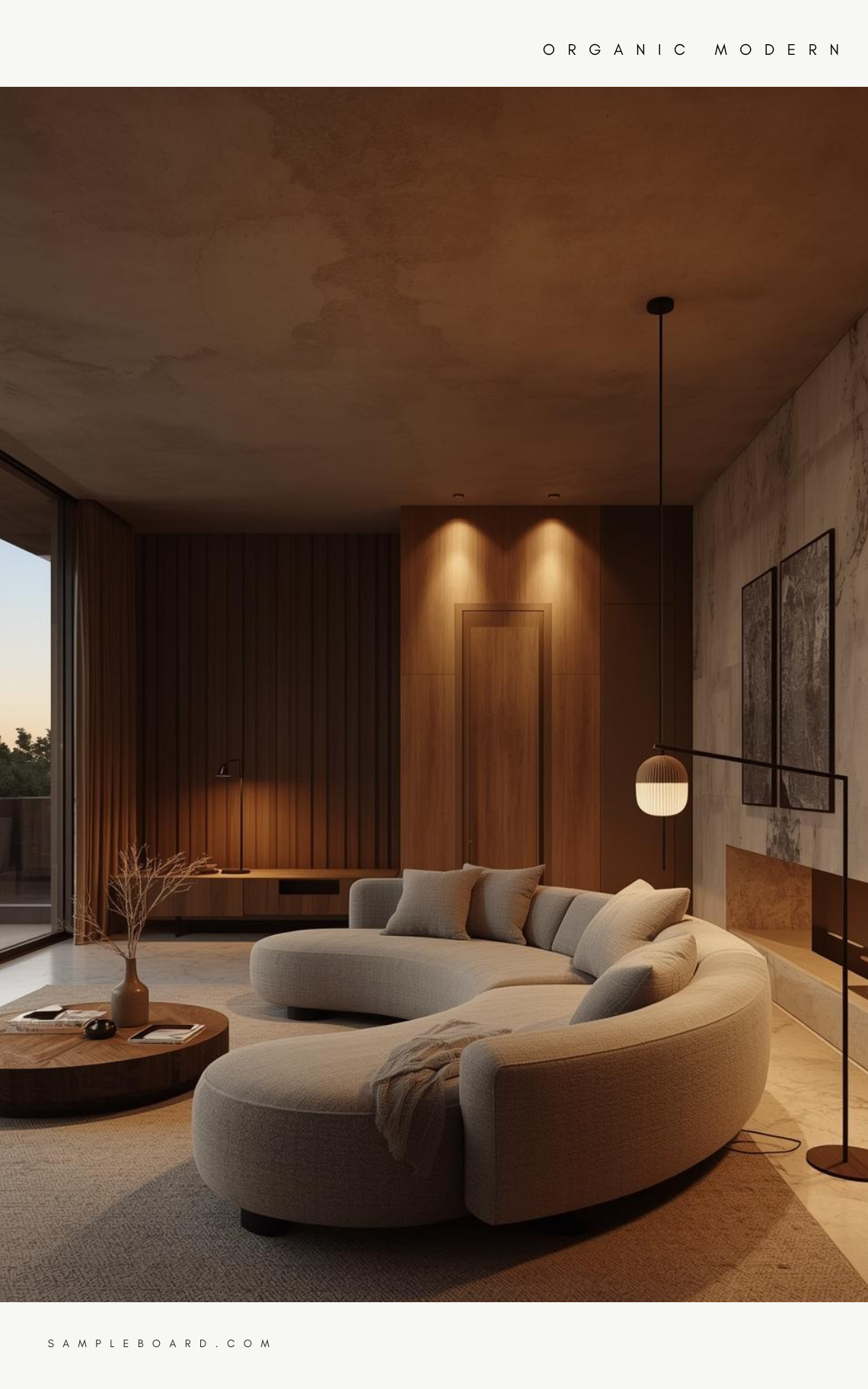
To embrace the organic modern look, it’s important to understand the key elements that define its understated yet luxurious aesthetic.
1. Minimalism with Warmth
While modern design often emphasizes clean lines and open space, organic modern softens the edges with warm woods, textured textiles, and earthy tones. The aim is serenity—not starkness.
2. Natural Materials
Materials like raw wood, wool, clay, rattan, linen, and stone are essential. These organic textures create contrast against the sleek lines and smooth surfaces of modern furnishings.
3. Earth-Toned Color Palette
The color scheme centers around neutral and nature-inspired shades—warm whites, sand, camel, ochre, olive, charcoal, and terracotta. Subtle contrast adds depth without overpowering the space.
4. Clean Lines and Functional Design
Furniture and architecture remain true to modern principles: minimal ornamentation, functional layouts, and a less-is-more approach to styling.
5. Nature-Inspired Forms and Textures
Curved edges, asymmetrical silhouettes, hand-formed ceramics, and tactile finishes echo the organic world while maintaining a refined aesthetic.

The Origins of Organic Modern Design
Organic Modern interior design is deeply rooted in a rich history that encompasses various movements, architects, and design philosophies.
This style emerged as a response to traditional modernism’s perceived coldness and rigidity, seeking a more harmonious integration with nature.
The historical trajectory of the Organic Modern Style can be traced through the following six key elements:

1. Mid-Century Modern Movement (1930s-1960s)
The mid-century modern movement, which focused on clean lines, functionality, and exploring new materials, laid the foundation for Organic Modern interior design.
Architects like Frank Lloyd Wright and designers like Charles and Ray Eames played pivotal roles in shaping the aesthetic.
Emphasis on open spaces, large windows, and a seamless connection between indoor and outdoor environments became prominent features.
2. Frank Lloyd Wright and Organic Architecture
Frank Lloyd Wright, a trailblazing American architect, introduced the “Organic Architecture” concept, which sought to design structures harmonizing with the natural world.
Wright’s philosophy emphasized the use of natural materials, integration with the landscape, and understanding the site’s inherent qualities.
His iconic works, such as Fallingwater and the Guggenheim Museum, showcase the principles of Organic Architecture.
3. Scandinavian Design Influence
Scandinavian designers like Alvar Aalto and Arne Jacobsen contributed to the Organic Modern Style by emphasizing simplicity, functionality, and a connection to nature.
Using warm, natural materials like wood, clean lines, and ergonomic design became defining characteristics of Scandinavian design.
4. California Modernism
In post-war California, the Case Study House program brought together architects like Richard Neutra, Charles Eames, and Eero Saarinen to experiment with modern residential architecture.
Designs from this period often featured open floor plans, extensive use of glass, and a strong emphasis on indoor-outdoor living.
These characteristics influenced the development of the Organic Modern Style.
5. Late 20th Century and Sustainable Design
As environmental awareness grew in the late 20th century,designers embraced sustainable practices, aligning with the ethos of Organic Modern Style.
This phase witnessed an increased emphasis on eco-friendly materials, energy-efficient solutions, and a commitment to minimizing the environmental impact of design and construction.
6. Contemporary Interpretations
In the 21st century, Organic Modern interior design has continued evolving under contemporary designers’ influence.
The style remains relevant, emphasizing timeless design principles, sustainable practices, and a desire to create spaces that promote well-being.
Modern designers draw inspiration from the historical roots of Organic Modernism while incorporating innovative ideas and materials.
Today, Organic Modern Style stands as a testament to the enduring appeal of designs that seamlessly blend modern aesthetics with the beauty of the natural world.
It has transcended its historical origins to become a versatile, timeless approach that resonates with those seeking a harmonious and sustainable living environment.
Furniture Pieces to Achieve an Organic Modern Interior Design
Organic Modern interior design furniture often features clean lines, natural materials, and a balance between modern sophistication and organic warmth.
Here are some examples of furniture pieces that are commonly associated with Organic Modern Style:
Wooden Platform Bed
- A wooden platform bed in Organic Modern Style often has a low-profile design, clean lines, and minimalistic detailing.
- The natural grain and warmth of the wood contribute to a cozy and inviting bedroom atmosphere.
Stone-Topped Side Tables
- Side tables with stone or marble tops introduce a touch of sophistication.
- The smooth, cool surface of the stone complements the warmth of organic materials and can serve as elegant accents in living spaces.
Eames Molded Plastic Chair
- The Eames Molded Plastic Chair is an iconic piece of mid-century design.
- Its organically shaped seat combines comfort with a sleek and modern aesthetic, making it a staple in Organic Modern interiors.

Organic Modern Style Variations
This design style is flexible and can take on different moods depending on your preferences and space. Explore more contemporary interior design styles..
Scandinavian Organic Modern
Fuses the coziness of hygge with clean Scandinavian minimalism. Features pale woods, soft linens, and a light, airy palette.
Rustic Organic Modern
Embraces raw, weathered finishes and a slightly earthier vibe. Great for mountain homes or modern farmhouses.
Japandi Organic Modern
A blend of Japanese simplicity and Scandinavian warmth—prioritizing intentional living, natural light, and grounded design.
Coastal Organic Modern
Incorporates driftwood tones, sandy neutrals, and breezy fabrics. Perfect for relaxed spaces that feel both natural and airy.

Room-by-Room Organic Modern Styling Guide
Living Room
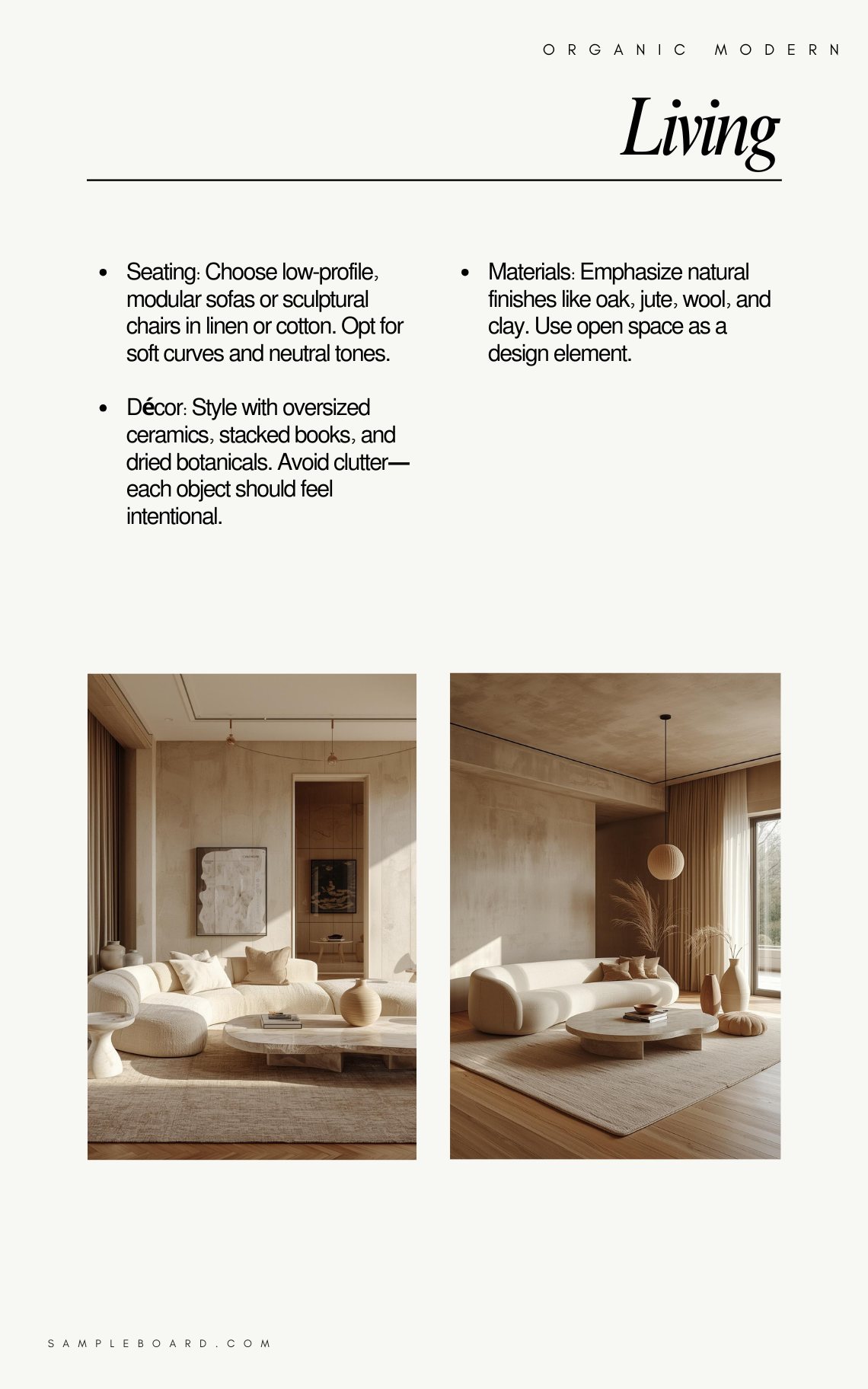
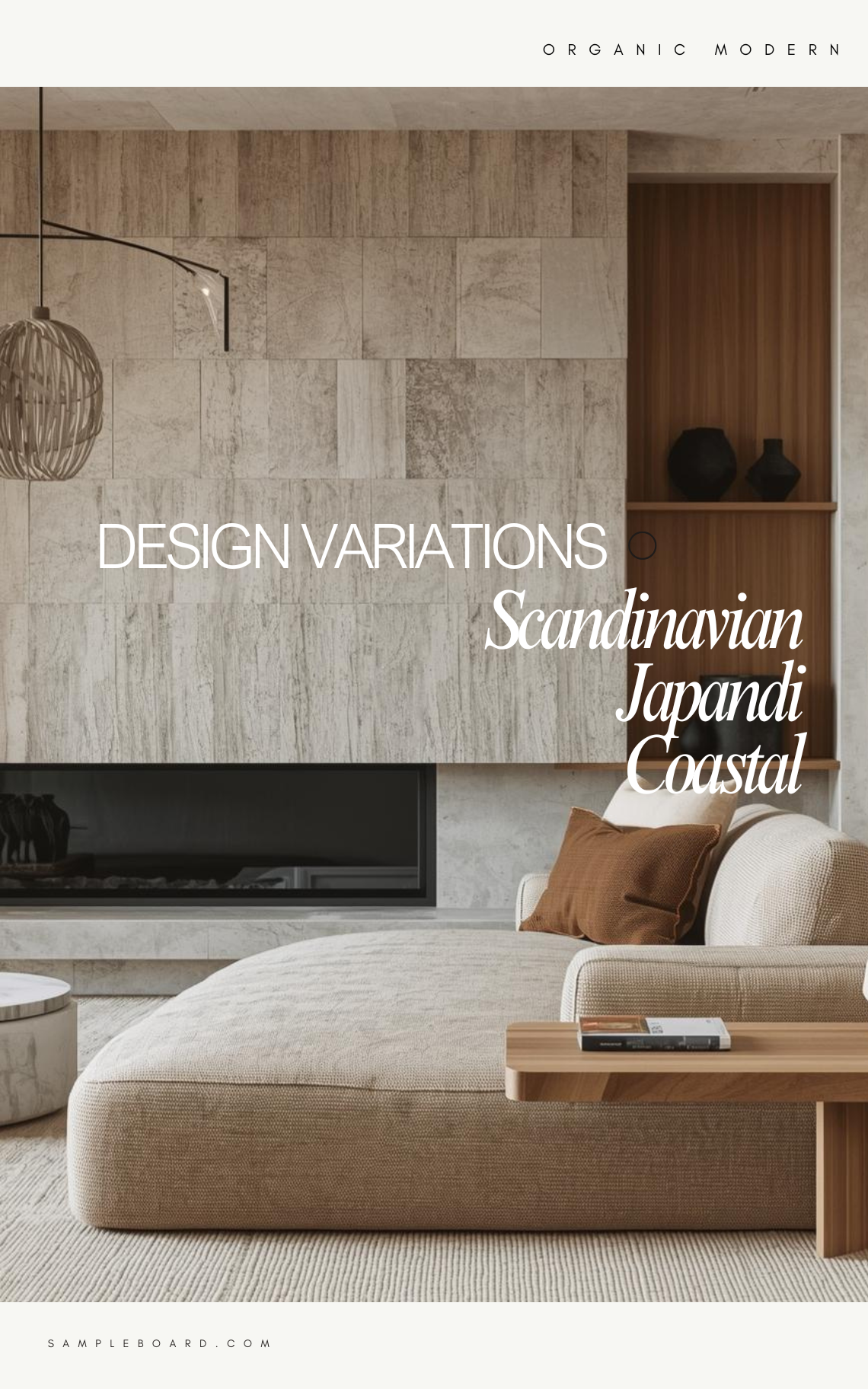
- Seating: Choose low-profile, modular sofas or sculptural chairs in linen or cotton. Opt for soft curves and neutral tones.
- Décor: Style with oversized ceramics, stacked books, and dried botanicals. Avoid clutter—each object should feel intentional.
- Materials: Emphasize natural finishes like oak, jute, wool, and clay. Use open space as a design element.

Kitchen
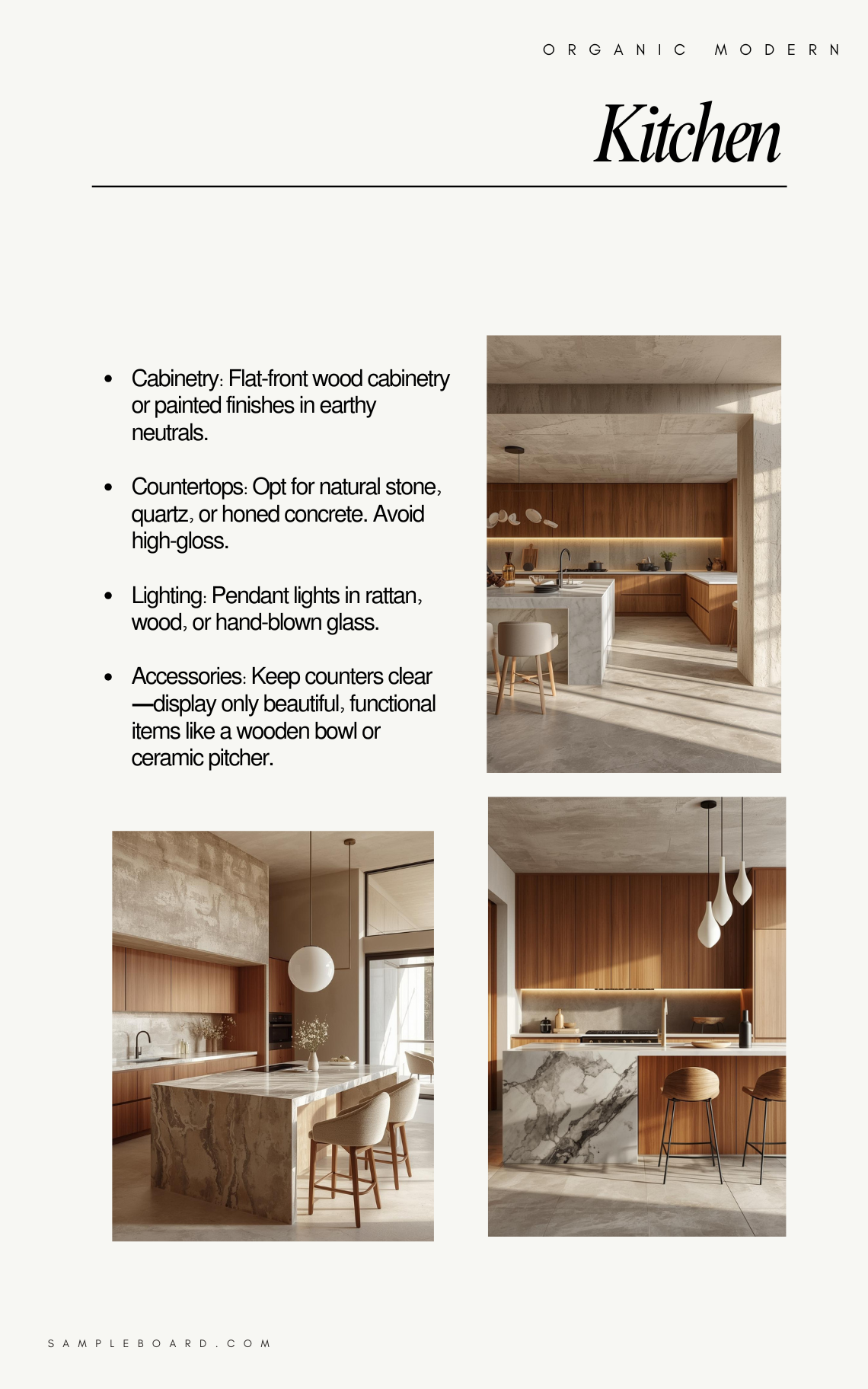
- Cabinetry: Flat-front wood cabinetry or painted finishes in earthy neutrals.
- Countertops: Opt for natural stone, quartz, or honed concrete. Avoid high-gloss.
- Lighting: Pendant lights in rattan, wood, or hand-blown glass.
- Accessories: Keep counters clear—display only beautiful, functional items like a wooden bowl or ceramic pitcher.


Dining Room
- Table and Chairs: A solid wood table in walnut, oak, or ash paired with sculptural dining chairs.
- Lighting: A single statement pendant or cluster of organic-shaped lights.
- Table Styling: Simple arrangements—branch cuttings, linen napkins, or handcrafted pottery.

Bedroom
- Bed Frame: Choose a platform or upholstered bed in wood, linen, or leather.
- Textiles: Layer with organic cotton sheets, wool throws, and textured pillows in soft, tonal hues.
- Lighting: Use soft, ambient lighting—linen lampshades, sconces, or paper lanterns.
- Décor: Keep it minimal. Add a branch in a vase, a sculptural lamp, or a framed nature photograph.

Bathroom
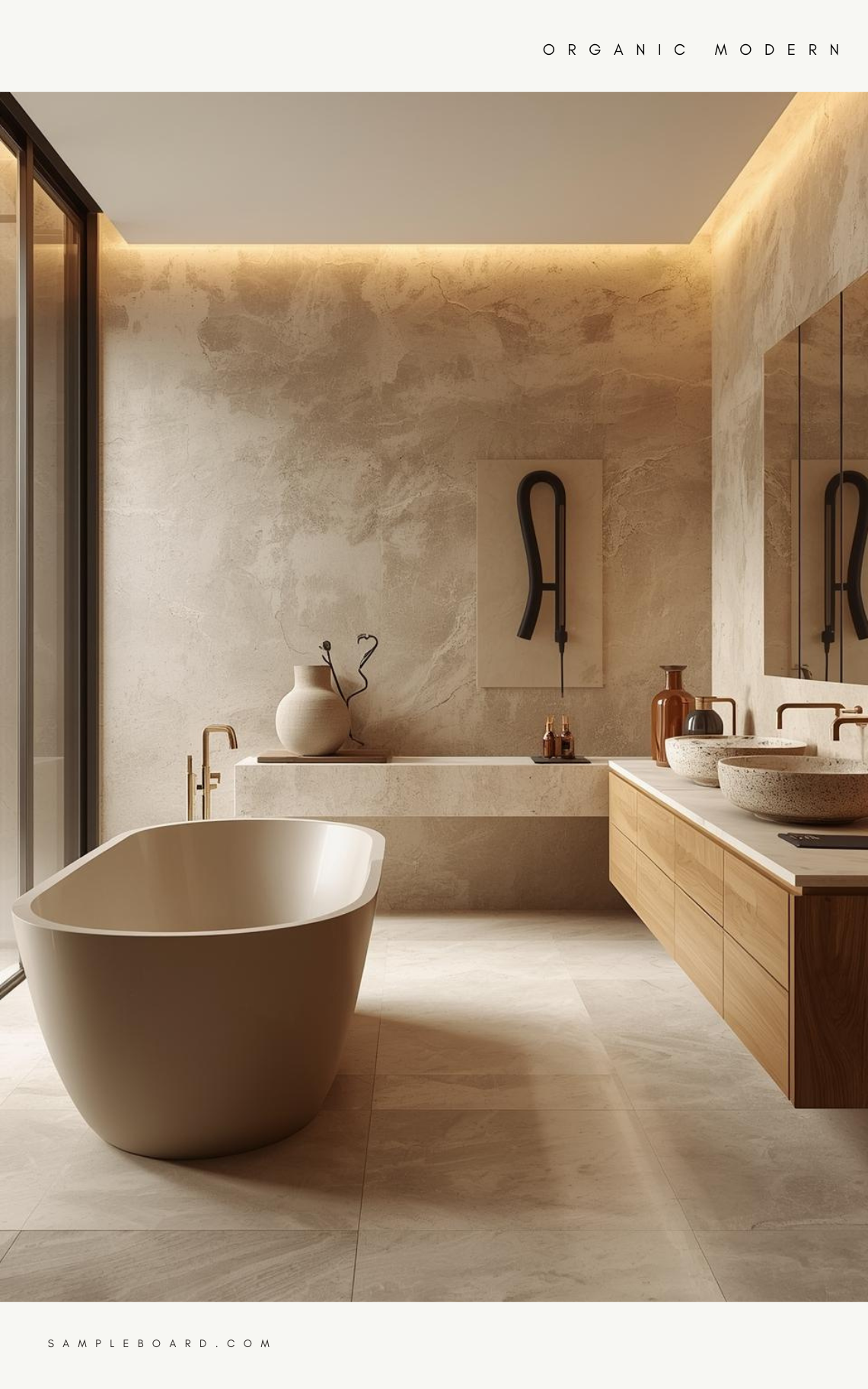
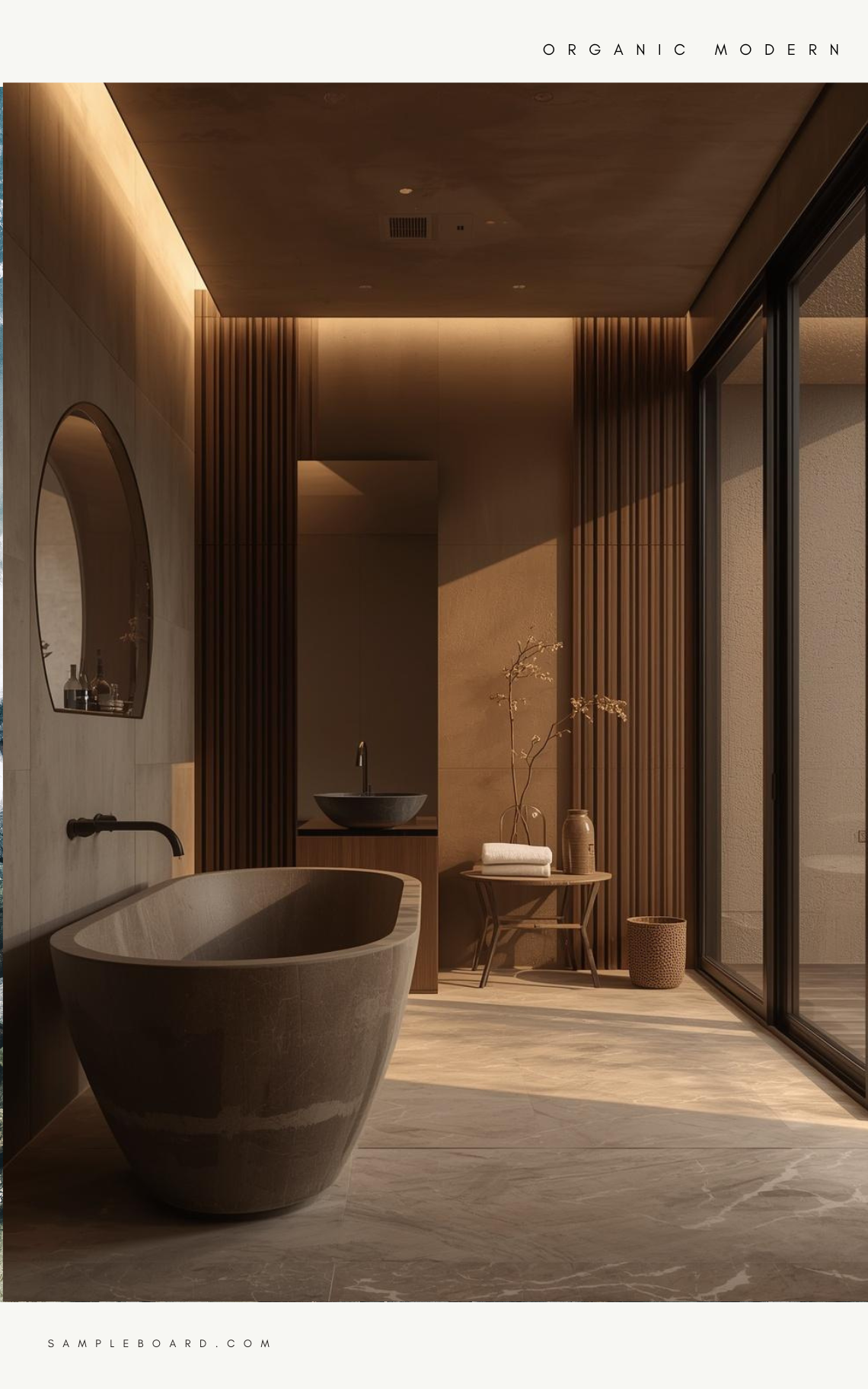
- Vanity: Use floating or slab-style vanities with natural wood or stone finishes.
- Tiles: Opt for textured ceramics or stone in natural tones.
- Lighting: Minimalist fixtures with soft light—brass or matte black finishes.
- Details: Add a stool, a clay soap dish, or a hanging plant for organic touches.

Workspace
- Desk Area: Keep surfaces clean and light. Choose a wood desk with curved edges or slim profiles.
- Chair: Go for ergonomic but stylish—think linen upholstery or woven leather.
- Décor: A single ceramic cup, neutral storage baskets, or a piece of abstract art.


Styling Small Spaces in Organic Modern Design
- Choose multi-functional furniture that doesn’t overwhelm—storage benches, nesting tables, or armless chairs.
- Use mirrors to reflect light and expand the space.
- Stick to a light, consistent color palette to create a cohesive flow.
- Layer texture instead of adding visual clutter.

Organic Modern Lighting Guide
- Chandeliers: Choose sculptural, nature-inspired forms in matte metal or wood.
- Pendant Lights: Linen, ceramic, or glass shades with soft curves or raw finishes.
- Wall Sconces: Minimalist fixtures that offer warm light—ideal near beds or hallways.
- Table Lamps: Look for handmade or artisan-crafted styles with neutral bases and fabric shades.
- Natural Light: Maximize windows, use sheer curtains, and let the outdoors in wherever possible.
Sustainability in Organic Modern Design
- Choose FSC-certified wood and eco-conscious textiles like organic cotton, hemp, or recycled linen.
- Support artisans and small makers who craft sustainable, high-quality furnishings.
- Buy fewer, better items—durability is a key part of this design philosophy.
- Repurpose vintage pieces with clean lines and quality craftsmanship.

DIY and Budget-Friendly Organic Modern Decor Ideas
- Clay Vases: Try hand-building or painting basic ceramic vases in earthy colors.
- Linen Table Runners: Sew your own from natural fabric remnants.
- Wood Stools or Side Tables: Repurpose scrap wood into simple stools or plant stands.
- Branch Wall Art: Mount natural wood branches in a shadow box or frame.
- Textured Pillow Covers: Use neutral weaves or wool blends to create cozy accents.
Organic Modern Decor Edit
Do’s
✔ Embrace natural materials and soft textures
✔ Keep your color palette earthy and tonal
✔ Let your furniture breathe—negative space is part of the design
✔ Use plants or botanical elements sparingly and mindfully
✔ Invest in timeless, quality pieces over trend-driven decor
Don’ts
✖ Don’t over-decorate—simplicity is key
✖ Don’t mix in overly glossy or synthetic materials
✖ Don’t rely on bright or saturated colors
✖ Don’t forget about balance—contrast clean lines with soft shapes
✖ Don’t clutter with excess furniture or accessories


Organic Modern Sourcing Notes
Organic Modern is often reduced to a palette — warm oak, linen, bouclé, travertine, soft neutrals. But the style is not defined by individual materials. It is defined by how those materials work together to create atmosphere.
The challenge is sourcing pieces that feel considered rather than decorative. A room can contain all the “right” materials and still miss the quiet confidence that makes Organic Modern successful.
To help readers explore the style in practice, I‘ve curated a collection of furniture, lighting, textiles, materials, and accessories that reflect the warmth, texture, and sculptural simplicity at the heart of Organic Modern interiors.
Use it as a material reference rather than a shopping list. The strongest Organic Modern spaces are not built around individual products, but around the relationship between texture, proportion, light, and atmosphere.
What is Organic Modern interior design?
Organic Modern interior design combines the sleek, functional sensibility of modern design with the warmth, softness, and grounding qualities of organic materials to create spaces that feel fresh, calming, and connected to the earth.
What are the core principles of Organic Modern design?
The core principles include Minimalism with Warmth, Natural Materials, an Earth-Toned Color Palette, Clean Lines and Functional Design, and Nature-Inspired Forms and Textures, all aimed at serenity and a sense of well-being.
Which furniture pieces help achieve an Organic Modern interior?
Key pieces include a Wooden Platform Bed, Stone-Topped Side Tables, and an Eames Molded Plastic Chair, all chosen for clean lines, natural materials, and a balance between modern sophistication and organic warmth.
How can I style small spaces in Organic Modern design?
In small spaces, choose multi-functional furniture, use mirrors to reflect light, maintain a light, consistent color palette, and layer texture instead of adding clutter to create a cohesive, spacious feel.
What sustainability practices align with Organic Modern design?
Sustainability is achieved by choosing FSC-certified wood and eco-conscious textiles, supporting artisans, buying fewer, better pieces for durability, and repurposing vintage items to maintain a quiet, confident atmosphere.
Take It Further
You’ve covered the core principles. Now see how design professionals are applying the organic modern framework in client presentations and mood board systems.
Already working with organic modern interiors professionally?
The Juno collection on SampleBoard Studio was built for exactly this aesthetic — warm, natural presentation frameworks and mood board systems that reflect everything covered in this guide.
- What is Organic Modern interior design?: Organic Modern interior design combines the sleek, functional sensibility of modern design with the warmth, softness, and grounding qualities of organic materials to create spaces that feel fresh, calming, and connected to the earth.
- Minimalism with Warmth: It softens modern clean lines with warm woods, textured textiles, and earthy tones to achieve serenity rather than starkness.
- Natural Materials: Essential materials include raw wood, wool, clay, rattan, linen, and stone, whose textures contrast with sleek modern furnishings and add organic warmth.
- Earth-Toned Color Palette: The palette centers on neutral, nature-inspired shades—warm whites, sand, camel, ochre, olive, charcoal, and terracotta—creating depth with subtle contrast.
- Clean Lines and Functional Design: Furnishing and architecture adhere to minimal ornamentation and practical layouts, maintaining a less-is-more approach that still feels refined.